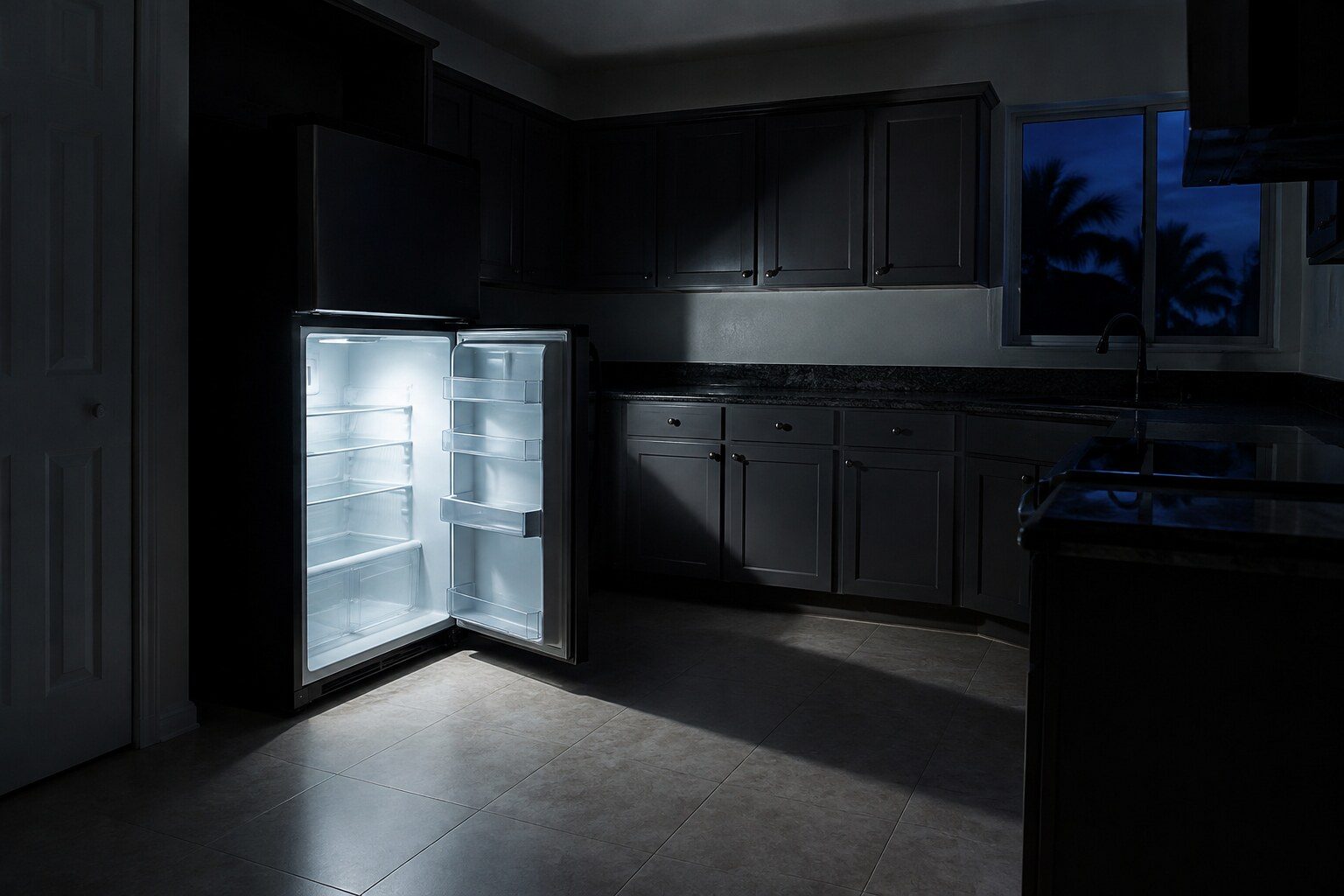
Demo mode on a refrigerator: lit, responsive, and not cooling by design. Sabbath mode on an oven, which holds a temperature and disables the controls. H5 on a cooktop, which means the glass is hot rather than that anything is wrong. And a recirculating range hood, which was never going to remove steam and is working exactly as installed. Between them these account for a real share of the calls we take, and all four are free to rule out.
20 symptoms · 70 codes behind them
Start from what it is doing, because that is what you actually have.
Most people do not have a code. They have a refrigerator that is not cold, a dryer that will not dry, or a washer stopped full of water. These pages start there, name the likely causes in the order they are worth checking, and link to the code the machine would show if it had one.
- 20 symptom pages
- 70 codes behind them
- 5 families LG publishes codes for
- 2 that publish nothing at all
By symptom
What it is doing
Each page separates the checks that cost nothing from the ones that need a technician, and says which of LG's codes belong to it.
-
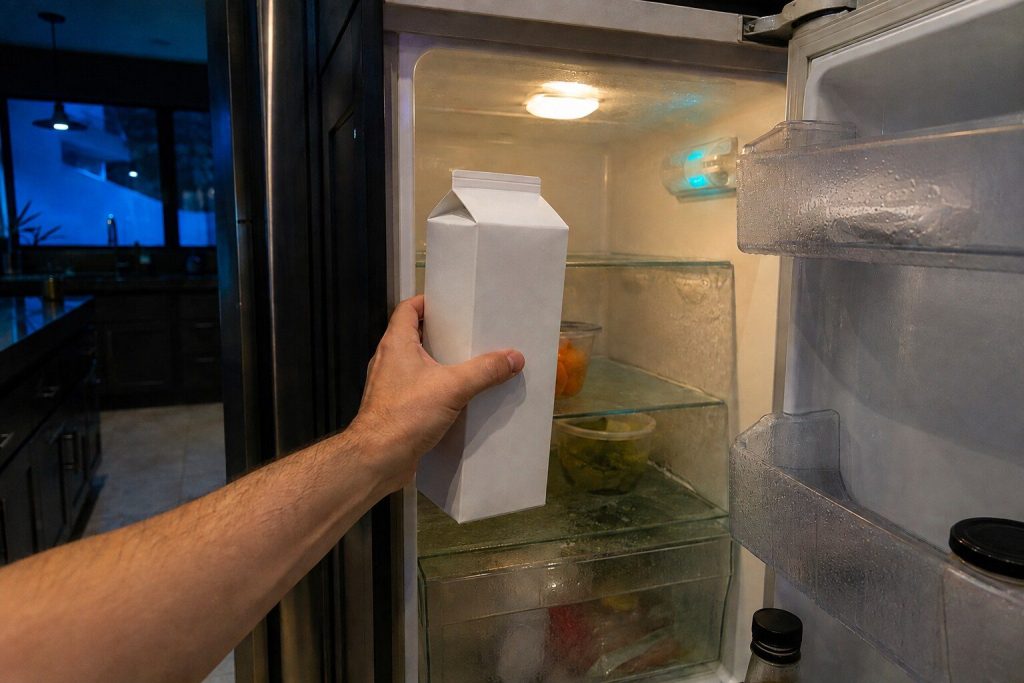
The lights are on and the food is warm Refrigerator not cooling
The most common call on this badge, and the first check is free. An LG refrigerator has a showroom mode that lights the whole panel, runs the fans and cools nothing at all, and it gets switched on at home by accident often enough that we ask about it on the phone before anything else.
- Demo mode looks exactly like a broken refrigerator and clears in ten seconds
- Three separate fan codes, and the usual cause of all three is ice rather than a dead motor
- The sealed system is last, and it is measured rather than assumed
-
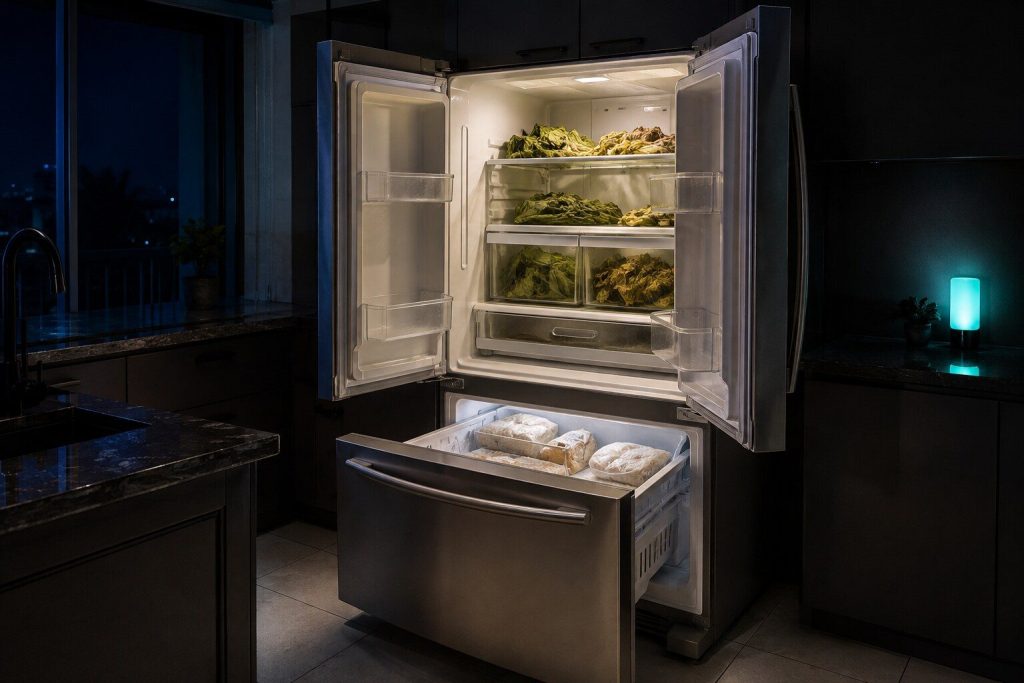
One compartment is right and the other is not Fridge warm and freezer cold
The combination that rules more out than it rules in. On most LG cabinets one cooling system feeds both compartments and a damper divides the cold between them, so a freezer that is still hard proves the compressor, the gas and the condenser are all doing their job — and moves the whole question to how the cold is getting from one side to the other.
- A hard freezer proves the sealed system is fine, which removes the expensive answer
- Air, damper, or the fan feeding the fresh food side
- On a two-evaporator cabinet, the code prefix says which coil is involved
-
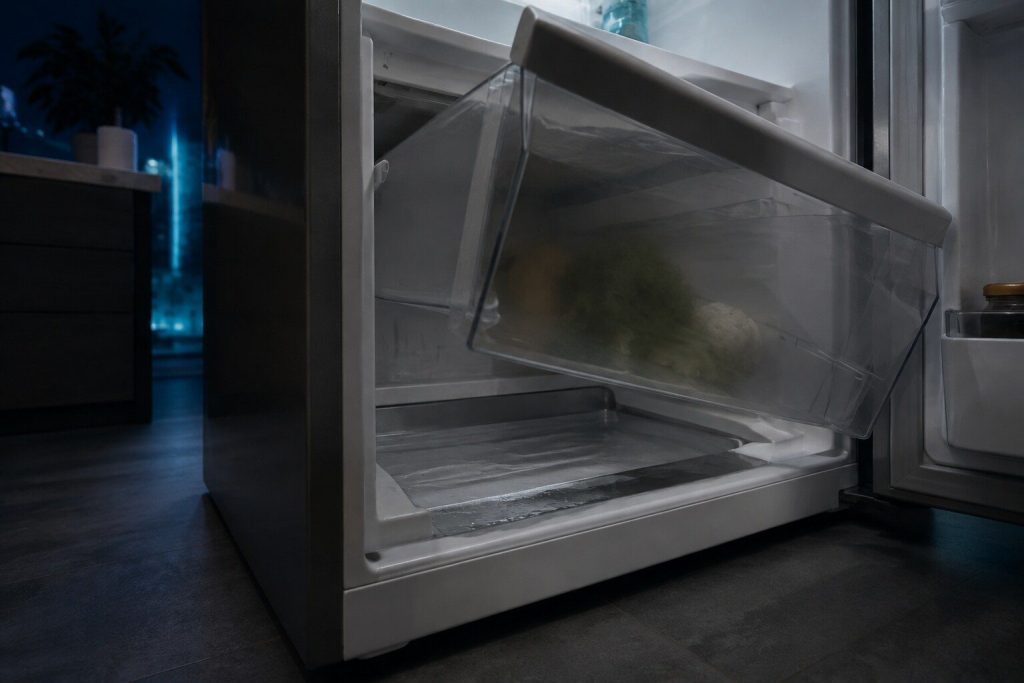
Water on the floor, or under the crisper Refrigerator leaking water
Water arrives from two places on this appliance and they are completely different repairs. Melt water that should have gone down a drain and did not, or supply water from the line that feeds the dispenser and the ice maker. Where the puddle is tells you which, and it is worth knowing before anybody is called.
- Under the crisper means the defrost drain, which is often a five-minute clear
- At the back or the toe kick means the supply line or the drain pan
- A leak that only appears after ice is made is the fill valve, not the drain
-
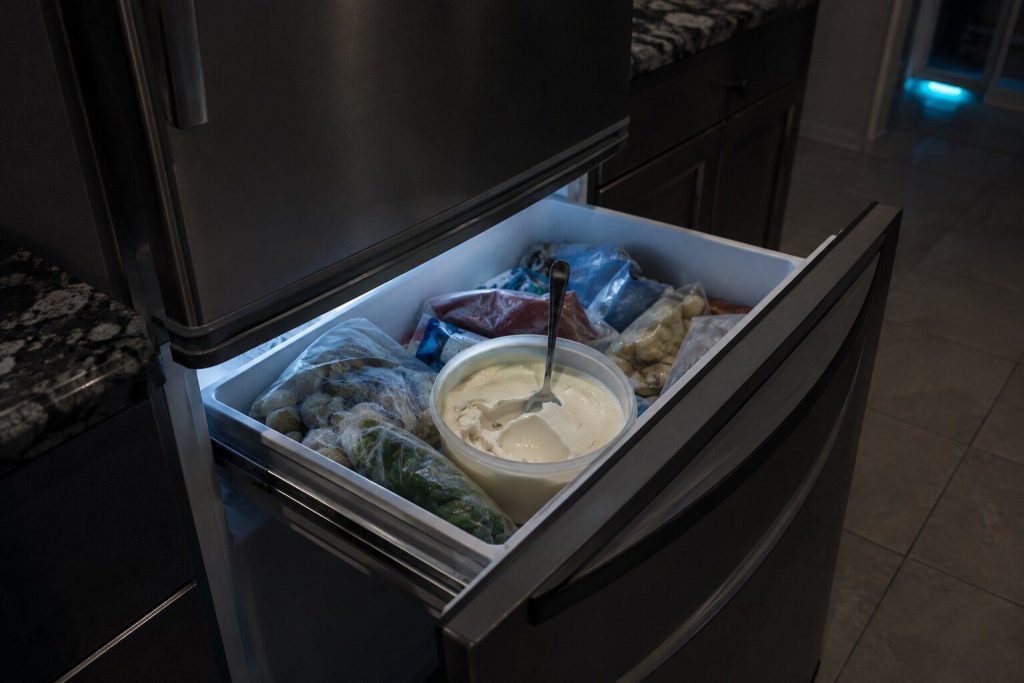
Soft packets, and water in the bottom basket Freezer not freezing
On this make the freezer is a compartment rather than a separate machine, which changes the diagnosis in a useful way: the compartment beside it is a live instrument. A freezer that is failing while the fresh food side holds is telling you something quite different from both of them drifting together, and LG's own codes carry that distinction in their prefix.
- The refrigerator compartment beside it is the most useful measurement you have
- FF, FS and dS are published and each names a different part
- A drawer that will not close on a packet is a real and common cause
-
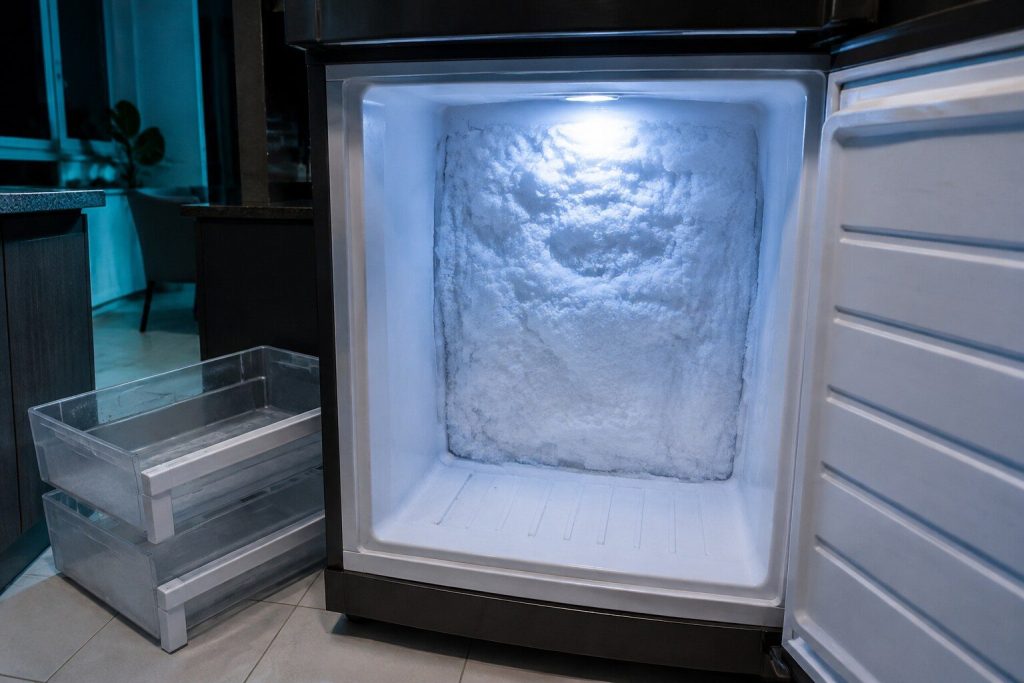
A white wall behind the back panel Frost building up in the freezer
Frost inside a freezer is not a cosmetic problem and it does not stay a small one. A modern cabinet is supposed to melt its own coil clear every few hours; when it stops doing that, the ice grows across the airway until the compartment above it starts to fail. This is the slow failure that people live with for a month and then call about in a hurry.
- A frost-free cabinet with frost has a defrost problem, by definition
- dS is the sensor half of the circuit; the heater is measured rather than read
- Do not chip at it — the coil is aluminum and the tubing is thin
-
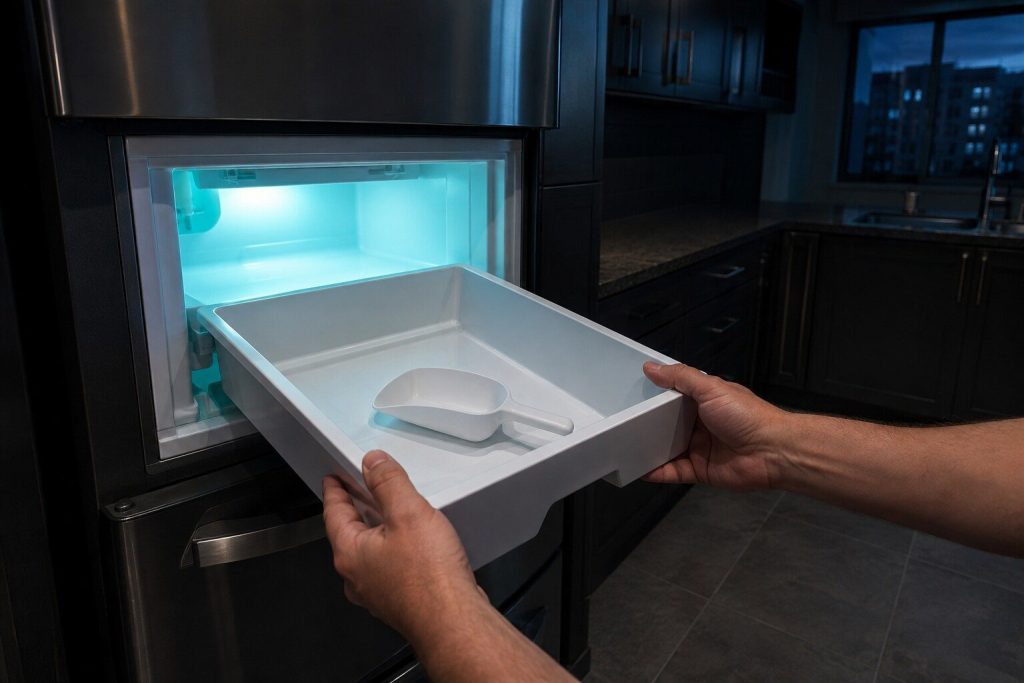
The bucket is empty and everything else looks fine Ice maker not making ice
The most common call on this badge after cooling itself, and the one where the useful question is not about the ice maker at all. Does the water dispenser still work? That single answer splits the problem in half before anybody opens anything, because ice and water share a supply and part company inside the door.
- Water working and ice not moves the whole question inside the compartment
- IF, IS and It are published — fan, sensor and motor
- A fill tube frozen at the mouth is common here and free to clear
-
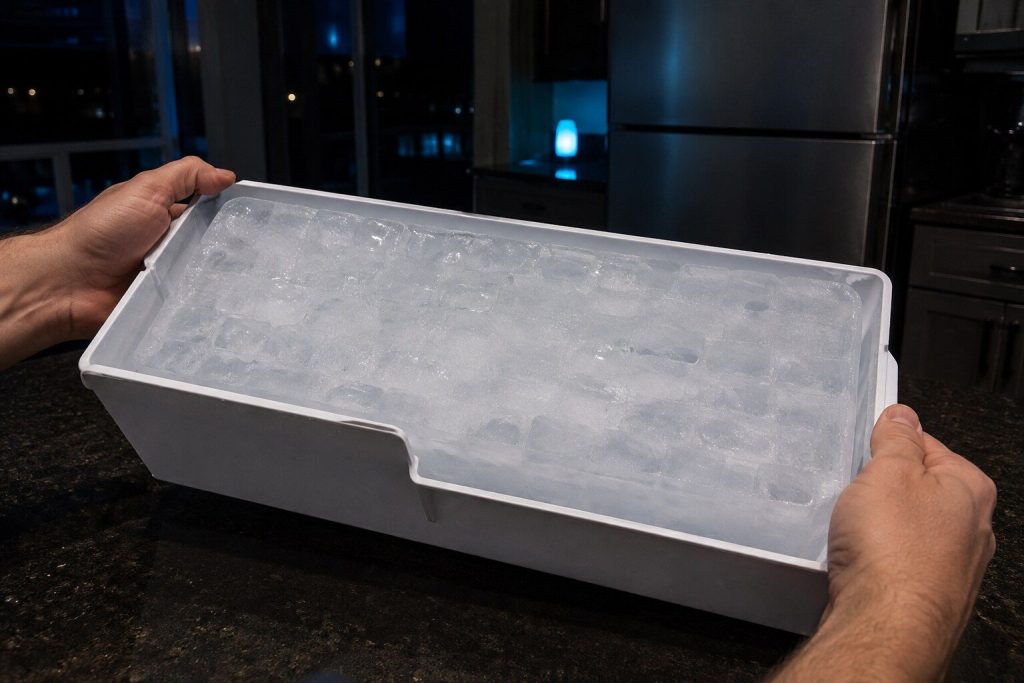
One clear mass instead of cubes Ice maker frozen into a block
A bucket of ice that has fused into a single lump is not the ice maker failing to work — it is ice sitting still for long enough to weld itself together, usually because the compartment is going through small warm-up cycles it should not, or because nobody has used any ice for a fortnight.
- Ice that partly melts and refreezes bonds into a solid mass
- A door left ajar, a failing seal, or a defrost problem all do it
- Clearing it is easy; the reason it happened is the actual question
-
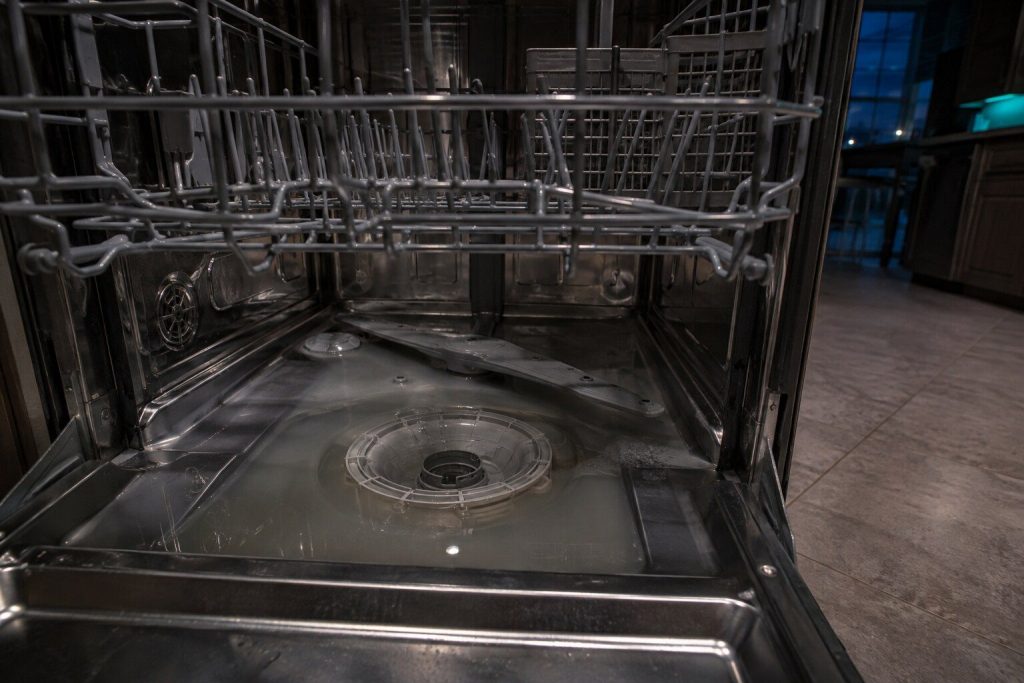
Water standing in the bottom at the end of the cycle Dishwasher not draining
The most common dishwasher call there is, and the cheapest cause is also the most likely. Everything the machine washes off the plates that does not leave through the drain stays in the sump, and the filter there is what catches it. A filter nobody has taken out in two years will stop a perfectly healthy pump.
- The filter in the sump floor is the answer more often than the pump
- OE is the code, and LG's own order goes from free to expensive
- A pump that hums is blocked; a pump that is silent has failed
-
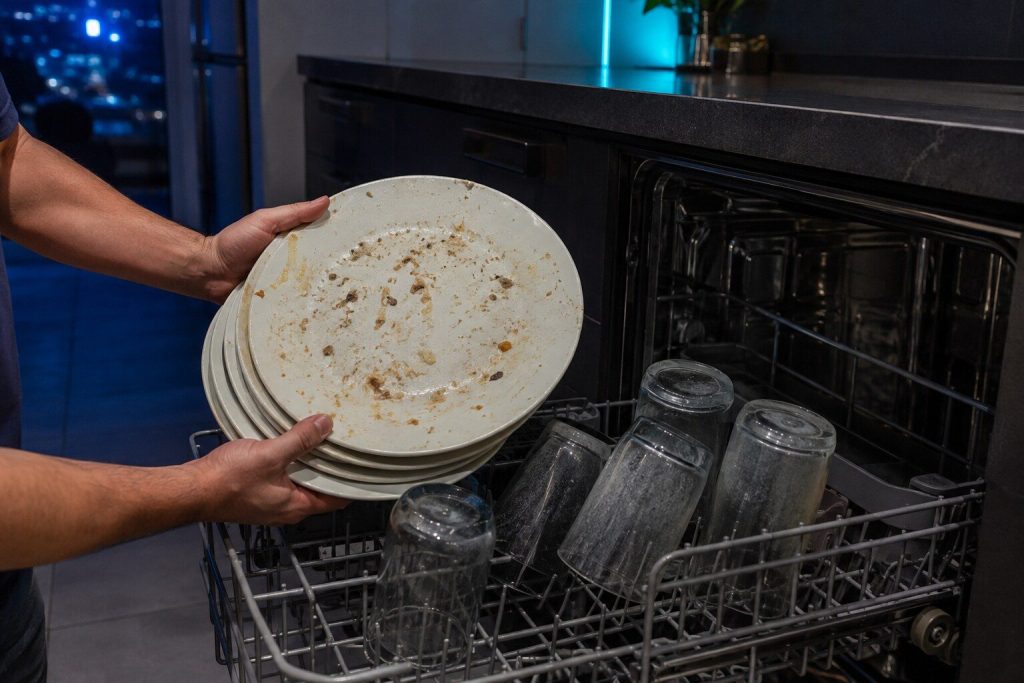
Dried food still on the plates, or a chalky film Dishwasher not cleaning
Two different complaints get reported the same way, and they have different answers. Food left on the plates is water not arriving with enough force in enough places. A white film on clean plates is the water itself, and in this city that is usually hardness rather than a machine problem at all.
- Food left on is spray, filter or heat; a chalky film is water
- Rinse aid does the work most people expect detergent to do
- Loading matters more than any setting on the panel
-
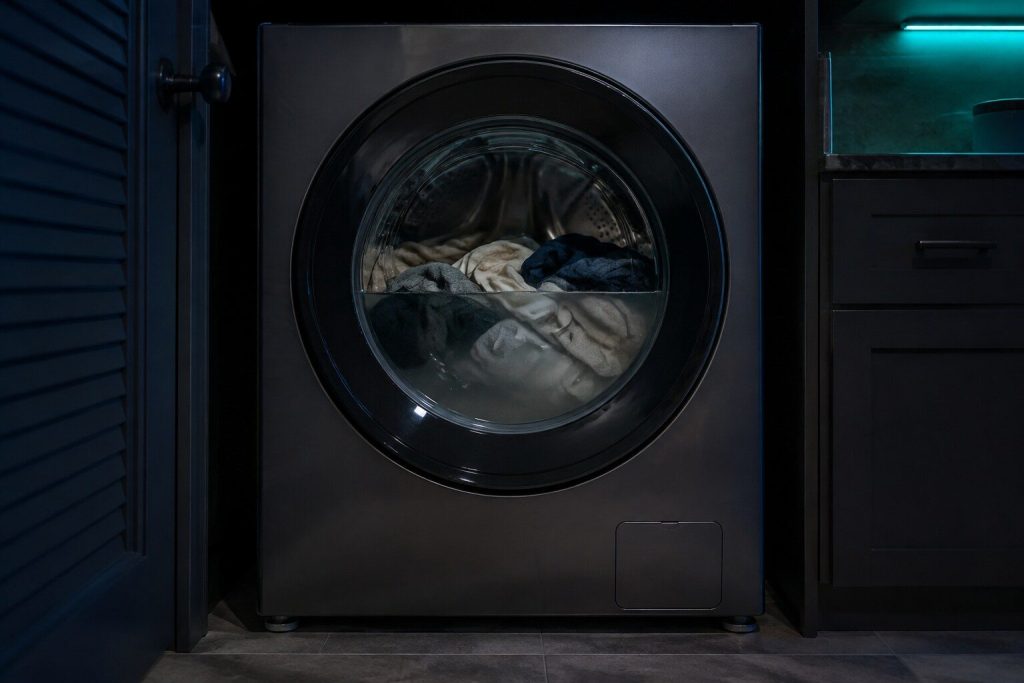
The cycle stops with the drum full Washer will not drain
A front loader stopped full of water is the laundry equivalent of the dishwasher call, and it has the same shape: a filter almost nobody knows about, a hose that gets crushed, and a pump that is usually innocent. LG's own troubleshooting order is the right one and it is worth following before booking anything.
- There is a pump filter behind a small door at the bottom front
- OE, E03 and E21 are the same condition under three names
- Put a tray down first — there is more water behind that filter than people expect
-
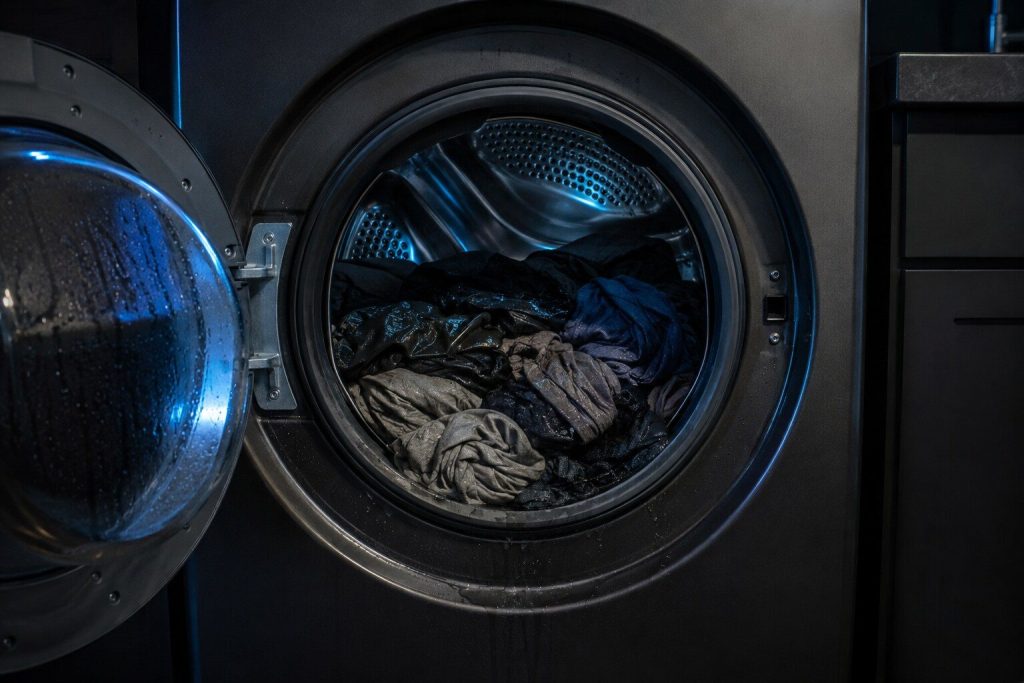
The load comes out soaked Washer will not spin
Two quite different problems arrive as this one sentence: a machine that cannot spin because the load is not balanced, and a machine that cannot spin because something mechanical will not let it. LG separates them in its codes — UE for the first, LE and E6 for the second — and the difference is easy to establish at home.
- UE means the machine tried three times to balance the load before telling you
- A machine that will not spin any load is a different call from one that will not spin some
- Water still in the drum means it is a drain problem wearing a spin problem's clothes
-
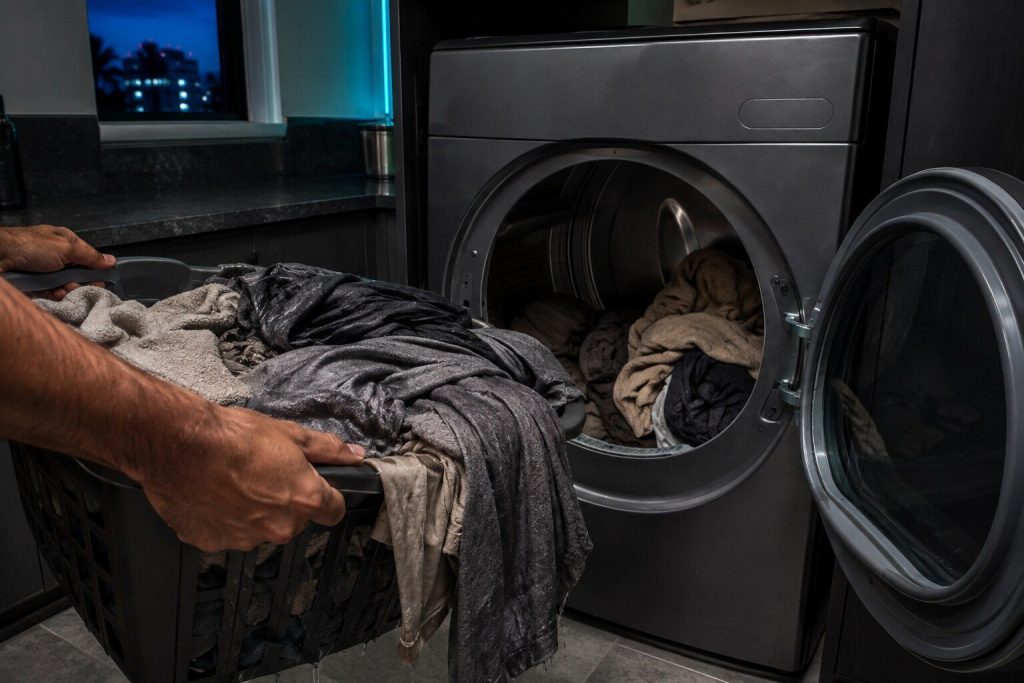
The clothes are still damp at the end of the cycle Dryer not drying
This is an air problem far more often than a heat problem, and the two feel identical from the laundry room. A dryer works by carrying moisture out; if the air cannot leave, the machine heats a drum full of humid air and the clothes stay wet no matter how long it runs.
- Air first: the screen, the duct, and the vent outside
- LG measures its own duct restriction and reports it as d80, d90 or d95
- A ventless heat pump machine has no duct — for those it is the condenser and the water
-
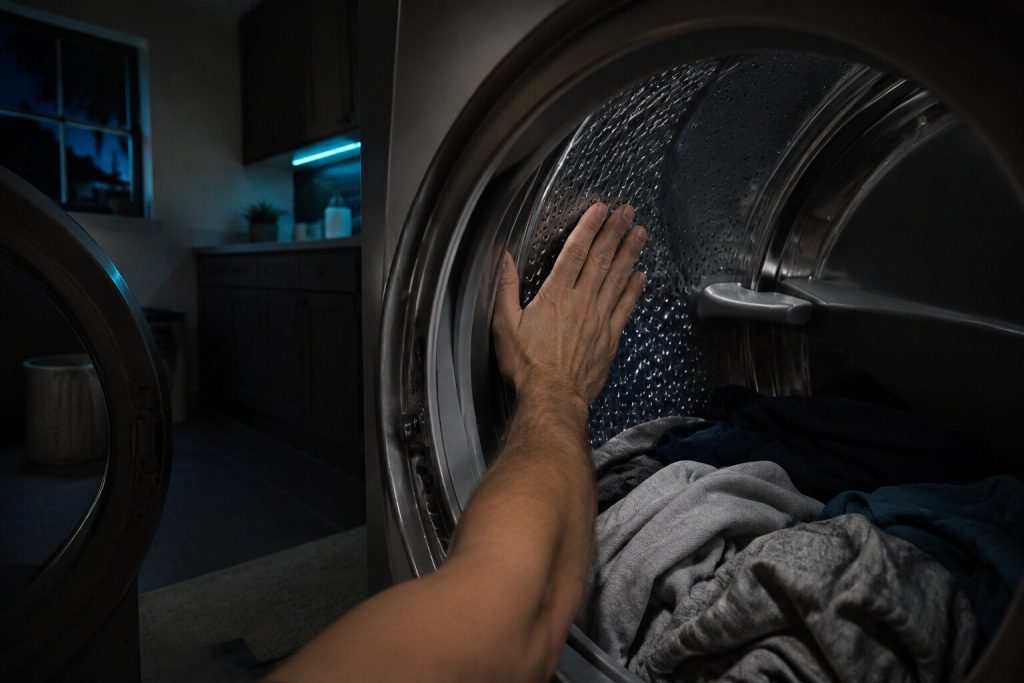
It tumbles, and everything comes out cold Dryer not heating
A dryer that turns but never warms is one of the clearest symptoms in this trade, because the motor and the heat run on different things. On an electric machine the drum turns on 120 volts and the element needs the full 240, so half a tripped double breaker gives you exactly this — a machine that looks completely alive and heats nothing.
- Half a double breaker is the first thing to rule out and it costs nothing
- nP is LG's code for no current reaching the heater
- A thermal cutoff that has opened means the duct was blocked, and both need fixing
-
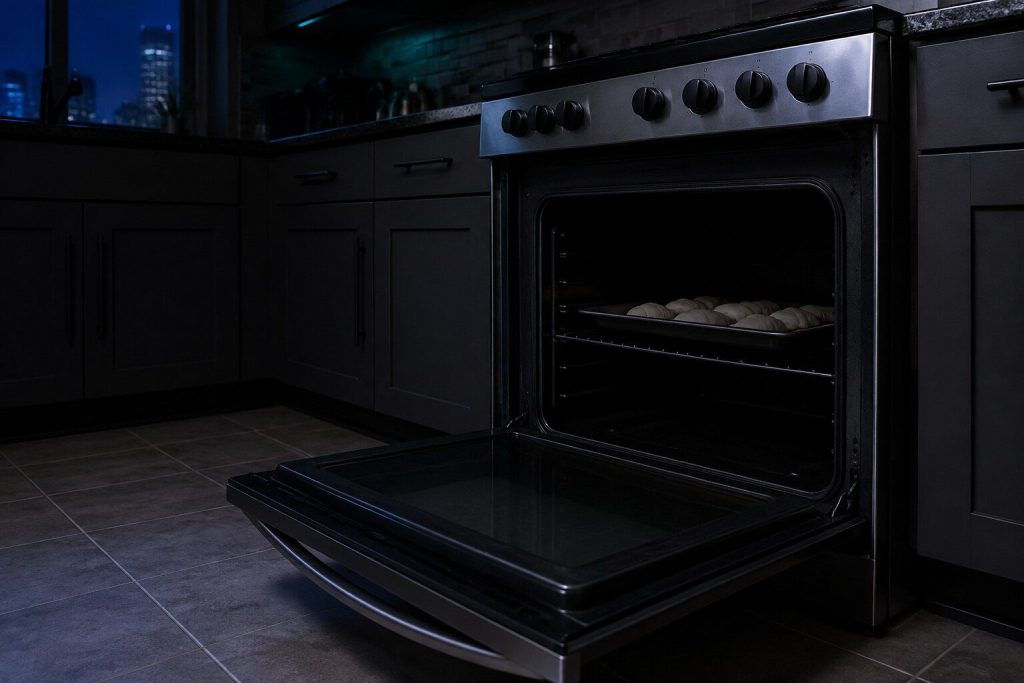
It lights up, it counts down, and it stays cold Oven not heating
An oven that will not heat divides cleanly on this make, because LG tells you which half you are in. A code means the machine has found something and named it. No code at all means the oven believes it is heating, which points somewhere different — at the element, the igniter, or the supply.
- The F number names the cavity: F1 and F2 upper, F4 and F5 lower
- On electric, look at the bake element cold — a break is often visible
- On gas, an igniter that glows and never lights is the classic failure
-
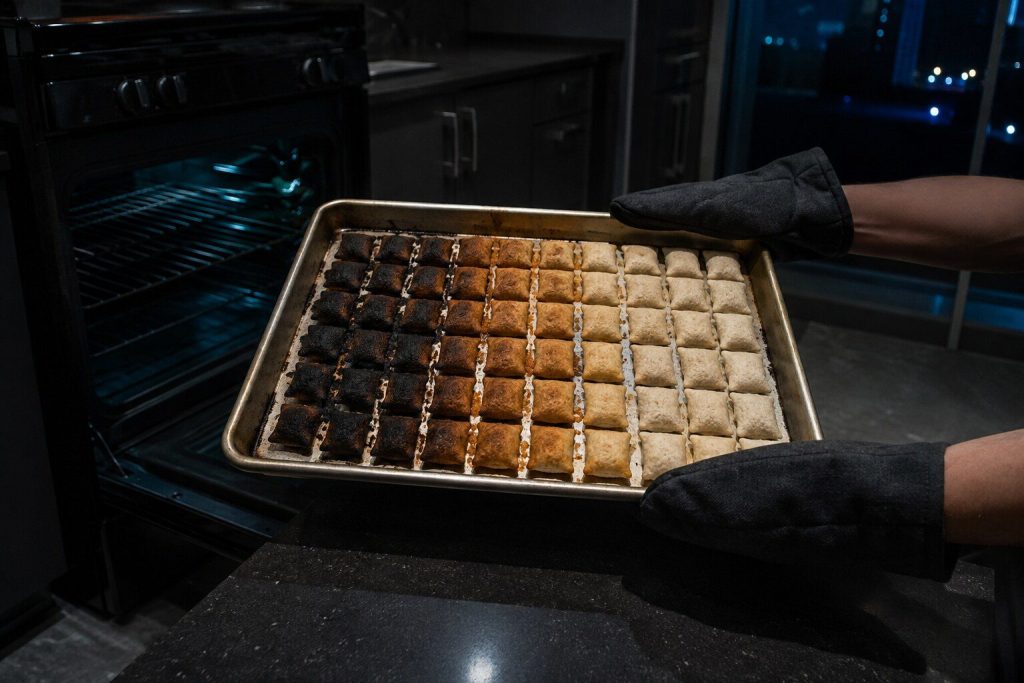
It says 350 and it is not 350 Oven temperature is wrong
There are three quite different things behind this and they need different answers: an oven that is out by a consistent amount, an oven that swings, and an oven that is fine but is being judged by a thermometer that is not. Establishing which one you have is most of the job.
- Consistently out is calibration; swinging is the sensor
- Measure at the middle shelf, not at the door and not by eye
- Most of these can be offset from the panel without any parts
-
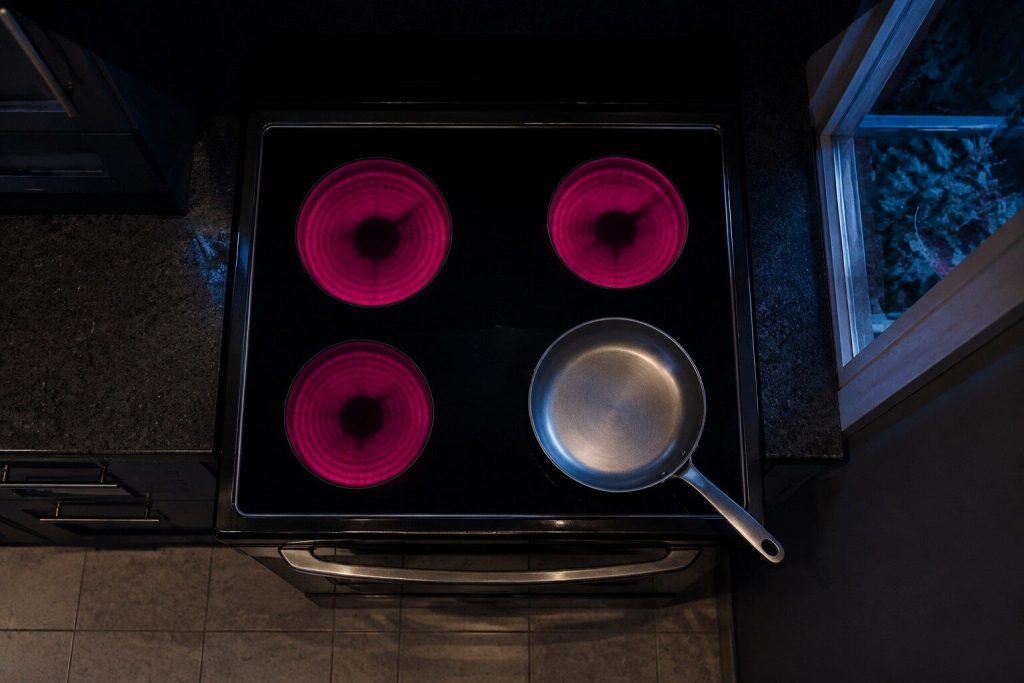
One zone is dead and the rest are fine Cooktop burner not working
One burner out of four is the good version of this problem, because it usually rules out everything shared — the supply, the board, the controls. What it points at depends entirely on the kind of top, and LG sells three: induction, radiant electric and gas.
- One zone dead is better news than several: the shared parts are fine
- Induction has coils and sensors rather than elements — F33 and F34 are its codes
- On gas, cleaning the cap and ports fixes more of these than parts do
-
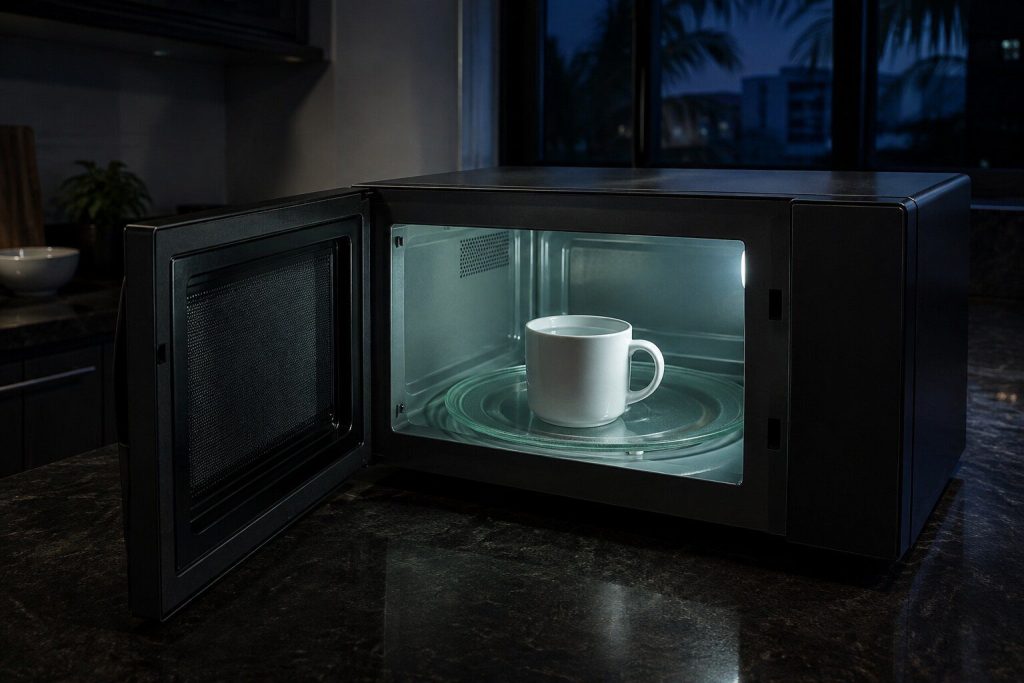
It runs, the light is on, and nothing gets hot Microwave not heating
One of the most specific symptoms in this trade. Everything else about the machine works — the turntable turns, the fan runs, the light comes on and the timer counts down — and the food stays cold. That combination points at one circuit, and it is worth an honest conversation about what repairing it costs.
- The magnetron circuit: magnetron, diode, capacitor or transformer
- Nothing else in the machine has to be wrong for this to happen
- On a built-in or over-the-range unit repair is usually right; on a countertop it may not be
-
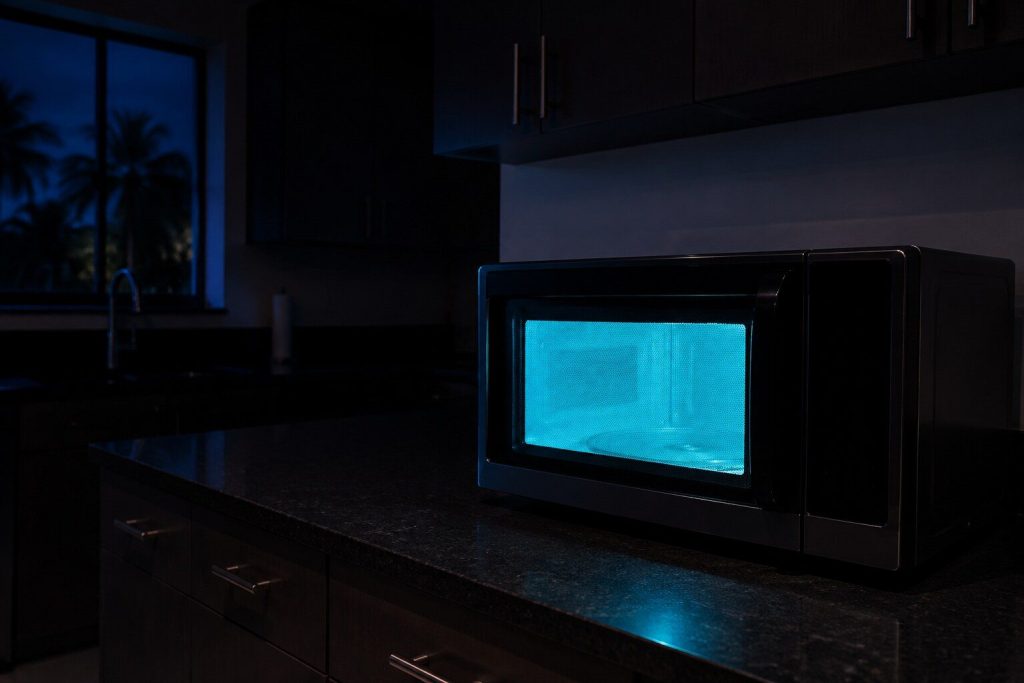
It runs as soon as the door shuts Microwave starts when the door closes
Stop using it and unplug it. This is a failed door interlock, and it means the switch that is supposed to prove the door is shut before the machine can run has stuck closed. It is a small, inexpensive part and it is a safety part, and a microwave that can start on its own is not one to think about over the weekend.
- Unplug it now — this is the one microwave symptom that is not a wait-and-see
- The interlock is a small cheap switch and the repair is short
- It is safe to use again once the switch is replaced and tested
-
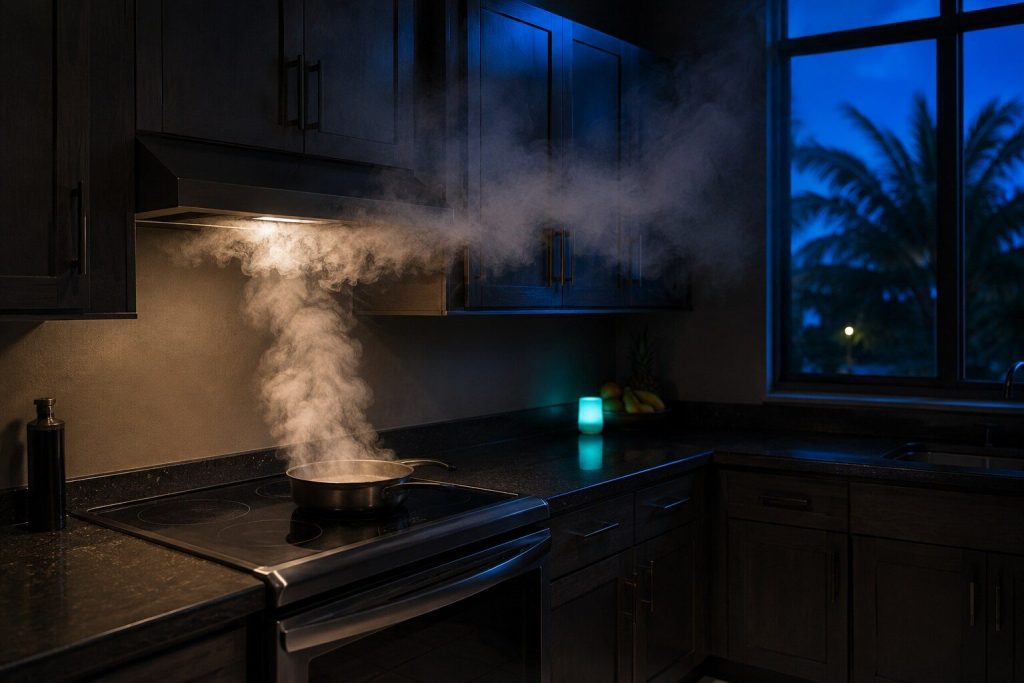
It runs and the kitchen still fills with steam Range hood not extracting
Before anything is called a failure, one question decides most of these: is the hood ducted to the outside, or is it recirculating through a filter back into the room? A recirculating hood was never going to remove steam. It removes grease and smell, and it does that only while its charcoal filter is fresh.
- Ducted or recirculating decides what 'working' even means
- Filters are maintenance and are the most common cause
- The vent flap outside seizes and packs solid, and nobody looks at it
-
The band has drifted, or the cabinet swings Wine cooler not holding temperature
A wine cabinet is judged differently from a refrigerator. It is not asked to be cold; it is asked to hold a narrow band steadily and to leave the bottle undisturbed while it does. So the two complaints on this appliance are drift and vibration, and neither is quite what a kitchen refrigerator call sounds like.
- A swing that returns to the same middle is normal; a middle that moves is not
- Vibration is part of the specification on this appliance, not a cosmetic issue
- Mechanically it is a refrigerator, so the same fans, sensors and sealed system apply

Two appliances with nothing to translate
Where the symptom page is the whole archive
LG publishes no error codes for its range hoods, and its wine cellar reports through the refrigerator control set. On those two the symptom page is not a way in to a code — it is the whole diagnosis, and it is written that way rather than borrowing a table from the appliance next door. A hood is a motor, a capacitor, a switch, two lamps and a duct, and none of it reports.
Before you book
Write it down before you cut the power
What the machine is reporting
- A code on the display, written down exactly — including the letter in front of it.
- On a refrigerator, hold Freezer Temperature and Express Frz together for three seconds to bring the last code back.
- On a laundry machine with no numbers, count a full blink sequence and photograph it.
- Do not cut the power first. A code that has been reset is information nobody has.
The model number, off the appliance
- Refrigerators: inside, on the left wall of the fresh food compartment.
- Washers and dryers: inside the door opening, or on the back panel.
- Ranges and wall ovens: on the frame behind the door, or under the cooktop.
- Dishwashers: on the edge of the door, visible when it is open.
By code
Or look the code up directly
Every string LG publishes for a condition is on one page, so whichever spelling you searched for is the right one.
-
Refrigerator error code CF
LG refrigerator error code CF: The condenser is the coil that throws the heat away, and it needs air moving across it to do that. Every spelling LG publishes for it, which machines can raise it, and what to do next.
What this one means -
Refrigerator error code FF
LG refrigerator error code FF: This is the fan inside the cabinet rather than the one in the machine room, and it is the one that circulates cold air through the freezer and, on most layouts, up into the refrigerator as well. Every spelling LG publishes for it, which machines can raise it, and what to do next.
What this one means
-
Refrigerator error code rF
LG refrigerator error code rF: On the cabinets that cool each compartment separately, the refrigerator side has a fan of its own, and this code is that fan. Every spelling LG publishes for it, which machines can raise it, and what to do next.
What this one means -
Refrigerator error code FS
LG refrigerator error code FS: Every decision this cabinet makes about running the compressor and starting a defrost comes from what its sensors tell it. Every spelling LG publishes for it, which machines can raise it, and what to do next.
What this one means -
Refrigerator error code rS
LG refrigerator error code rS: The same problem as the freezer sensor, on the other side of the machine: the probe that tells the board how cold the fresh food compartment is has gone out of range. Every spelling LG publishes for it, which machines can raise it, and what to do next.
What this one means -
Refrigerator error code dS
LG refrigerator error code dS: A refrigerator has to stop and melt its own evaporator every few hours, and this sensor is what tells it when the coil is cold enough to need it and warm enough to stop. Every spelling LG publishes for it, which machines can raise it, and what to do next.
What this one means -
Refrigerator error code rT
LG refrigerator error code rT: A modern refrigerator adjusts what it does to the kitchen around it — how long to run, how often to defrost, when to worry about condensation on the door mullion. Every spelling LG publishes for it, which machines can raise it, and what to do next.
What this one means
Worth doing first
Force the refrigerator to show its last code
Hold Freezer Temperature and Express Frz together for three seconds. LG documents it, and it matters after a power cut, because the display clears on its own and the condition does not. A code that has been reset is information nobody has.

Before you call
Questions about reading a symptom
There is no code at all. Is that worse?
Not usually. Plenty of real problems show nothing — a blocked dryer duct, a loaded dishwasher filter, a door that has stopped sealing. A symptom with no code often points at something mechanical, which is generally the cheaper half of this trade.
The code cleared by itself. Should I still call?
Write down what it was and watch it. A code that came from a power event and never returns is not a repair. One that comes back — even a week later — is the same condition and it is worth acting on while it is intermittent rather than after.
Can I keep using it meanwhile?
It depends what it is doing. A hood that has lost a lamp, yes. A microwave that starts on its own, no — that is unplugged today. We will tell you plainly which yours is when you call.
In more detail
Why the symptom comes before the code
The code archive is no use until you have a code
An error code is excellent information and most people do not have one. What they have is a machine doing something, and the job of these pages is to turn that into something a technician can act on — which of LG’s codes it would raise, which checks are free, and which cause is most likely in a house on this coast.
What this climate changes
Nine wet months a year is hard on door seals, defrost drains and dryer ducts, and those three sit behind a large share of the calls we take. A gasket that would last a decade elsewhere hardens sooner here; a defrost drain ices sooner; and a dryer vent hood corrodes half open and packs with lint. None of that is a defect in the machine. It is what this climate does to a machine that is working.
Tell us what it is doing, and what the panel shows.
If there is no display, tell us which lights are blinking and how many times. That is a diagnosis on this make, not a description.
This article is based on:
- Official manufacturer documentation
- Internal repair procedures
- Technician repair history
- Company quality standards