Common Problems
A Washer That Will Not Spin: Is It the Load or the Machine?
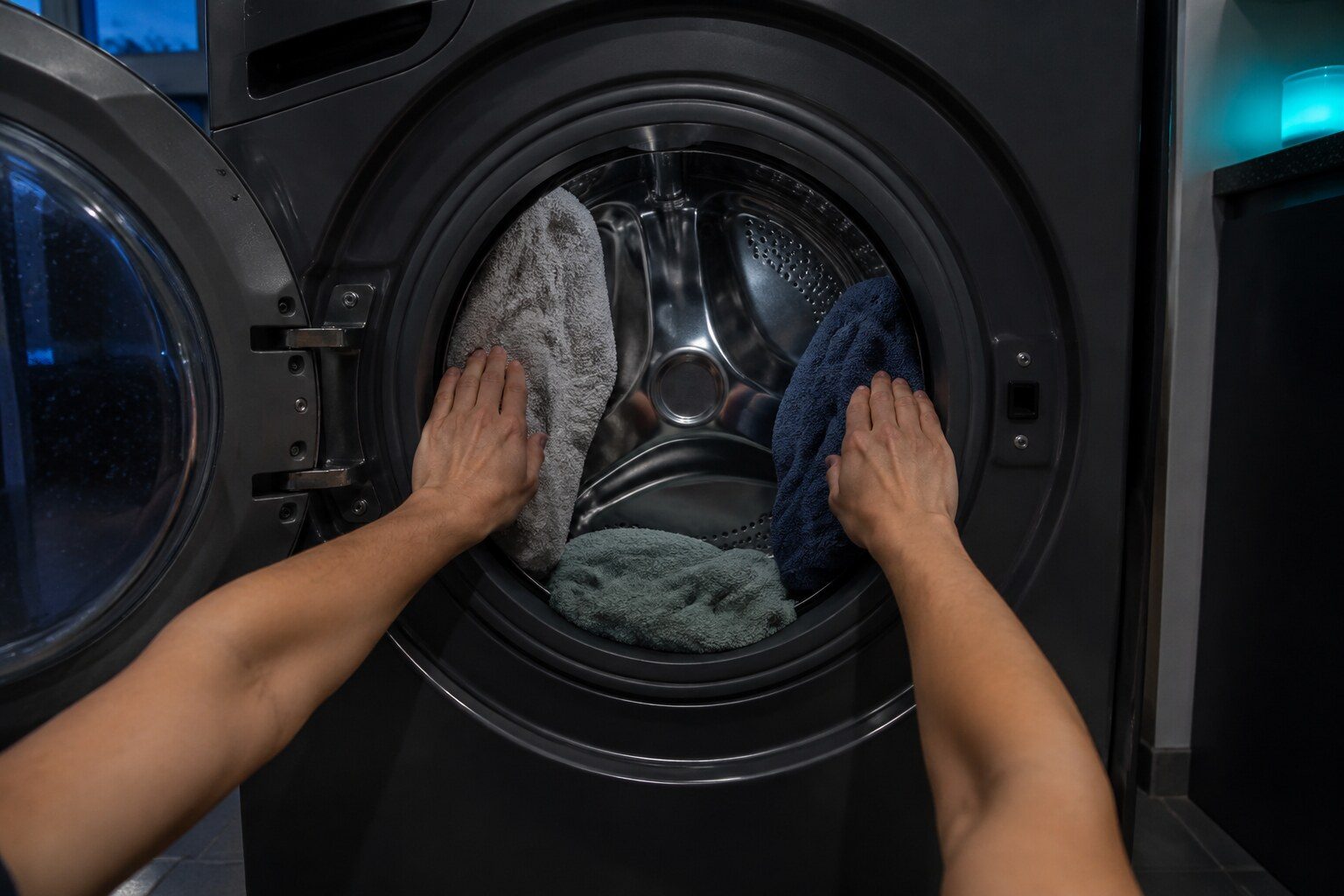
Open the door and look first. If the drum still has water in it, this is a drain problem and the spin is a symptom — a washer will not spin water and is not supposed to. If it is wet but empty, spread the load evenly around the drum by hand, close the door and press start: a machine that then spins normally was never broken, it was unbalanced, and LG shows that as UE after it has already tried three times to fix it itself. If it will not spin even three towels spread evenly, the problem is mechanical rather than a load, and the shortlist is the suspension, the vibration sensor that authorizes a high spin, the motor LG codes as LE, or on a top loader the clutch it codes as E6. Before any of those, push each corner of the machine: a washer that rocks is a washer that cannot balance anything, and leveling is free.
The full guide
How to fix LG washer not spinning: split it first
One sentence covers two unrelated problems, and the split takes seconds.
Open the door. If there is still water in the drum, this is not a spin problem. A washer will not spin a drum full of water — it is not allowed to, and it should not — so the spin failing is the visible half of a drain failure. Go and open the pump filter, and come back when the machine empties properly.
If the drum is wet but empty, the machine drained fine and genuinely did not spin. Now the question is the load or the machine.
The three-towel test
Take everything out. Put three ordinary bath towels in, spread evenly around the drum rather than in a heap. Close the door and run a spin-only cycle.
If that spins normally, nothing is broken. The machine could not balance whatever was in it before — a single heavy item, a load too small to spread, a duvet that wrapped itself into a ball, or a mixed load of jeans and shirts that ended up on one side. That is what UE means, and it is worth knowing that the machine tries three times to correct it by adding water and redistributing before it gives up and tells you anything. By the time you see the code, it has done everything it can.
If three towels spread evenly will not spin either, the problem is mechanical and the list below applies.
Before the list: is it level?
Push each corner of the machine in turn. All four feet should be firmly down with no rock at all. A washer that rocks cannot balance anything, and a machine that has been moved house — or one on a pedestal that has worked loose — is the classic candidate.
This is free, it takes a minute, and it accounts for a real share of the machines we are called out to.
The mechanical shortlist
The vibration sensor. The machine measures how much it is moving to decide how fast it dares spin. Without a reading it trusts, it will not authorize a high spin and holds itself slow, which arrives as laundry that comes out much wetter than it used to. LG codes this family as vS and uS.
The suspension. Dampers soften over years. A machine that has begun to walk, or that bangs at the start of a spin, has usually lost some of its damping — and each spin makes it worse.
The motor. LG bolts the motor directly to the drum, which removes the belt and most of what used to fail on a washing machine. When the drive does stall, the code is LE or LE1, and the maker's own first step is worth doing before anything else: let the machine rest for thirty minutes with the power off, because a motor that has simply got hot needs nothing else.
Something jammed. With the power off, turn the empty drum by hand. It should move smoothly with a little resistance. Grinding, or a hard stop, means something is between the drum and the outer tub — and the answer is nearly always an underwire.
The clutch, on a top loader. The wash completes and the spin does not. LG codes that as E6, and it is a mechanical part rather than a write-off.
Why the machine gives up rather than trying harder
It is worth reading UE as good behavior rather than a breakdown. A drum of wet laundry spinning at over a thousand revolutions a minute stores a serious amount of energy, and an unbalanced one will walk across a room and destroy its own bearings on the way. The machine measures balance before it commits, corrects what it can, and stops when it cannot.
That is the appliance protecting itself and your floor. The problem, when there is one, is usually the load.
If it turns out to be a repair
What this leads to, and what it costs
Every job on this site is priced the same way: an on-site diagnostic first, the figure agreed in writing before anybody starts.
-
Washer will not spin
Two quite different problems arrive as this one sentence: a machine that cannot spin because the load is not balanced, and a machine that cannot spin because something mechanical will not let it. LG separates them in its codes — UE for the first, LE and E6 for the second — and the difference is easy to establish at home.
- UE means the machine tried three times to balance the load before telling you
- A machine that will not spin any load is a different call from one that will not spin some
- Water still in the drum means it is a drain problem wearing a spin problem's clothes
-
Washer error code UE
LG washer error code UE: This is the code people meet most and worry about least correctly. Every spelling LG publishes for it, which machines can raise it, and what to do next.
What this one means -
Washer error code LE
LG washer error code LE: LG's Direct Drive motor is bolted straight to the drum, which removes the belt and most of what used to fail on a washing machine — and changes what this code means when it appears. Every spelling LG publishes for it, which machines can raise it, and what to do next.
What this one means -
Washer spin and balance repair
UE that will not clear on a fair load, a machine that walks, or a spin that never reaches speed. Dampers, suspension, leveling and the vibration sensor between them account for all of it, and the diagnosis decides which — which is why the band is wide.
- A machine that will not spin any load is different from one that will not spin some
- Leveling is free and it is the first thing checked
- vS and uS are the vibration sensor, and a slow spin is often that rather than the drive

Questions people ask about this
It spins slowly but never fast.
That is often the vibration sensor rather than the drive. The machine will not authorize a high spin without a reading it trusts, so it holds itself at a low speed and the laundry comes out wetter than it should. LG codes that family as vS or uS. The first thing to rule out is whether the machine is level, because that is what the sensor is measuring.
It has started walking across the floor.
Stop using it on high spin until somebody looks at it. A machine that moves is either not level, standing on a floor that flexes, or has lost its suspension damping — and every spin makes the last of those worse. A drum of wet laundry at over a thousand revolutions a minute stores a great deal of energy.
Why does it add water when it is trying to spin?
That is the machine trying to rebalance the load, and it is deliberate. Adding a little water lets the clothes move and redistribute. It tries this up to three times before giving up and showing UE, so by the time you see the code it has already done everything it can on its own.
There is a scraping noise when I turn the drum by hand.
Then something is between the drum and the outer tub, and the classic object is an underwire from a bra. It is the single most common foreign object we take out of a washing machine. Stop using it — a wire loose in there will eventually find the outer tub or the pump.
Common Problems
More guides like this one
-
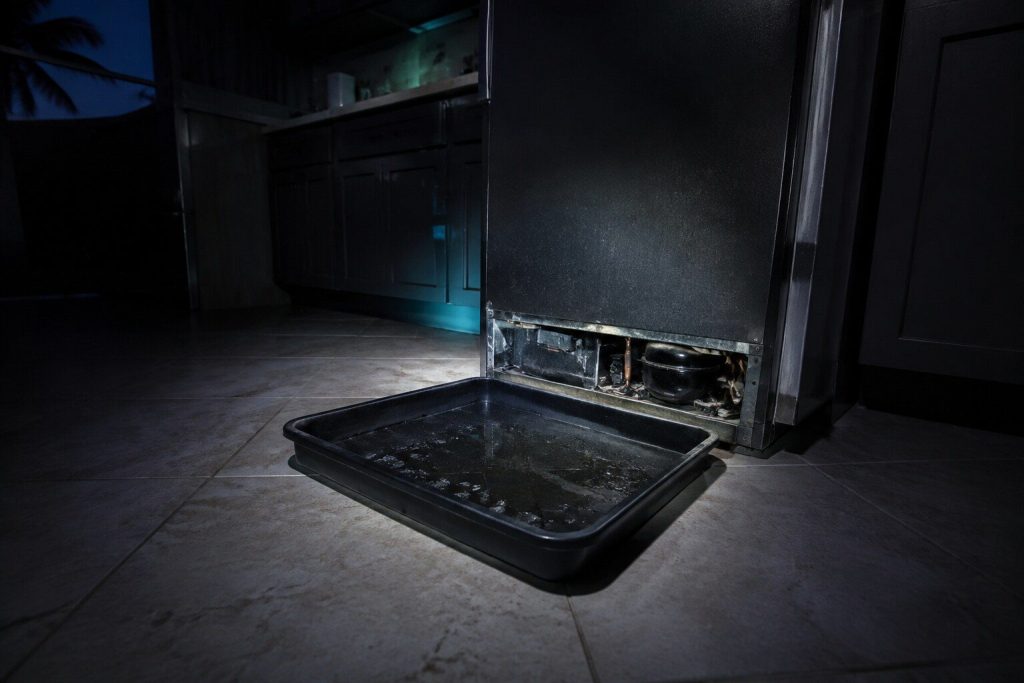
Water Under the Crisper Drawer, and the Tube Behind It
A refrigerator handles two entirely separate kinds of water, and where the puddle is decides which one you have before anybody is called.
Read more -
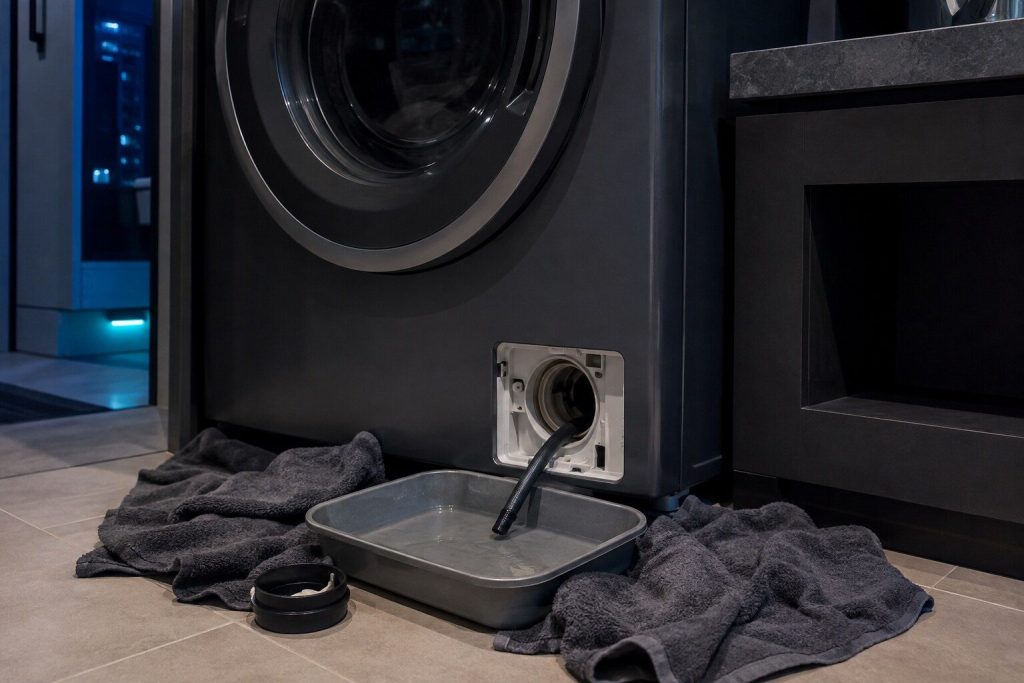
A Washer Stopped Full of Water: The Filter Nobody Opens
There is a filter behind a small door at the bottom of your washer, it is designed to be opened by you, and what comes out of it is usually the whole explanation.
Read more -
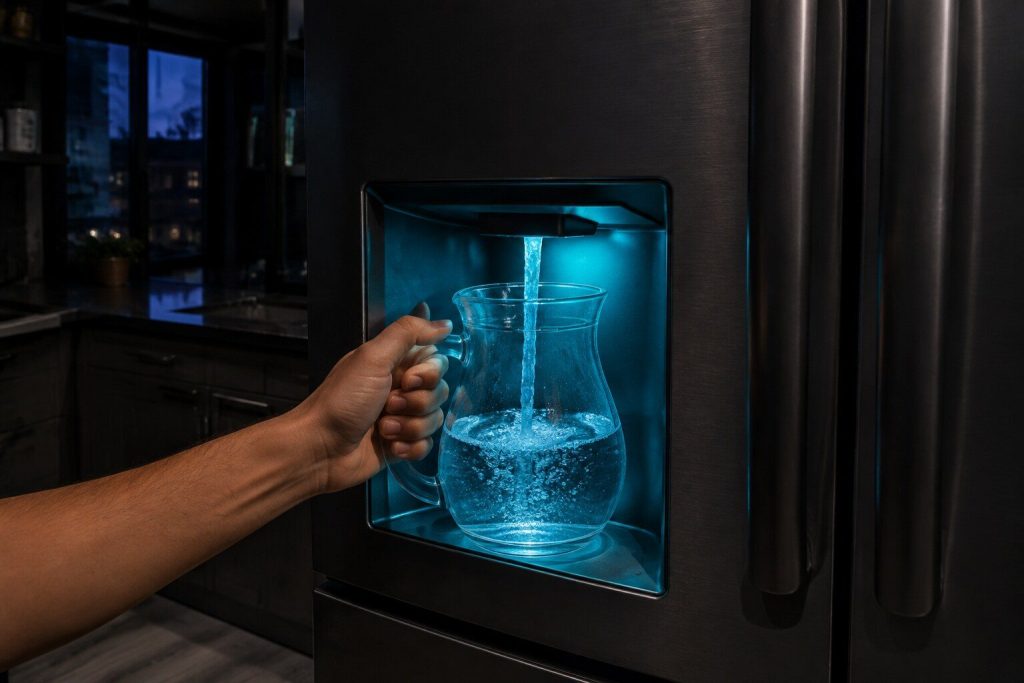
No Ice, But the Water Dispenser Works: What That Narrows It To
One ten-second test splits this problem in half, because ice and water share a supply and part company inside the door.
Read more
Tell us the model number and what it is doing.
This article is based on:
- Official manufacturer documentation
- Internal repair procedures
- Technician repair history
- Company quality standards