Common Problems
No Ice, But the Water Dispenser Works: What That Narrows It To
Run the water dispenser. If water comes out normally, the supply, the shut-off valve, the inlet valve and the filter are all proved working in one observation, and the problem is inside the ice compartment: the fill tube, the harvest mechanism, or the cold reaching it. If water is slow or absent too, everything upstream is suspect and the ice maker is probably innocent. Then check the ice maker is actually switched on, which on LG is either a wire arm that has been lifted or a setting on the panel. LG publishes three codes for the compartment itself — IF for the fan that carries cold to it, IS for the sensor that decides the cubes are frozen, and It for the motor that harvests them — and publishes nothing for the fill tube, which is the part that actually freezes in this climate and stops the water before it reaches the tray.
The full guide
How do I know if my LG ice maker is on, and why there is no ice
Two questions arrive together and they have different answers. Whether the ice maker is switched on is easy: on most LG cabinets it is either a wire arm inside the compartment that has been lifted to the off position, or a setting on the dispenser panel. Lift the arm down, or turn the setting on, and give it a day — an ice maker takes hours to produce anything, so nothing you do here is judged in the driveway.
The second question is the interesting one, and there is a test that answers half of it in ten seconds.
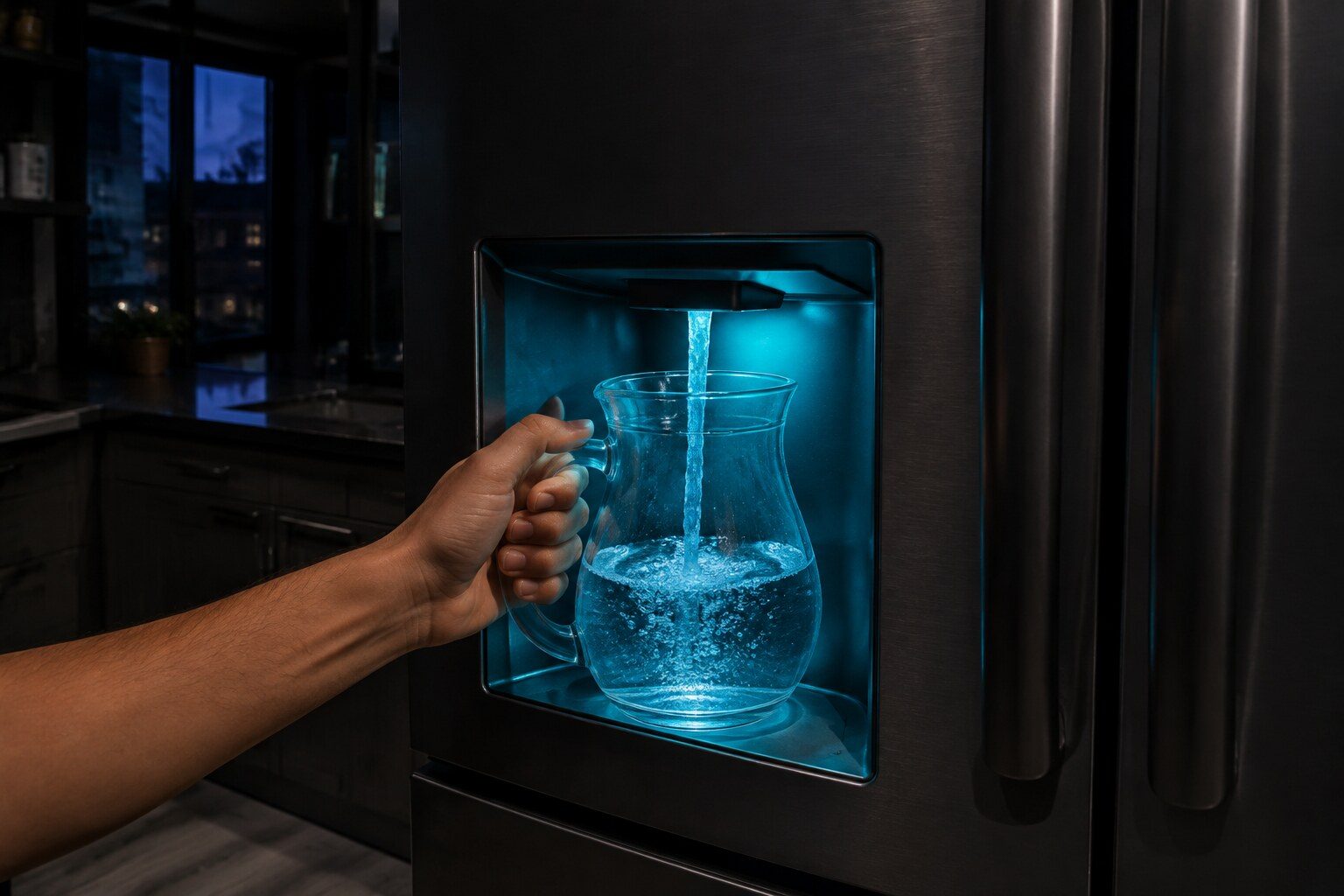
Run the water dispenser
Ice and water arrive through the same line. They come off the mains, through a shut-off valve, through the filter, through the inlet valve on the machine, and only then do they part company: some of it goes to the dispenser in the door and some of it goes up a small tube into the ice tray.
So if water comes out of the dispenser normally, everything before that fork is proved working. The supply is on, the valve is open, the filter is passing, and the inlet solenoid is opening. That is four things ruled out with one glass.
And if water is slow or absent as well, the ice maker is probably innocent and the answer is upstream — a tap somebody closed and never fully reopened, a line crushed when the cabinet was pushed back, a filter cartridge that has never been changed, or air in the line after one that has.
The part that freezes, and has no code
Assume water is fine. Now the question is inside the compartment, and there is one cause here that no code will ever report.
The fill tube is a small tube that delivers water from the valve into the tray. It ends inside a space kept below freezing, it carries water intermittently rather than continuously, and in a humid house it grows a plug of ice at the mouth. Once that plug forms, water stops arriving, the tray never fills, and the machine has nothing to complain about — because as far as the control board is concerned, nothing has failed.
The test costs nothing. Take the ice bucket out, find the tube at the back of the compartment, and hold a warm damp cloth around it for ten minutes. If ice appears the next day, that was the whole problem, and the real question becomes what let the warm moist air in — usually a door held a fraction open by a bottle, or a gasket that has hardened.
The three that are coded
LG does publish codes for the compartment, and they cover air, cold and mechanism:
- IF — the fan that carries cold to the ice maker. On the cabinets with the ice maker in the door, cold has to be delivered there, and this is what delivers it.
- IS — the temperature sensor that decides the cubes are frozen and can be harvested. Lose it and the cycle stalls with a tray of ice sitting there.
- It — the motor that turns the harvest and pushes finished cubes into the bucket.
That third one has a signature worth recognizing: a full tray with an empty bucket. If you take the bucket out and the tray above it is packed with ice that never left, the mechanism is the answer and no amount of waiting will change it.
What is not on this list
There is no undercounter ice machine in LG's US catalog. Its only ice-maker products are the automatic ice maker kits that go inside a refrigerator, so an ice call on this badge is a refrigerator call and is diagnosed with the refrigerator's own tools — including the trick of forcing the last code back onto the display by holding Freezer Temperature and Express Frz together for three seconds.
The order that saves a visit
- Run the water dispenser. Water working narrows it enormously.
- Check the arm or the setting. It costs nothing and it happens more than people admit.
- Take the bucket out and look in with a torch. Full tray and empty bucket, or empty dry tray — two different problems.
- Warm cloth on the fill tube for ten minutes, then wait a day.
- If there is a code, write it down before cutting the power.
Most no-ice calls end somewhere in the first four, and the ones that do not are usually a five-minute part in an awkward place.
If it turns out to be a repair
What this leads to, and what it costs
Every job on this site is priced the same way: an on-site diagnostic first, the figure agreed in writing before anybody starts.
-
Ice maker not making ice
The most common call on this badge after cooling itself, and the one where the useful question is not about the ice maker at all. Does the water dispenser still work? That single answer splits the problem in half before anybody opens anything, because ice and water share a supply and part company inside the door.
- Water working and ice not moves the whole question inside the compartment
- IF, IS and It are published — fan, sensor and motor
- A fill tube frozen at the mouth is common here and free to clear
-
Refrigerator error code It
LG refrigerator error code It: This is the mechanism rather than the cold: the motor that rotates the tray or drives the ejector arm to push finished cubes into the bucket. Every spelling LG publishes for it, which machines can raise it, and what to do next.
What this one means -
Ice fill tube and heater service
The small white tube that delivers water into the tray ends inside a compartment kept below freezing, and in this climate it grows a plug of ice at the mouth that stops the fill without ever showing a code. Clearing it is short. Replacing the heater that is supposed to stop it happening is not.
- The commonest no-ice cause that no code reports
- Clearing it is quick; the heater around it is the real repair
- Often paired with a door that is not sealing
Questions people ask about this
It made ice and stopped right after I changed the filter.
Very common and usually not a repair. A new cartridge puts air into the line, and the machine will not fill a tray it cannot fill cleanly. Run four or five liters through the water dispenser until it stops spitting, check the cartridge is seated all the way to its stop, and give it twenty-four hours before deciding anything.
How much ice should it actually make?
Less than most people expect. A typical in-door ice maker produces on the order of two to three pounds a day, and a household that entertains can empty that faster than it refills with nothing wrong at all. If the bucket is never full but there is always some ice, that may be capacity rather than a failure.
The tray is full of ice and the bucket is empty.
That combination is close to a diagnosis on its own. Water is arriving and freezing, and the mechanism that pushes the finished cubes into the bucket is not turning — LG codes that as It. Because the tray stays full, the machine will not fill again either, so everything stops with a full tray and an empty bucket.
Can I just buy ice and ignore it?
For a while, yes, but there is one version worth acting on. If the compartment is not staying cold — the cause behind the IF and IS codes — then whatever is warming it is also warming the food next to it, and the ice is the early warning rather than the problem.
Common Problems
More guides like this one
-
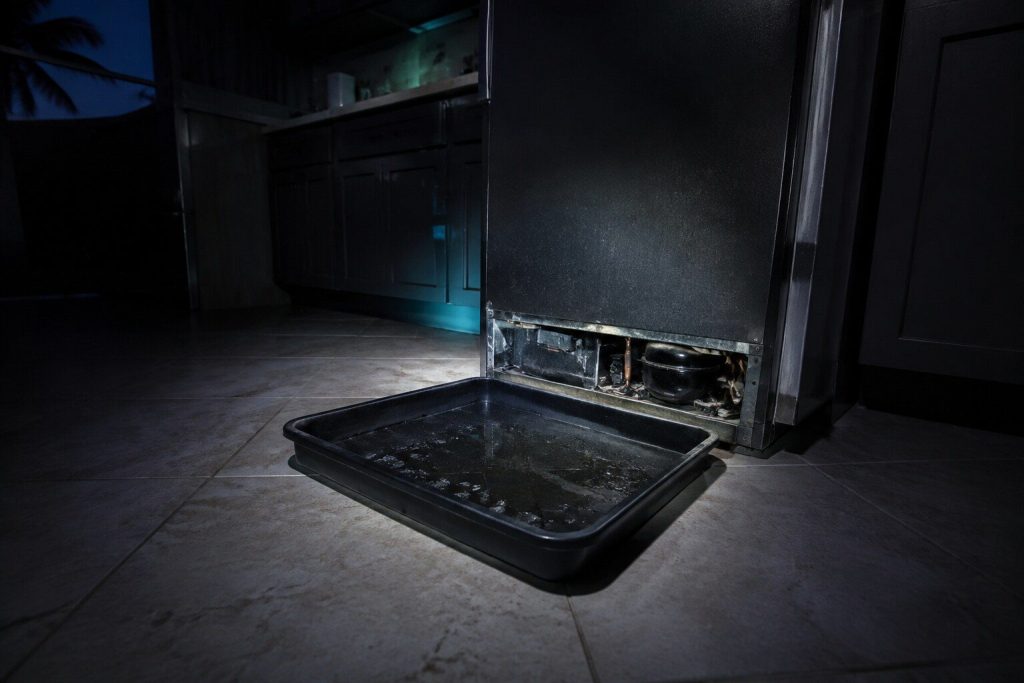
Water Under the Crisper Drawer, and the Tube Behind It
A refrigerator handles two entirely separate kinds of water, and where the puddle is decides which one you have before anybody is called.
Read more -
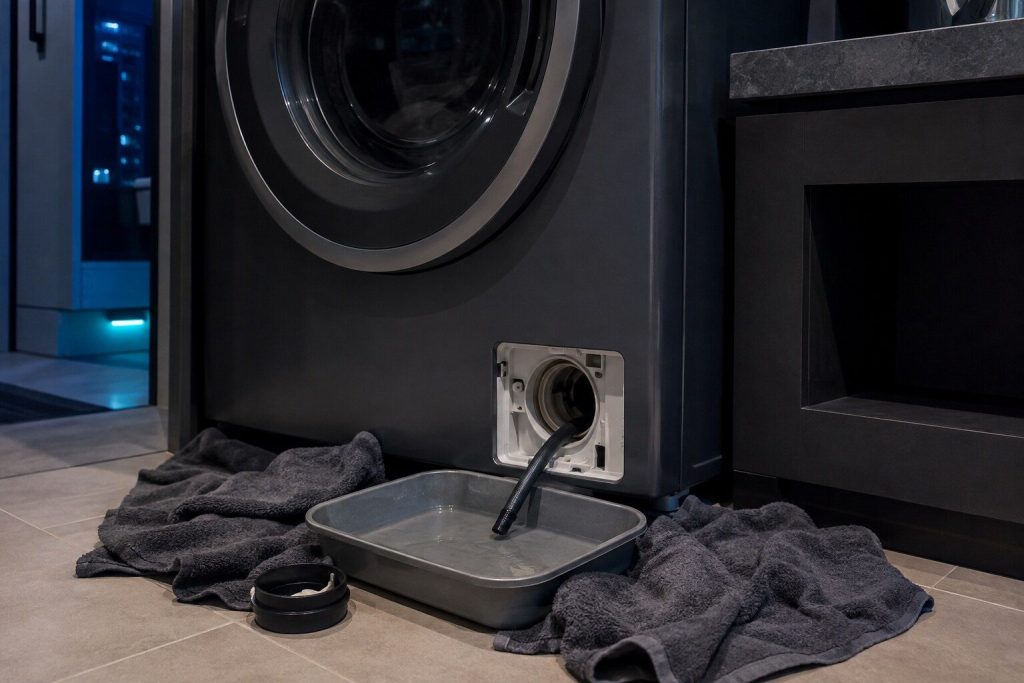
A Washer Stopped Full of Water: The Filter Nobody Opens
There is a filter behind a small door at the bottom of your washer, it is designed to be opened by you, and what comes out of it is usually the whole explanation.
Read more -
One Burner Dead and the Rest Fine: Gas, Radiant and Induction
One zone or all of them is the whole first question. After that the answer depends entirely on which of three technologies is under the glass.
Read more
Tell us the model number and what it is doing.
This article is based on:
- Official manufacturer documentation
- Internal repair procedures
- Technician repair history
- Company quality standards