Common Problems
A Washer Stopped Full of Water: The Filter Nobody Opens
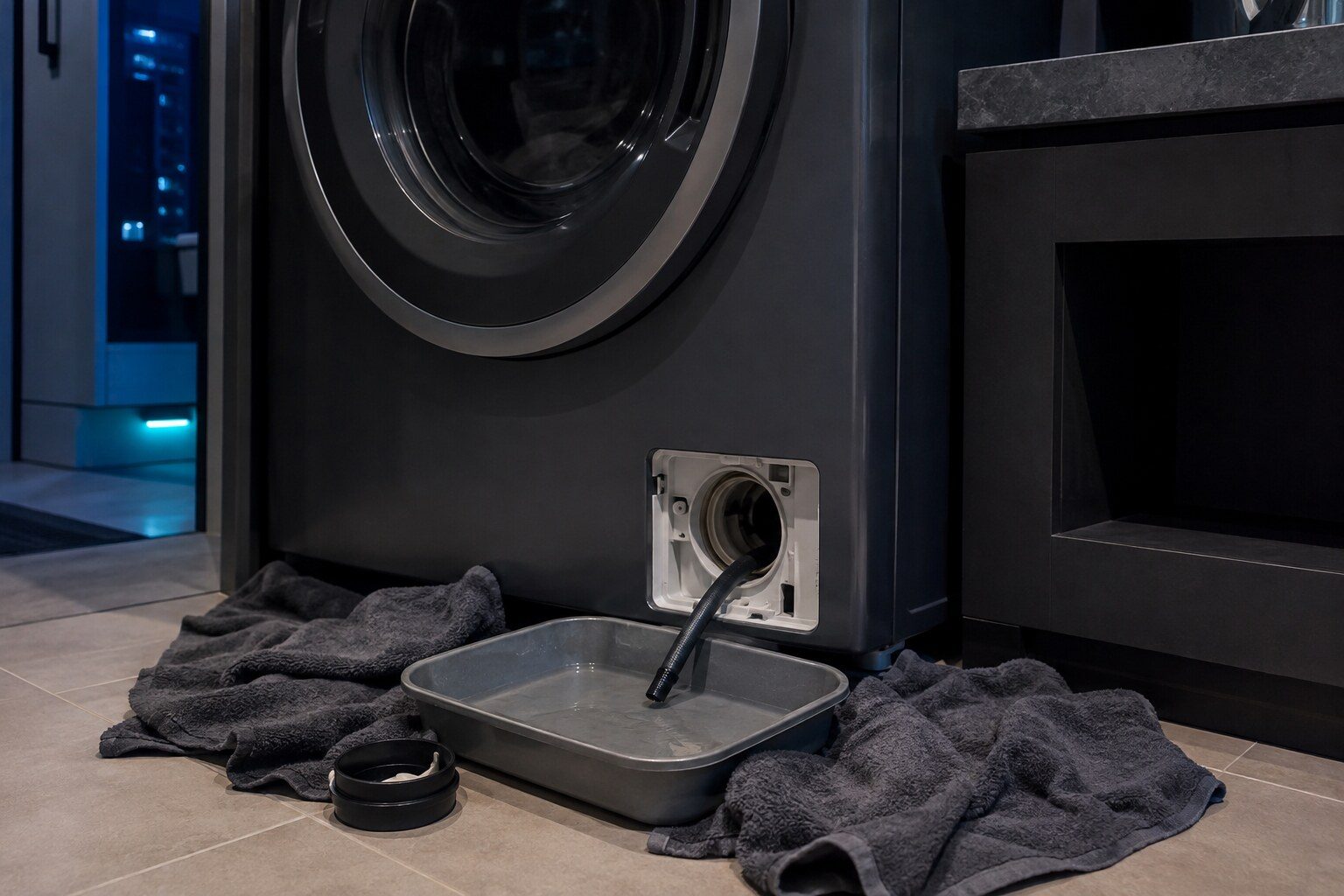
Two ways, and the order matters. If the machine will still run, select a spin-only cycle and let the pump empty the drum — on LG that is usually the Spin Speed key pressed until a spin-only option is selected, then Start. If it will not, or the pump is blocked, drain it by hand through the pump filter at the bottom front of the machine. Put a shallow tray and towels down first, because everything in the drum is behind that filter and unscrewing it on a full machine puts several liters on the floor in about four seconds. Many LG models fit a short drain tube beside the filter for exactly this: pull it out, take its cap off, and let the water run into the tray a liter at a time, capping it between trips. Only when nothing more comes out is the filter itself unscrewed, rinsed and refitted finger tight.
The full guide
How do I get my LG washer to drain only
If the machine will still take a command, this is easy. Select a spin-only cycle — on most LG washers, press the Spin Speed key until a spin-only option is showing, then press Start. The pump runs, the drum empties, and you get your laundry back.
If it will not, or if it hums and nothing moves, the water has to come out by hand. That is what the rest of this page is about, and the part worth reading first is how not to put it all on your floor.
The filter almost nobody has opened
Every front-loading washer has a drain pump filter behind a small hatch at the bottom of the front panel, usually on the right. It levers open with a coin. Its entire purpose is to catch the things that would otherwise destroy the pump — coins, hair grips, tissue, the corner of a receipt, the occasional key — and it is meant to be opened by the owner, regularly.
In practice, most machines we open have never had it out. What comes out of one is very often the whole explanation for a washer that stopped mid-cycle full of water.
Why the order matters
The filter sits below the level of the drum. Everything in the machine is behind it. Unscrew it on a full drum and you get several liters across the laundry floor in about four seconds, which is memorable rather than useful.
LG fits a short drain tube beside the filter on many models for exactly this reason. Pull it out, take the cap off, and let it run into a shallow baking tray a liter at a time — cap it, empty the tray, repeat. It turns a flood into a slow trickle into a bowl, and it takes about five minutes.
Only when nothing more comes out is the filter itself unscrewed. Rinse it under the tap with a brush, feel carefully in the housing behind it — carefully, because a shard of glass gets in there as easily as a coin — and check the impeller turns freely with a finger.
Refit it finger tight, not forced. A cross-threaded filter is a new leak on top of an old one, and it is the commonest avoidable call we take after somebody has cleaned one themselves.
Then the two things behind the machine
With the filter clean, run a spin-only cycle and listen.
A pump that hums and moves nothing is still blocked, or blocked further along. Check the drain hose behind the machine for a kink or a crush where it was pushed back into place, and check it is not pushed more than a few inches down the standpipe — a hose too far in can siphon and re-fill the drum as fast as the pump empties it.
A pump that is silent where there should be a hum has failed, or is not being told to run. That is a visit rather than an afternoon, and it is genuinely less common than either of the two causes above it.
What the code says
LG publishes this as OE, and on the newer panels also as E03 and E21. They are one condition with three spellings, which is worth knowing if you searched for one of them and found nothing — every page on this site that carries a code carries all the spellings the maker uses for it.
The maker's own troubleshooting order is the one above, and it is the right one because it goes from free to expensive: hose, filter, pump.
One thing that is not this
If the machine drains perfectly and then will not spin, that is a different page. A drum full of water will never spin — the machine will not risk it — so a spin problem with water still in the drum is a drain problem wearing a spin problem's clothes. Get the water out first, then see whether the spin behaves.
If it turns out to be a repair
What this leads to, and what it costs
Every job on this site is priced the same way: an on-site diagnostic first, the figure agreed in writing before anybody starts.
-
Washer will not drain
A front loader stopped full of water is the laundry equivalent of the dishwasher call, and it has the same shape: a filter almost nobody knows about, a hose that gets crushed, and a pump that is usually innocent. LG's own troubleshooting order is the right one and it is worth following before booking anything.
- There is a pump filter behind a small door at the bottom front
- OE, E03 and E21 are the same condition under three names
- Put a tray down first — there is more water behind that filter than people expect
-
Washer error code OE
LG washer error code OE: The most common laundry call on any make, and LG's own troubleshooting order is the right one because it goes from free to expensive. Every spelling LG publishes for it, which machines can raise it, and what to do next.
What this one means -
Washer drain pump replacement
OE, E03 or E21 on the display and a drum full of water. Most of these are the filter rather than the pump, and the filter is behind a small door the owner is meant to open — so the diagnosis happens before anything is quoted.
- The filter is checked first, and it is free
- A pump that hums is blocked; a pump that is silent has failed
- A stocked part on this make

Questions people ask about this
The door will not open and the drum is full.
Power the machine off at the wall for five minutes. That discharges the board and releases most door interlocks. If it still refuses, it is refusing because it believes there is water inside — which there is — so drain it through the filter tube first and try again.
It drained fine when I ran it again. Is that fixed?
Probably shifted rather than fixed. A partial blockage clears itself and comes back, usually within a few weeks and usually at a worse moment. Opening the filter while it is convenient is a much better afternoon than opening it when the drum is full of a wash you needed.
How often should the filter be cleaned?
Two or three times a year in an ordinary household, and more if there are children or pets. It is not a service item. It is designed to be opened by the owner, which is why it has a hatch on the front of the machine and a hand-tightened thread.
What if the standpipe is the problem?
Worth ruling out and it takes a jug. Pour water down the standpipe the drain hose goes into. If it backs up, the plumbing is the problem and no amount of work on the appliance will help. That is a real outcome and it is cheaper to discover before a service call than during one.
Common Problems
More guides like this one
-
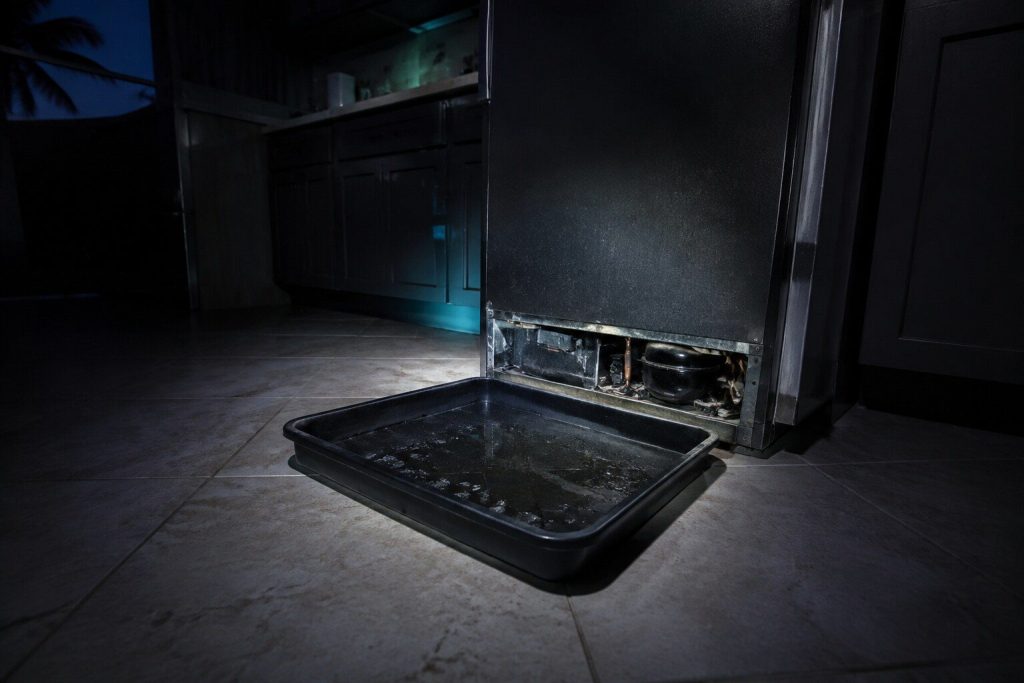
Water Under the Crisper Drawer, and the Tube Behind It
A refrigerator handles two entirely separate kinds of water, and where the puddle is decides which one you have before anybody is called.
Read more -
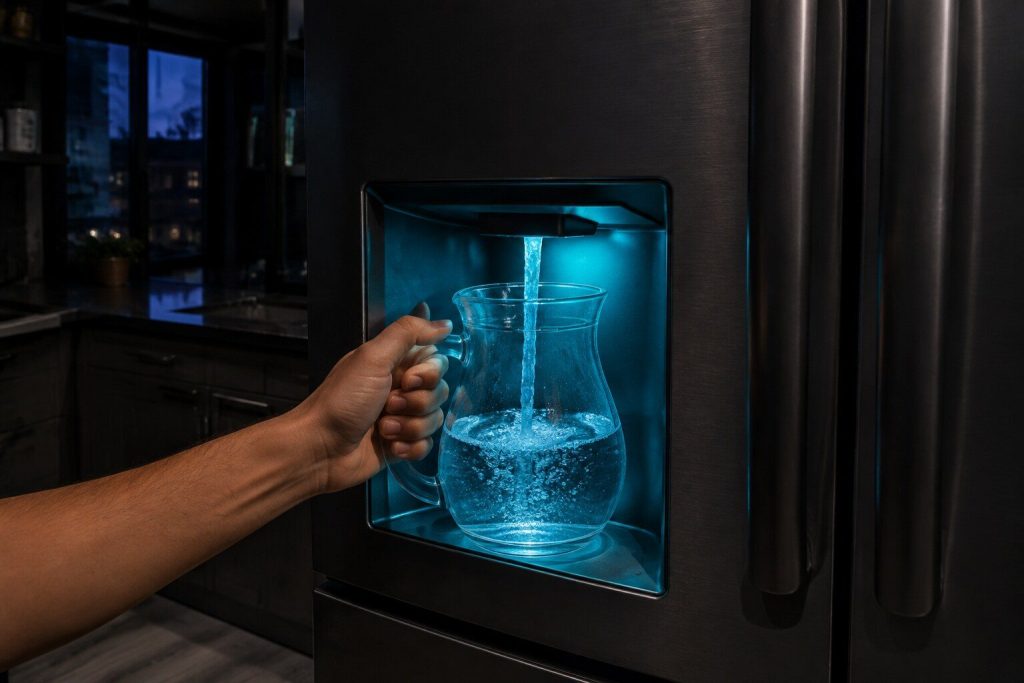
No Ice, But the Water Dispenser Works: What That Narrows It To
One ten-second test splits this problem in half, because ice and water share a supply and part company inside the door.
Read more -
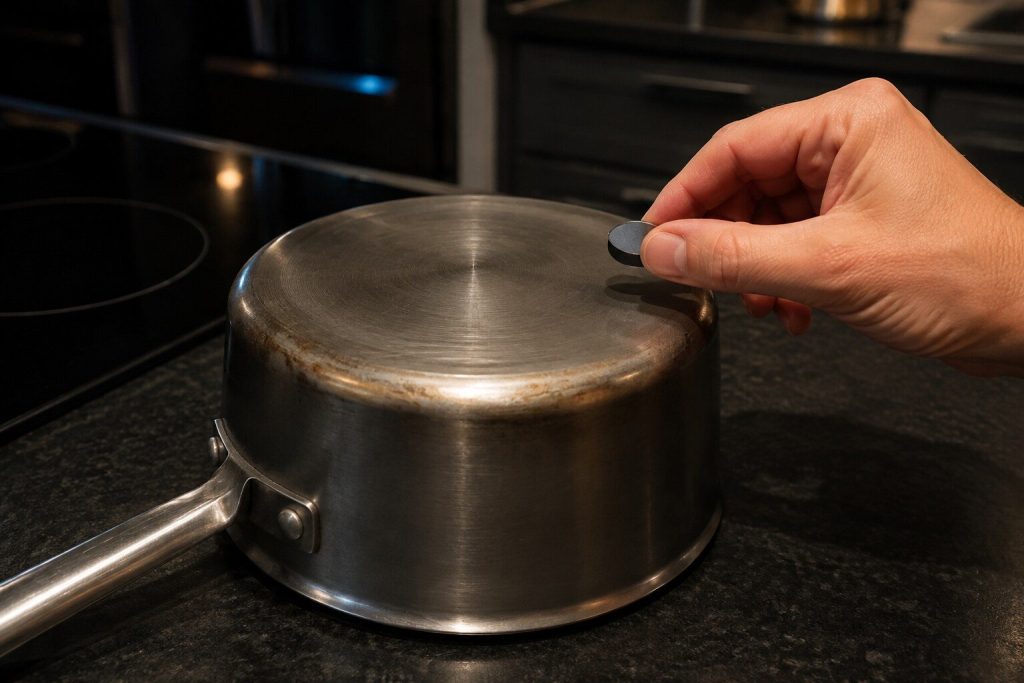
One Burner Dead and the Rest Fine: Gas, Radiant and Induction
One zone or all of them is the whole first question. After that the answer depends entirely on which of three technologies is under the glass.
Read more
Tell us the model number and what it is doing.
This article is based on:
- Official manufacturer documentation
- Internal repair procedures
- Technician repair history
- Company quality standards