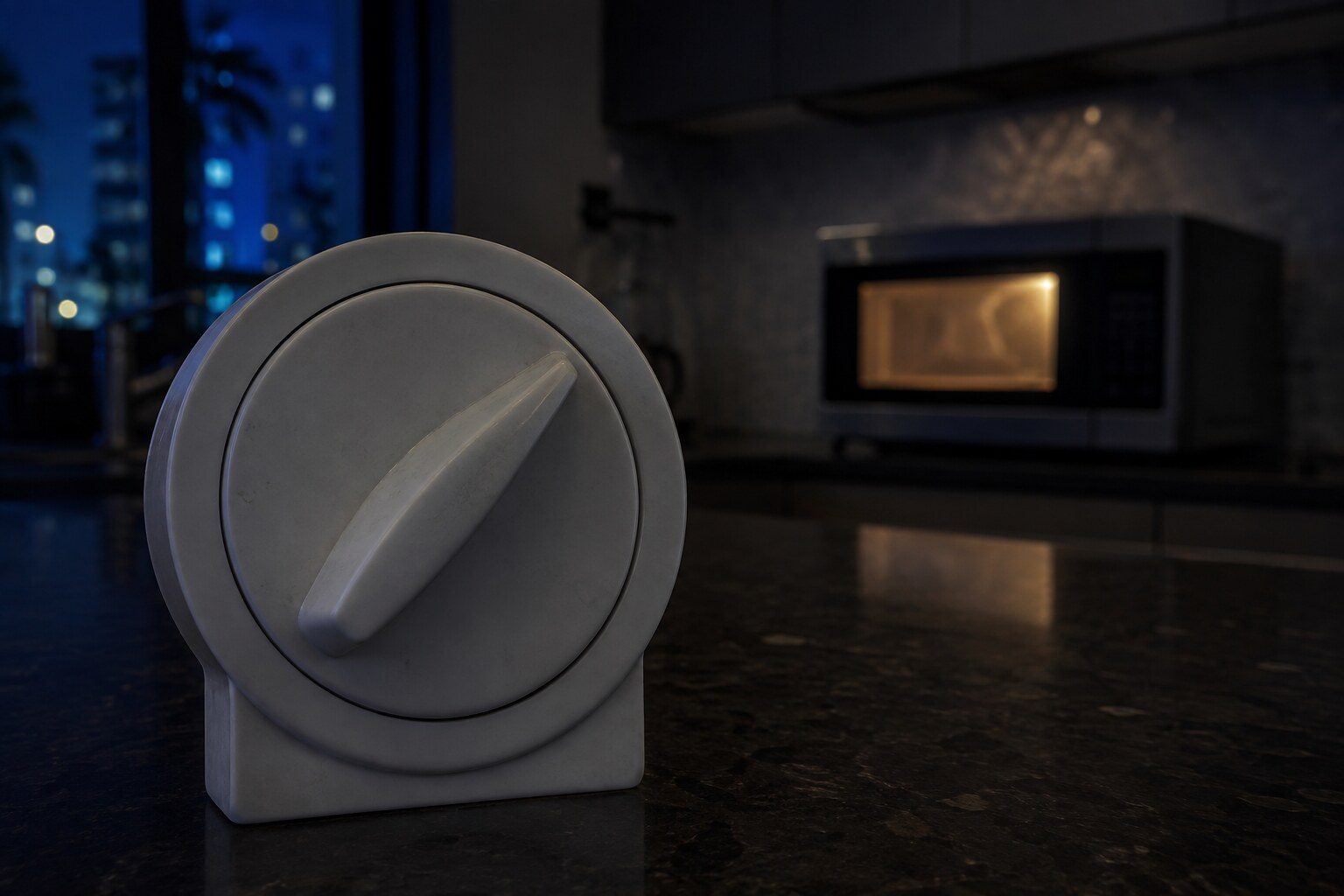
Common Problems
A Microwave That Runs and Does Not Heat, and the Honest Arithmetic
The one-cup test settles the diagnosis. Put a plain glass of cold water in the middle of the cavity, run the machine at full power for one minute, and feel it. Water that is noticeably warm means the machine is producing power and the complaint is about time or quantity. Water exactly as cold as it went in confirms the magnetron circuit — the magnetron itself, the high-voltage diode, the capacitor or the transformer — and nothing else in the machine has to be wrong for that to happen, which is why everything visible keeps working. As for cost, the honest answer depends on where the machine lives rather than on which part failed. On a countertop machine the parts and the labor together often approach the price of a new one and we will say so. On a built-in or an over-the-range unit, repairing is nearly always right, because most of what you paid for is the cabinet, the trim and the ventilation rather than the microwave.
The full guide
LG microwave problems: the one-minute test that settles it
Put a plain glass or mug of cold water — about a cup — in the middle of the cavity. Run the machine on full power for one minute. Then feel the water.
Noticeably warm means the machine is producing microwave power. Whatever the complaint is, it is about time, quantity or expectation rather than a failure.
Exactly as cold as it went in confirms it. That is a specific diagnosis, not a vague one, and it points at one circuit.
Use a plain glass without markings, and do not use an empty cavity — running a microwave with nothing in it is hard on the magnetron and proves nothing.
Why everything else still works
A microwave is two nearly independent machines in one box.
The first is the part you can see: turntable, light, cooling fan, timer, control panel. All of it runs on ordinary household mains.
The second is a high-voltage circuit that produces several thousand volts through a transformer, a capacitor and a diode, and feeds a magnetron — the component that actually makes the microwaves.
So a machine where everything visible works perfectly and nothing gets hot is not a mystery. It is the second half, and only the second half. The turntable turning is evidence rather than a contradiction.
What actually failed
Four parts produce this symptom and they cost very different amounts:
- The magnetron — the expensive answer, and the one people assume.
- The high-voltage diode — much cheaper, fails often, identical symptom.
- The capacitor — likewise.
- The transformer — less common, and it usually announces itself with a smell.
That spread is exactly why a phone quote here is guessing. The symptom does not name the part.
The arithmetic, said plainly
This is the part of the page that matters more than the diagnosis.
A countertop machine. The parts and the labor together often approach the price of a new machine of similar output. We will tell you that rather than sell you a repair that does not make sense. There is no version of this trade where talking somebody into a bad decision is good business.
An over-the-range machine. Nearly always worth repairing. You are not just buying a microwave — you are buying the cabinet fit, the trim, the ventilation and the fact that it works with the cooktop underneath it. Replacing one means matching a size and a finish and re-doing the install.
The microwave half of a combination wall oven. Definitely worth repairing. It is half of a built-in appliance and it cannot be swapped for a countertop machine at any price.
The one thing that is never a wait-and-see
If the machine starts by itself when you close the door, unplug it now.
That is a failed door interlock: the switch that proves the door is shut has stuck closed, and the safety chain that prevents microwaves being produced into a room has lost part of itself. It is a small, inexpensive part and it is a safety part, and a microwave that can run on its own does not stay on the counter while you think about it.
And the thing not to do
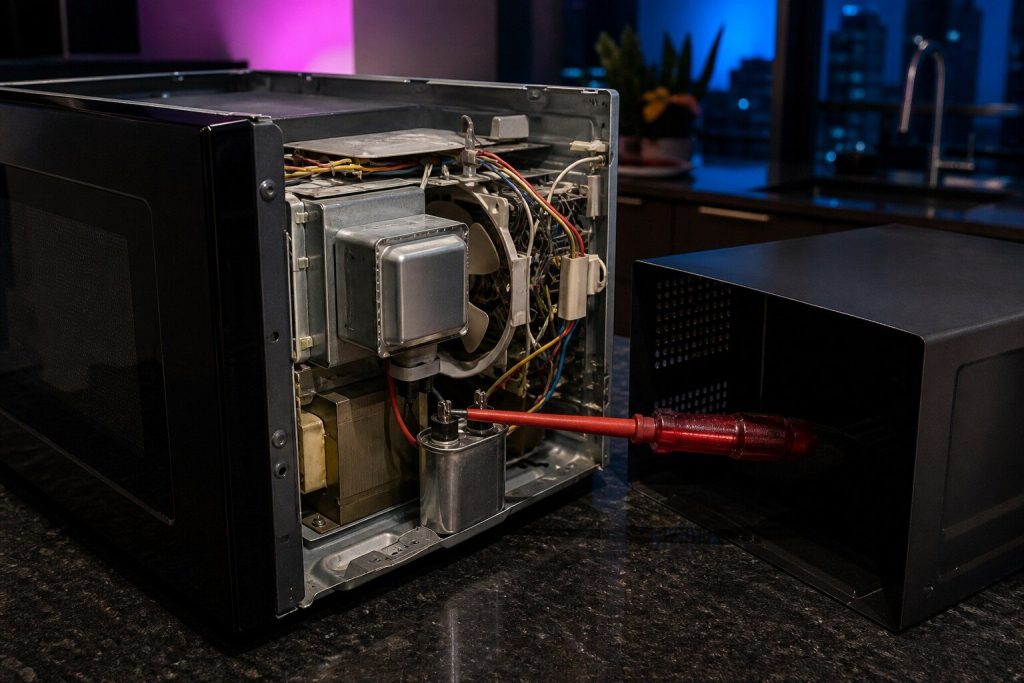
Do not open the case, and this is the one appliance where we say that without qualification. The capacitor inside stores a charge that can be lethal, and it holds it long after the machine has been unplugged — weeks, in some cases. Every internal job on a microwave starts by discharging it deliberately, with the right tool, and that is not a step to improvise.
If it turns out to be a repair
What this leads to, and what it costs
Every job on this site is priced the same way: an on-site diagnostic first, the figure agreed in writing before anybody starts.
-
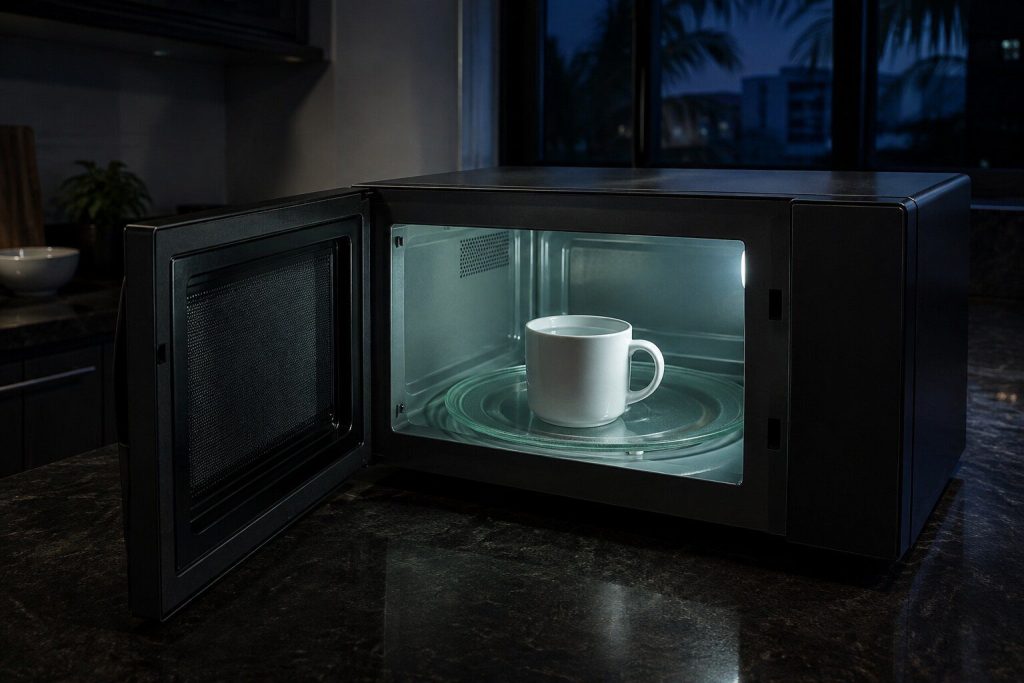
It runs, the light is on, and nothing gets hot Microwave not heating
One of the most specific symptoms in this trade. Everything else about the machine works — the turntable turns, the fan runs, the light comes on and the timer counts down — and the food stays cold. That combination points at one circuit, and it is worth an honest conversation about what repairing it costs.
- The magnetron circuit: magnetron, diode, capacitor or transformer
- Nothing else in the machine has to be wrong for this to happen
- On a built-in or over-the-range unit repair is usually right; on a countertop it may not be
-
from $185 Microwave repair
Built-in and over-the-range machines, where the value is in the installation as much as the appliance. The magnetron circuit, the door interlocks and the control cover nearly everything that goes wrong. On a countertop machine we will tell you plainly when the arithmetic does not favor repairing it.
- A machine that runs and does not heat is the magnetron circuit, specifically
- A door interlock that has failed is a safety repair and comes out of service today
- The capacitor holds a lethal charge — this is the one appliance not to open

Questions people ask about this
Is it dangerous to keep using it?
A machine that runs and does not heat is producing nothing, so there is nothing leaking. The dangerous case is the reverse: a door that does not seal, or an interlock that has failed so the machine can start on its own. That one comes out of service the same day. What is genuinely dangerous in every case is opening the case — the capacitor stores a charge that can be lethal weeks after it was unplugged.
It heats, but slowly.
That is usually not the magnetron, which tends to work or not work rather than fade. Slow heating is more often low supply voltage, a shared circuit under load, or simply a machine of lower wattage than the one it replaced. Worth measuring before anything is replaced.
How much does an appliance repair cost in general?
It divides more by access than by appliance. A part that is reachable from the front of a freestanding machine is one kind of job; the same part behind joinery, or above a cooktop at head height, is another. Every figure on this site is a from, and the exact number is confirmed on site after the diagnostic and agreed in writing before anything is opened.
Can the turntable motor cause this?
No, and that is a useful thing to know. The turntable, the light, the fan and the timer all run on ordinary mains and have nothing to do with the high-voltage circuit that actually cooks. Their working perfectly is the diagnosis rather than a contradiction of it.
Common Problems
More guides like this one
-
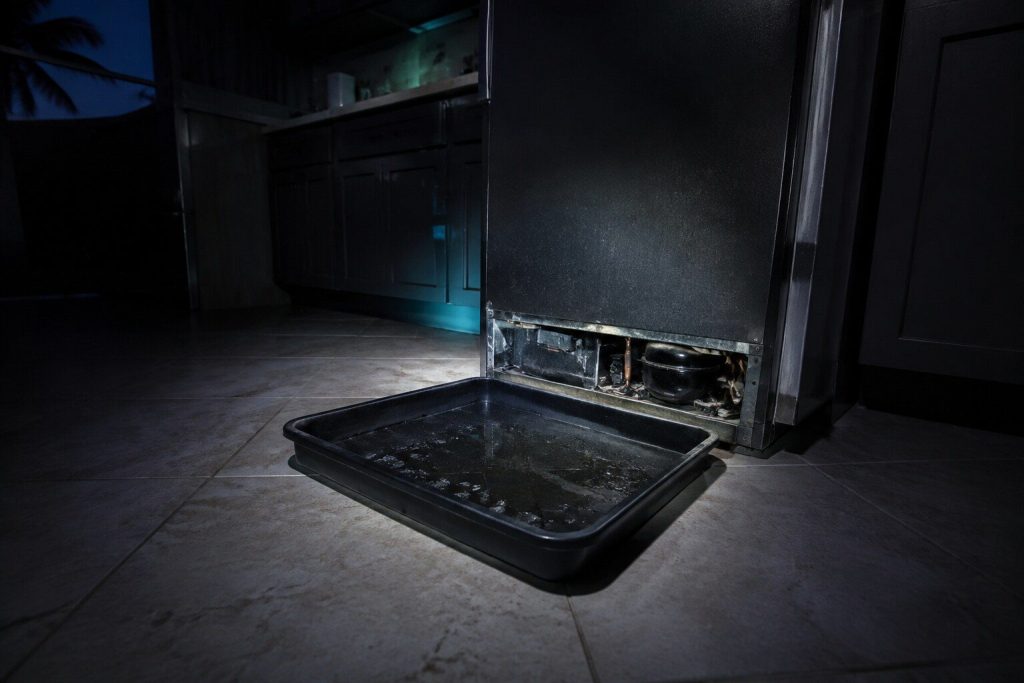
Water Under the Crisper Drawer, and the Tube Behind It
A refrigerator handles two entirely separate kinds of water, and where the puddle is decides which one you have before anybody is called.
Read more -
A Washer Stopped Full of Water: The Filter Nobody Opens
There is a filter behind a small door at the bottom of your washer, it is designed to be opened by you, and what comes out of it is usually the whole explanation.
Read more -
No Ice, But the Water Dispenser Works: What That Narrows It To
One ten-second test splits this problem in half, because ice and water share a supply and part company inside the door.
Read more
Tell us the model number and what it is doing.
This article is based on:
- Official manufacturer documentation
- Internal repair procedures
- Technician repair history
- Company quality standards