Safety & Risks
How Long Food Stays Safe in a Refrigerator Without Power
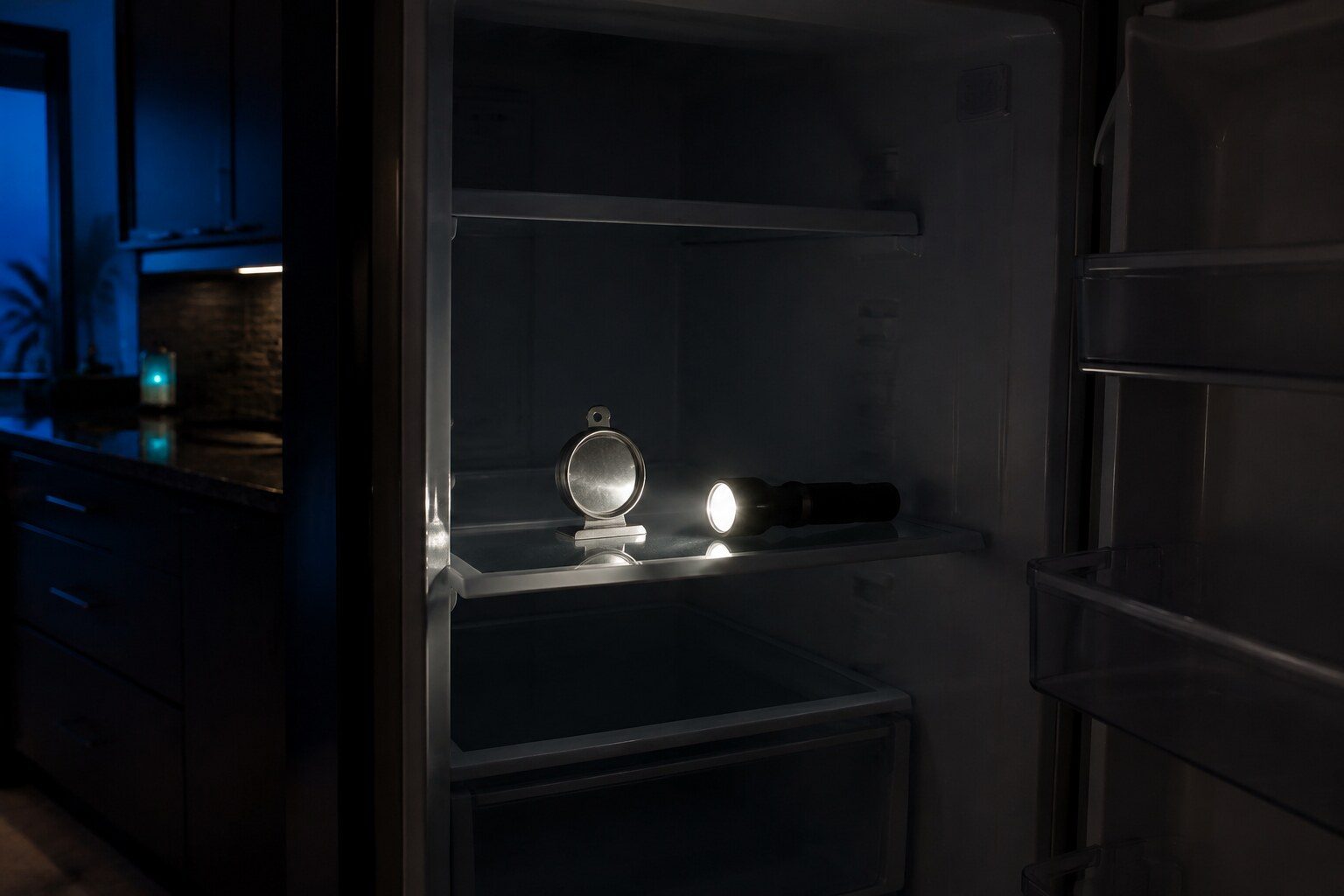
Four hours in an unopened refrigerator. Forty-eight hours in a full freezer, twenty-four in a half-empty one. Those are the published food-safety intervals and they all carry the same condition: the door stays shut. Every opening costs a meaningful share of the remaining time, which is why the single most useful thing anyone can do during an outage is decide what they need before they open the door, or better, not open it at all. When power returns, judge by temperature rather than by appearance or smell: food held above 40°F for more than two hours is not safe, and a freezer item that still has ice crystals and reads 40°F or below can be refrozen. A refrigerator that stayed cold does not necessarily behave normally afterwards — LG machines show PF for a power failure on the laundry side and Er for an internal error on the refrigeration side, and a cabinet that has come back with a code needs looking at rather than resetting.
The full guide
How long does food last in refrigerator power outage: the clock
These are the published food-safety intervals and they are not opinions.
Refrigerator: four hours. Full freezer: forty-eight hours. Half-full freezer: twenty-four hours.
All three carry the same condition, printed in smaller letters and ignored by nearly everyone: the door stays shut.
Why that condition is the whole thing
A closed refrigerator is a very well-insulated box holding a large mass of cold food. It coasts.
An opened one dumps the cold air in seconds and replaces it with the ninety-degree, saturated air of a South Florida house with no air conditioning. The food re-cools that air using the only cold left in the room, which is itself.
Two or three casual openings can take a four-hour window down to something well short of it. So:
Decide before you open. Know exactly what you are taking out.
Better, use a cooler. At the start of an outage, move what you will actually need in the next few hours into a cooler with ice, and then leave the refrigerator alone entirely.
Freezer before refrigerator. If you must open something, the freezer has far more thermal mass and recovers better.
Before the storm, not during it
This city gives notice. Four things are worth doing while the power is still on.
Fill the freezer. Water in containers, jugs, anything. A full freezer holds temperature roughly twice as long as a half-empty one, and afterwards that ice is drinking water or cooler ice.
Put a thermometer in each compartment. A cheap appliance thermometer is the difference between knowing and guessing when the power comes back. This is genuinely the most useful two dollars in the kitchen.
Move what you will want to the front. So one opening gets it.
Do not run the ice maker during the outage. Make ice beforehand. Afterwards it is just another thing the compartment has to do.
When the power comes back
Judge by temperature, not by appearance and never by smell.
Refrigerator: anything held above 40°F for more than two hours is not safe. Meat, poultry, fish, eggs, dairy, cut fruit, cooked leftovers, soft cheese — those go. Hard cheese, butter, whole uncut fruit and vegetables, most condiments and jam are fine.
Freezer: if an item still has ice crystals in it, or reads 40°F or below, it can be refrozen. The texture may not be what it was. It is safe.
When in doubt, throw it out. That is the actual public health guidance and it exists because the alternative test does not work.
The sentence that causes the illness
*It looks fine and it smells fine.*
The organisms that make people ill do not reliably announce themselves. The ones that make food smell bad are usually the harmless spoilage bacteria, so the smell test finds exactly the wrong thing.
Temperature and time. Nothing else.
And the appliance itself
An outage is harder on the machine than most people realize, and the damage tends to happen at the restoration rather than during the dark — surges, brownouts and repeated starts as the grid comes back.
If a code appears at that moment, do not reflexively reset it.
PF on a washer is the machine telling you it lost power mid-cycle. That one is expected and is not a defect.
Er on the refrigeration side is an internal system report and is worth reading rather than clearing — a reset erases the stored history along with the code, and on something that appeared during a grid event that history is the most useful thing in the appliance.
If the cabinet is running but the compartment is not coming back down to temperature within a day, that is a call. A freezer takes hours rather than minutes to recover after an outage, so nothing is judged in the first thirty minutes.
If it turns out to be a repair
What this leads to, and what it costs
Every job on this site is priced the same way: an on-site diagnostic first, the figure agreed in writing before anybody starts.
-
Freezer not freezing
On this make the freezer is a compartment rather than a separate machine, which changes the diagnosis in a useful way: the compartment beside it is a live instrument. A freezer that is failing while the fresh food side holds is telling you something quite different from both of them drifting together, and LG's own codes carry that distinction in their prefix.
- The refrigerator compartment beside it is the most useful measurement you have
- FF, FS and dS are published and each names a different part
- A drawer that will not close on a packet is a real and common cause
-
Refrigerator not cooling
The most common call on this badge, and the first check is free. An LG refrigerator has a showroom mode that lights the whole panel, runs the fans and cools nothing at all, and it gets switched on at home by accident often enough that we ask about it on the phone before anything else.
- Demo mode looks exactly like a broken refrigerator and clears in ten seconds
- Three separate fan codes, and the usual cause of all three is ice rather than a dead motor
- The sealed system is last, and it is measured rather than assumed
-
Refrigerator error code Er
LG refrigerator error code Er: LG groups a long list of codes — Od, Sd, CI, IU, dH, d1, d2, d, H1, H2, F1, F2, US, LS, E1, E2, r, Id, gS and gF — under one instruction, because they all mean the same thing to the person standing in the kitchen: the refrigerator has found something wrong inside itself, in a component, a control circuit or a connection, and it wants a technician rather than an adjustment. Every spelling LG publishes for it, which machines can raise it, and what to do next.
What this one means
Questions people ask about this
Can I refreeze food that thawed?
If it still has ice crystals in it, or an appliance thermometer reads 40°F or below, yes — it can be refrozen safely, though the texture may suffer. If it thawed completely and sat above 40°F for more than two hours, no. This is the one case where the answer is a number and not a judgment call.
It looks fine and it smells fine.
That is the most dangerous sentence in this article. The organisms that cause food-borne illness do not reliably change how food looks, smells or tastes; the ones that do are usually the harmless spoilage bacteria. Temperature and time are the only reliable test, which is why a cheap appliance thermometer in the fridge is worth more than any amount of sniffing.
What should I do before a storm?
Freeze water in containers and fill the empty space in the freezer — a full freezer holds temperature for twice as long as a half-empty one, and the ice is drinking water afterwards. Put an appliance thermometer in both compartments. Move anything you will want during the outage to the front of the refrigerator so a single quick opening gets it. And run the ice maker up beforehand rather than during.
The power came back and the fridge is showing a code.
Do not simply reset it. On the laundry side, PF is the machine telling you it lost power mid-cycle and that is expected. On the refrigeration side an Er code is an internal system report and reads as something to look at. Surges and brownouts around a restoration are harder on electronics than the outage itself, and a code that appeared at that moment is information worth keeping rather than clearing.
Safety & Risks
More guides like this one
-
Can an Appliance Start a Fire? The Four That Actually Can
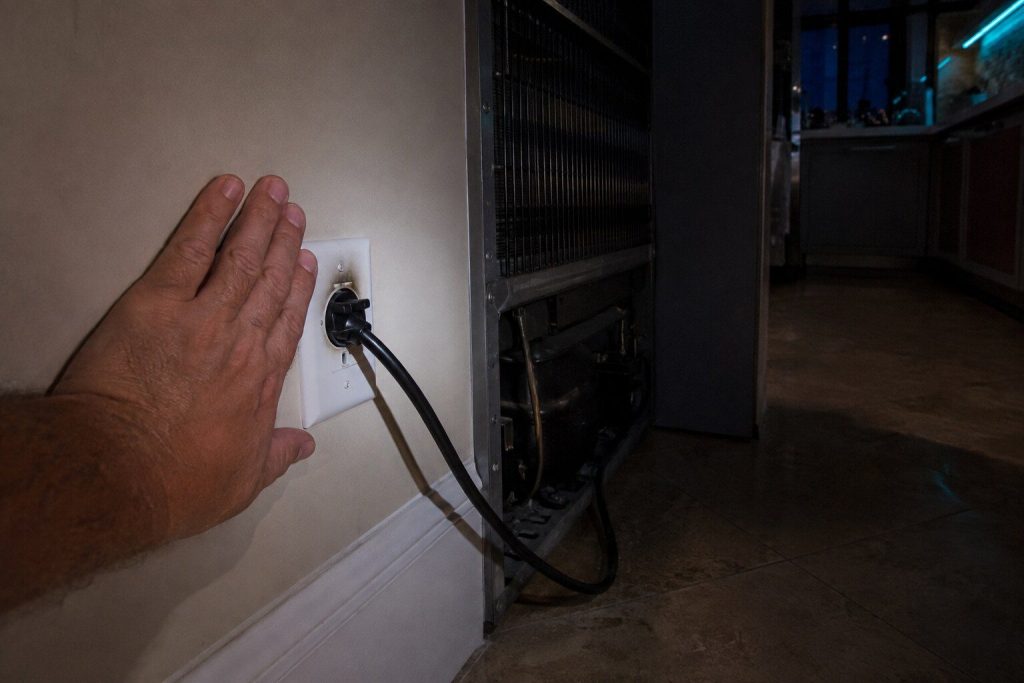
The honest answer separates the appliances people worry about from the ones that deserve it — and the refrigerator is not usually on the second list.
Read more
Tell us the model number and what it is doing.
This article is based on:
- Official manufacturer documentation
- Internal repair procedures
- Technician repair history
- Company quality standards