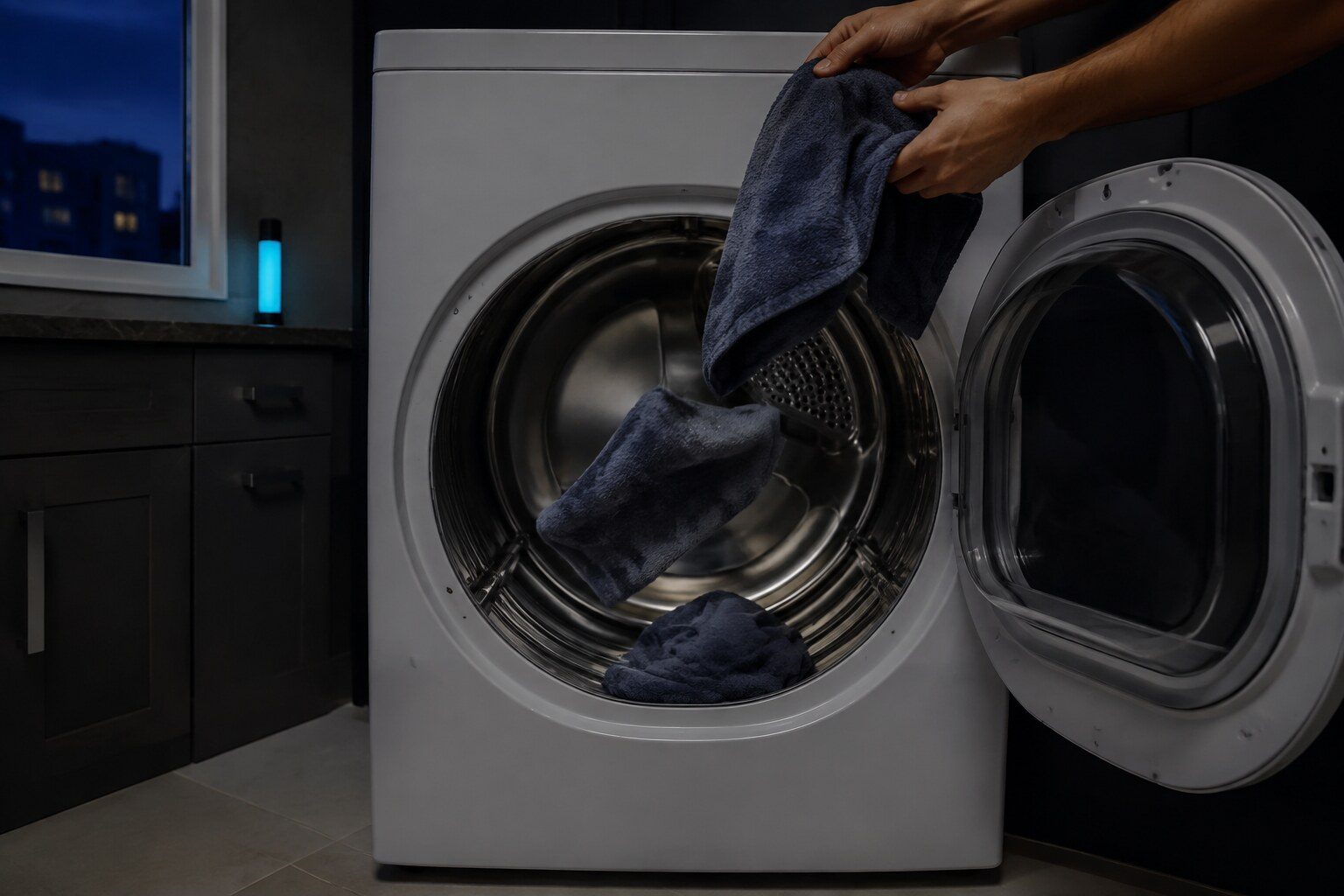
Troubleshooting
Why the Dryer Says an Hour and Then Suddenly Says One Minute
On a sensor cycle the time on the display is an estimate rather than a countdown. The machine does not know how long the load will take — it guesses from the program and the starting conditions, then keeps measuring how wet the clothes are through two metal strips inside the drum opening. When the load reaches the dryness the cycle was set for, the estimate collapses to the cool-down time, which can be a minute, and the number appears to jump. That is normal and every sensor dryer does it. It becomes a symptom when it happens within a few minutes of starting on clothes that are still soaking, because that means the sensor believes the load is dry when it is not, and the usual cause is a film of fabric softener insulating the strips. Rubbing alcohol on a cotton pad is often the entire repair. If instead the cycle runs long and hot and the clothes are still damp, that is airflow rather than sensing.
The full guide
How to fix LG dryer not drying: which version do you have?
Two very different complaints share this sentence, and separating them takes one cycle.
The cycle ends early and the clothes are wet. The machine believes it has finished. That is sensing.
The cycle runs long, the machine gets hot, and the clothes are still damp. The machine is trying and failing. That is airflow.
Everything below is about the first. If you have the second, the duct is where to look, and LG measures its own restriction and prints it on the display as d80, d90 or d95 — which is more help than most makes give.
The number was never a countdown
On a sensor-dry cycle, the time on the display is a running estimate.
When you press start, the machine knows three things: which program you chose, roughly how much is in the drum from the load, and how wet it is at that instant. From those it produces a number, because an appliance showing nothing at all would be worse. Then it keeps measuring, and the number gets revised.
When the load reaches the dryness the program was set for, there is nothing left to estimate. What remains is the cool-down — a few minutes of tumbling without heat so nothing comes out hot enough to crease — and the display shows that. Fifty-nine minutes vanish because they were never real.
How the sensing works, and what breaks it
Inside the drum opening there are two thin metal strips, usually on the front bulkhead near the lint screen slot, an inch or two apart. They are not a temperature sensor and not a humidity sensor. They are two electrical contacts.
A wet garment tumbling past touches both at once and completes a circuit, because water conducts and dry fabric does not. The machine counts how often that happens. Early in a cycle it happens constantly; as the load dries the contacts become rarer, and below a threshold the machine decides the load has reached the dryness you asked for.
It is elegant because it is simple — no calibration, no consumables, nothing to drift. Which is why the one thing that defeats it is worth knowing.
The film nobody can see
Liquid fabric softener and dryer sheets both leave residue. On the lint screen it shows as the waxy film that makes a clean-looking screen pass no air. On the sensor strips it does something worse: it insulates them.
A thin coating means wet fabric no longer completes the circuit reliably. The machine stops seeing contact, concludes the load is dry, and collapses the estimate — sometimes within five minutes of starting, on clothes that are soaking.
That is the version that is a real symptom, and the tell is timing. A jump near the end of a cycle with dry clothes is the machine working correctly. A jump near the beginning with wet clothes is the sensor being wrong.
The fix is usually free: rubbing alcohol on a cotton pad, wiped along both strips until they are bright metal again. One minute. If the next load behaves, that was the repair and everything else you were about to do was unnecessary.
The test that settles it
Run a timed cycle rather than an automatic one. Timed cycles do count down, and they always did — they run the drum and the heat for a fixed period regardless of what any sensor thinks.
If a timed cycle dries the load properly and an automatic one does not, that is the sensor and nothing else. If a timed cycle also leaves things damp, the problem is heat or air, and you are on a different page.
What LG calls it
HS is the code when the humidity sensing fails outright. Far more common is the version with no code at all — a sensor that has not failed, merely drifted behind a film — which is why this behavior gets reported as a mystery rather than looked up.
If it turns out to be a repair
What this leads to, and what it costs
Every job on this site is priced the same way: an on-site diagnostic first, the figure agreed in writing before anybody starts.
-
Dryer moisture sensor service
Two metal strips inside the drum front decide when the load is dry, and fabric softener films them over until the machine reads every load as finished. The result is a cycle that jumps from an hour to a minute, or one that stops with the laundry still damp. Often cleaning rather than a part, and priced accordingly.
- HS is the code when it fails outright; drifting is far more common
- A timed cycle that dries and an auto cycle that does not is this, every time
- Usually cleaning rather than a part
-
Dryer error code HS
LG dryer error code HS: LG dryers finish by moisture rather than by time, and two metal strips inside the drum front do the measuring. Every spelling LG publishes for it, which machines can raise it, and what to do next.
What this one means -
Dryer not drying
This is an air problem far more often than a heat problem, and the two feel identical from the laundry room. A dryer works by carrying moisture out; if the air cannot leave, the machine heats a drum full of humid air and the clothes stay wet no matter how long it runs.
- Air first: the screen, the duct, and the vent outside
- LG measures its own duct restriction and reports it as d80, d90 or d95
- A ventless heat pump machine has no duct — for those it is the condenser and the water

Questions people ask about this
So the display is lying to me?
It is estimating, and the manual says so. A sensor cycle stops when the clothes are dry rather than when a clock runs out, so any time shown before that point is a prediction based on what the machine knows so far. Predictions get revised, and this one gets revised in a single step because the machine has no reason to walk the number down gradually.
Where are the sensor strips?
Two thin metal strips inside the drum opening, usually on the front bulkhead near the lint screen slot, an inch or two apart. Wet fabric tumbling past touches both at once and completes a circuit; the drier the load, the less often that happens. They are not a temperature sensor and not a humidity sensor — just two contacts.
Should I just use a timed cycle instead?
As a workaround it works, and plenty of households end up there. What it costs you is the thing sensor drying is for: stopping when the clothes are dry rather than cooking them for a fixed period, which is harder on fabric and on the electricity bill. Worth cleaning the strips first.
I cleaned them and it still does it.
Then check the wiring behind them — a connector that has vibrated loose gives the same reading — and consider the other cause. A cycle that ends early with wet clothes is sensing; a cycle that runs long and hot with wet clothes is air, and the duct is where that lives. LG will tell you itself if it is bad enough: d80, d90 or d95 on the display.
Troubleshooting
More guides like this one
-
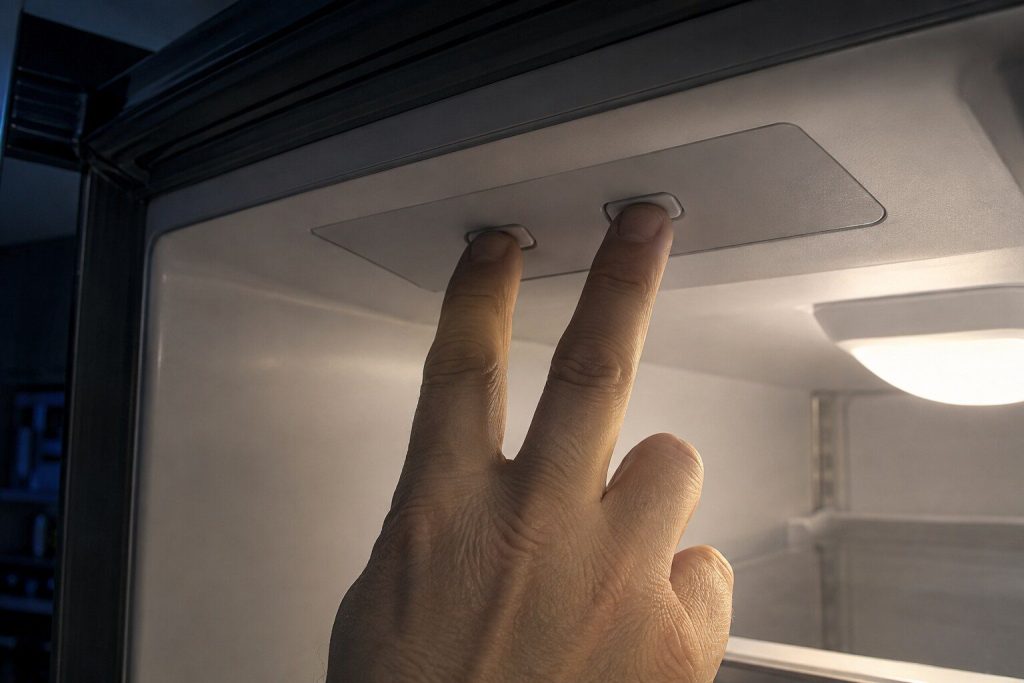
Er, F or r: The Letter in Front of an LG Refrigerator Code
The characters name the part. The letter in front of them names which cooling system is reporting it — and everybody drops it when they write the code down.
Read more -
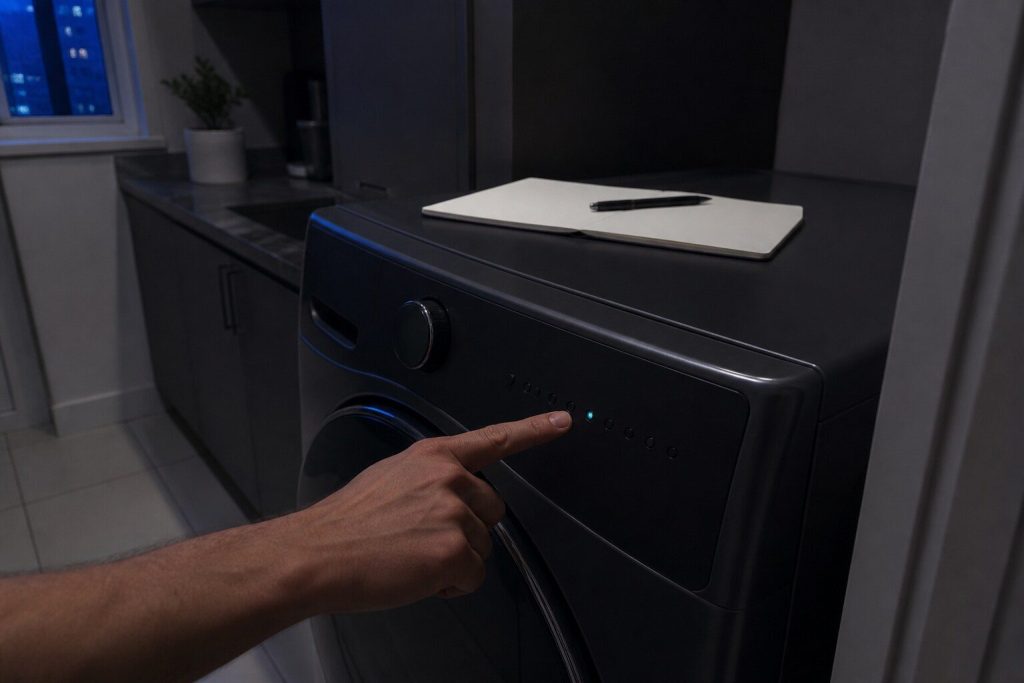
Reading an LG Washer or Dryer by Its Blinking Lights
Some of these machines have no numbers to show you. They report by which lights blink, the maker publishes what the patterns mean, and there is nothing to type into a search box.
Read more -
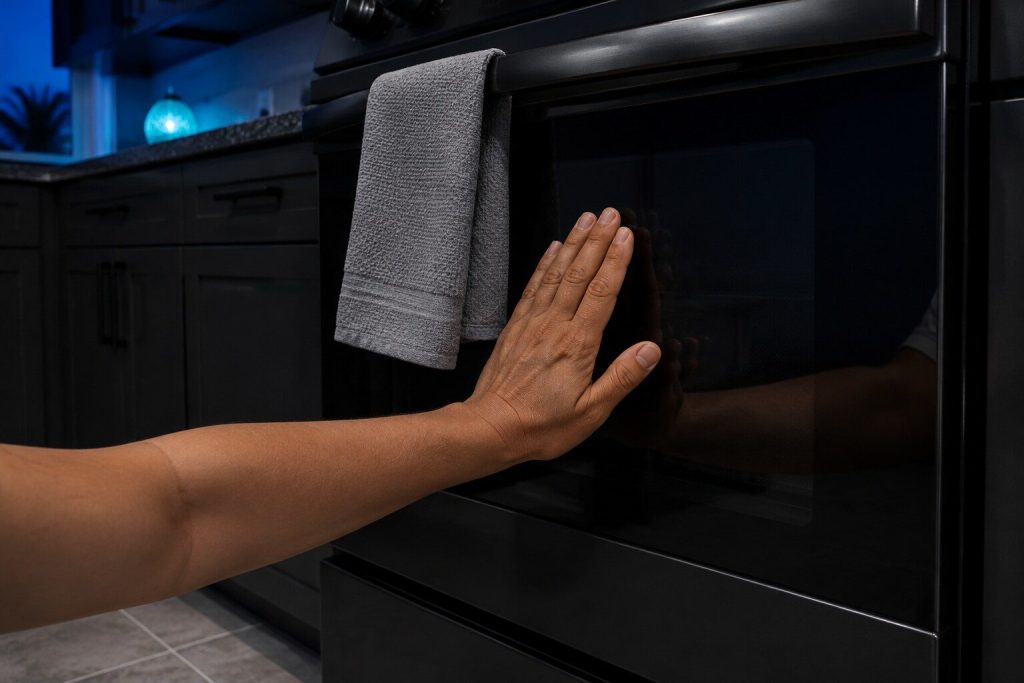
The Oven Door Is Still Locked After Self Clean. What Now?
Time first, because the lock is not allowed to release while the cavity is hot — and on a well-insulated wall oven that is hours rather than minutes.
Read more
Tell us the model number and what it is doing.
This article is based on:
- Official manufacturer documentation
- Internal repair procedures
- Technician repair history
- Company quality standards