Maintenance & Prevention
The Dishwasher Filter, and Why It Explains Both of Your Complaints
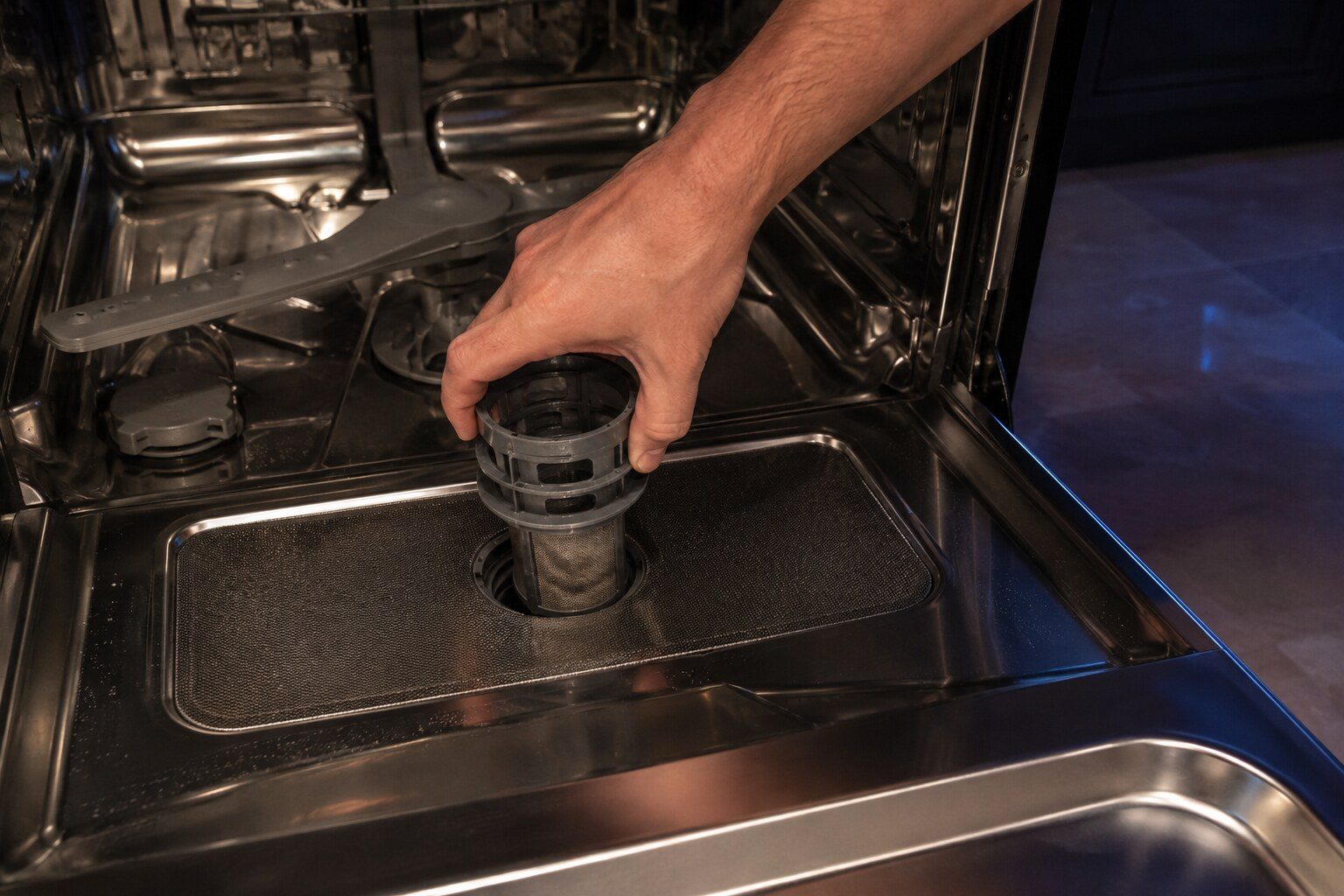
Every modern LG dishwasher has a filter in the floor of the tub, under the lower spray arm, and it is designed to be removed by hand — a cylinder that releases with about a quarter turn counter-clockwise, usually with a flat mesh plate underneath it that lifts out afterwards. It is there because the machine recirculates its wash water, and everything the water carries has to be caught somewhere. When it packs, two things happen at once: the pump can no longer pull clean water, so dishes come out gritty, and the same restriction slows the drain, so a little water sits in the sump between cycles and the machine starts to smell. That is why poor cleaning and poor draining so often turn out to be one problem. The job takes five minutes under a warm tap with an old toothbrush, needs no tools, and twice a year is enough for most households — monthly if plates go in without a rinse.
The full guide
How to clean LG dishwasher filter: two complaints, one cause
People ring about two separate things.
*The dishes come out gritty.* And: *there is always a little water in the bottom and it smells.*
More often than not those are the same problem, and the problem lifts out with your fingers.
Why the filter is there at all
A dishwasher does not fill and drain repeatedly the way a washing machine does. It takes a small amount of water and recirculates it, spraying the same water through the arms over and over for most of the cycle.
That only works if what comes off the plates is caught somewhere, and the filter is the somewhere.
Older machines dealt with it by grinding waste up with a hard food disposer. Today's dishwashers filter instead, which is why they are so much quieter — and the trade is that somebody has to empty the filter. That somebody is you, twice a year.
What happens when it packs
Cleaning gets worse. The pump cannot pull clean water through a blocked mesh, so pressure at the spray arms falls and the water it does move is dirtier than it should be.
Draining gets worse. The same restriction sits in the path to the drain pump, so the sump empties slowly and never completely.
And then it smells, because a small amount of water and a filter full of food have been sitting in a warm dark box since Tuesday.
The five minutes
Pull the lower rack out and look at the floor of the tub under the spray arm.
Twist the cylinder counter-clockwise — about a quarter turn on most models — and lift it straight out.
Lift the flat mesh plate underneath it. On some models the two come as one piece; on most they separate.
Warm water and an old toothbrush. Both sides of the mesh. No dishwasher, no bleach, nothing abrasive on the mesh itself.
Look in the sump while it is open. If there is glass, a fruit sticker or a bone chip down there, take it out now — that is exactly what finds its way into a drain pump.
Put it back the other way round. Mesh plate flat first, then the cylinder through it, then turn until it locks. It must lock. A filter that is only sitting there lets everything past it into the pump.
While the racks are out
Two more minutes and you have done the whole appliance.
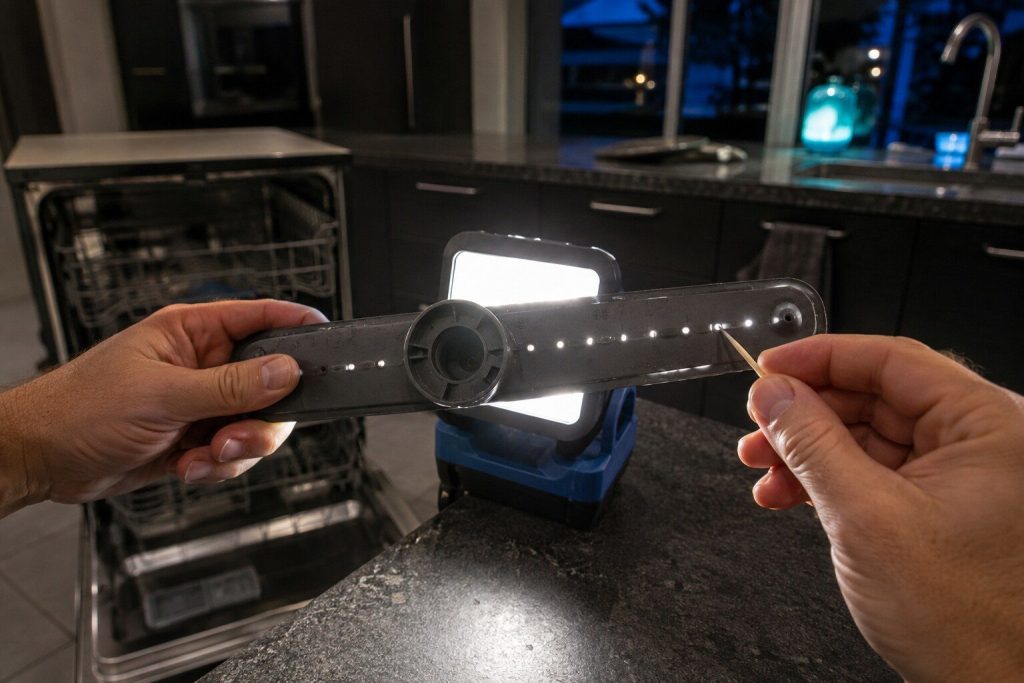
The spray arms unclip on most models. Hold them up to the light and clear any blocked jet with a toothpick — in hard-water areas the outer holes go first and you notice it as a top rack that never quite gets clean.
The door edge and the bottom seal. A cloth along the lip. That is where the smell people blame on the drain very often actually lives.
How often
Twice a year if plates get a quick rinse before they go in. Monthly if they do not — which is fine, modern detergent is designed for it, but the filter is where that food ends up.
If the machine still holds water after all this, that is a different article and a different job: the drain path, the hose loop, the air gap, or a disposer knockout plug that nobody removed when the machine was installed.
If it turns out to be a repair
What this leads to, and what it costs
Every job on this site is priced the same way: an on-site diagnostic first, the figure agreed in writing before anybody starts.
-
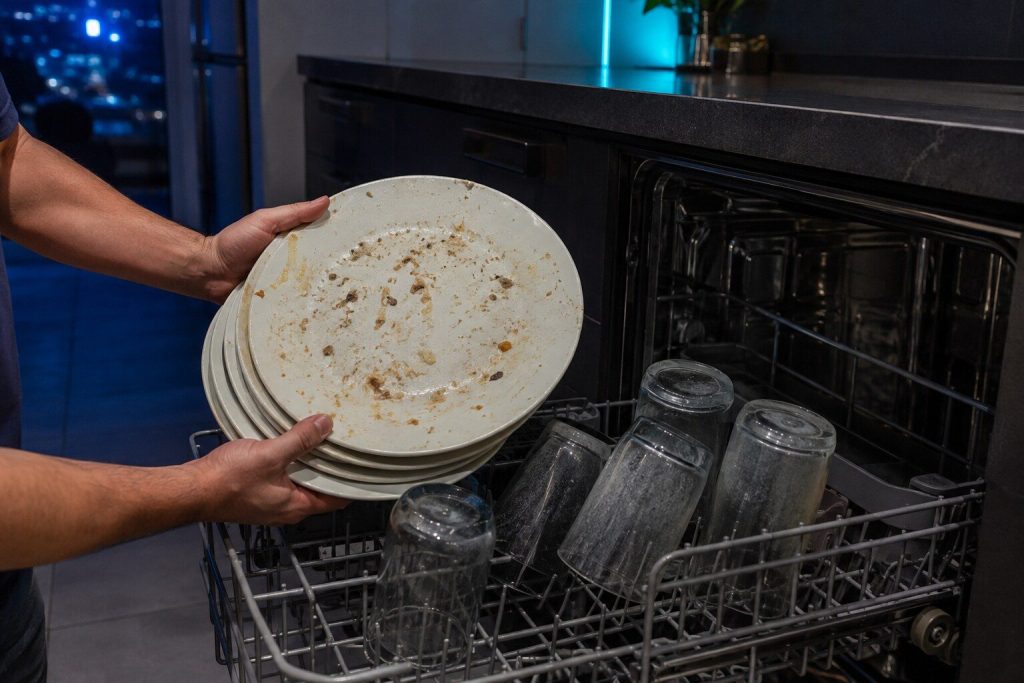
Dried food still on the plates, or a chalky film Dishwasher not cleaning
Two different complaints get reported the same way, and they have different answers. Food left on the plates is water not arriving with enough force in enough places. A white film on clean plates is the water itself, and in this city that is usually hardness rather than a machine problem at all.
- Food left on is spray, filter or heat; a chalky film is water
- Rinse aid does the work most people expect detergent to do
- Loading matters more than any setting on the panel
-
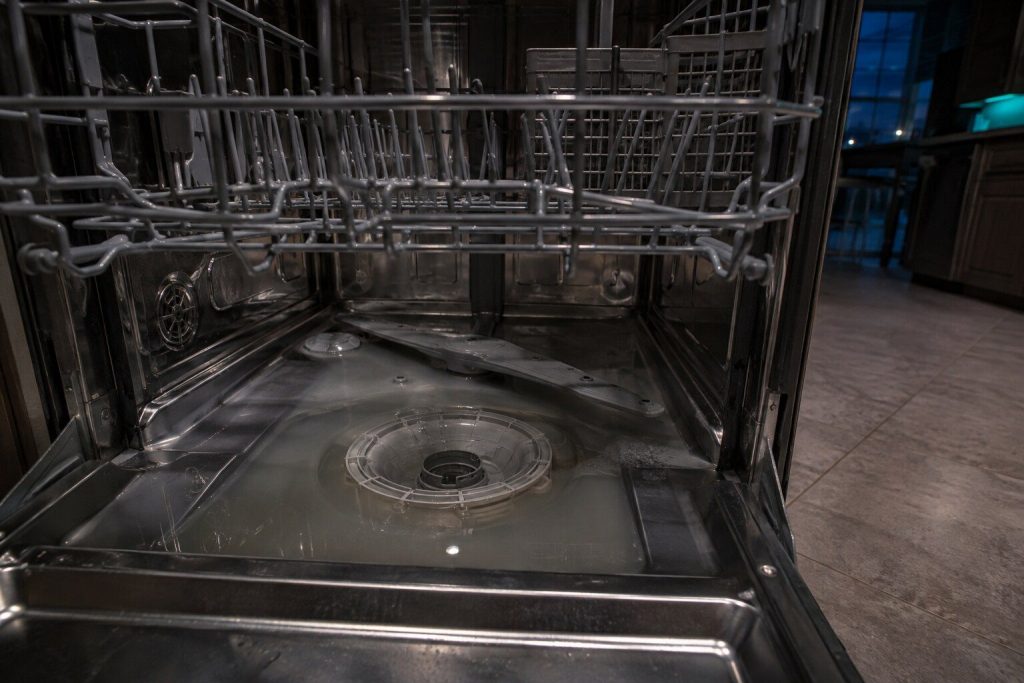
Water standing in the bottom at the end of the cycle Dishwasher not draining
The most common dishwasher call there is, and the cheapest cause is also the most likely. Everything the machine washes off the plates that does not leave through the drain stays in the sump, and the filter there is what catches it. A filter nobody has taken out in two years will stop a perfectly healthy pump.
- The filter in the sump floor is the answer more often than the pump
- OE is the code, and LG's own order goes from free to expensive
- A pump that hums is blocked; a pump that is silent has failed
-
from $125 Dishwasher wash performance service
The visit for a machine that runs perfectly and cleans badly. Most of it is not a part: spray arms, filter, water temperature, rinse aid, loading and the diverter that switches between racks. It is priced on time because that is what it takes.
- Arms, filter, diverter and temperature, measured rather than guessed
- One rack clean and one dirty points at the diverter — nE on this make
- Hard water and no rinse aid explain the chalky film, and no repair fixes that
Questions people ask about this
My dishwasher is new and self-cleaning. Does it still have a filter?
Yes. The machines that ground waste up with a hard food disposer are largely a previous generation; today's dishwashers are quieter because they filter rather than grind, and a filter that is never emptied is the price of that quiet. If yours is more than a few years old and has never been touched, expect what comes out to be startling.
Will cleaning the filter fix my draining problem?
Sometimes on its own, and it is always the first thing to check because it costs nothing. If the machine still holds water afterwards, the next places to look are the drain hose loop, the air gap at the sink if there is one, and the disposer knockout plug on a recently installed unit — a plug nobody removed is a classic and it means the machine has never been able to drain properly at all.
Can I put the filter in the dishwasher?
No, and it is a tempting idea. It needs mechanical scrubbing under running water; a wash cycle will not shift the film that builds on the mesh, and you cannot run the machine with the filter out anyway.
It will not lock back in.
Do not force it and do not run the machine until it does. The mesh plate goes in first and sits flat, then the cylinder drops through it and turns. If the cylinder is fighting you, the plate underneath is probably not seated. A filter that is not locked lets debris straight into the pump, which turns a five-minute job into a real one.
Maintenance & Prevention
More guides like this one
-
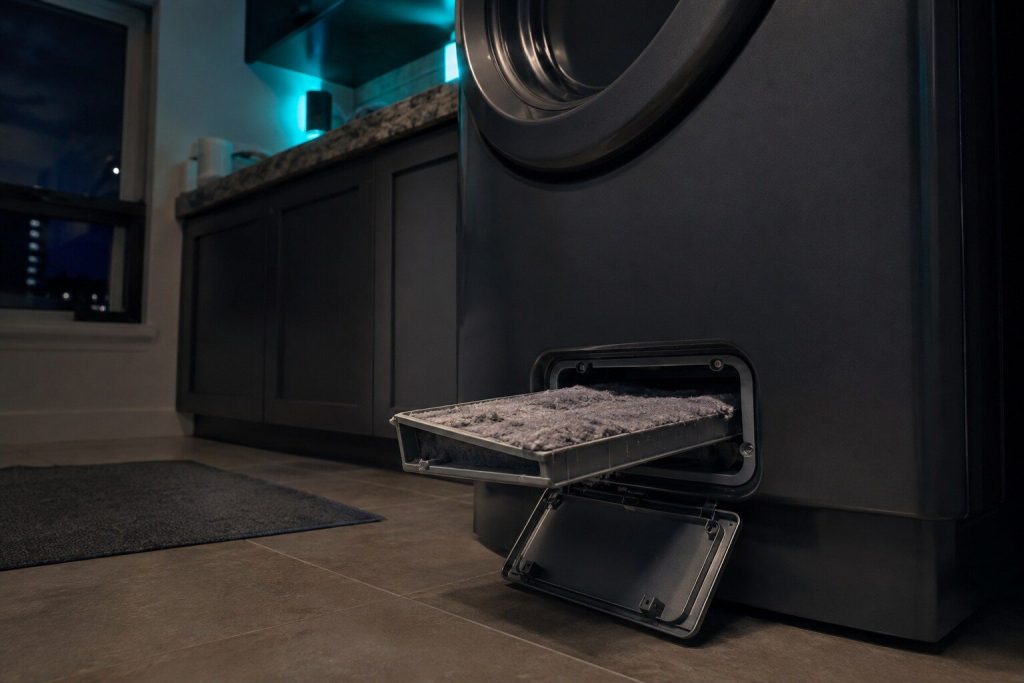
A Dryer With No Vent: The Maintenance Nobody Told You About
A heat pump dryer has no duct, two lint filters instead of one, a condenser block that slides out and a water path that stops the machine when it blocks. None of that is optional.
Read more -
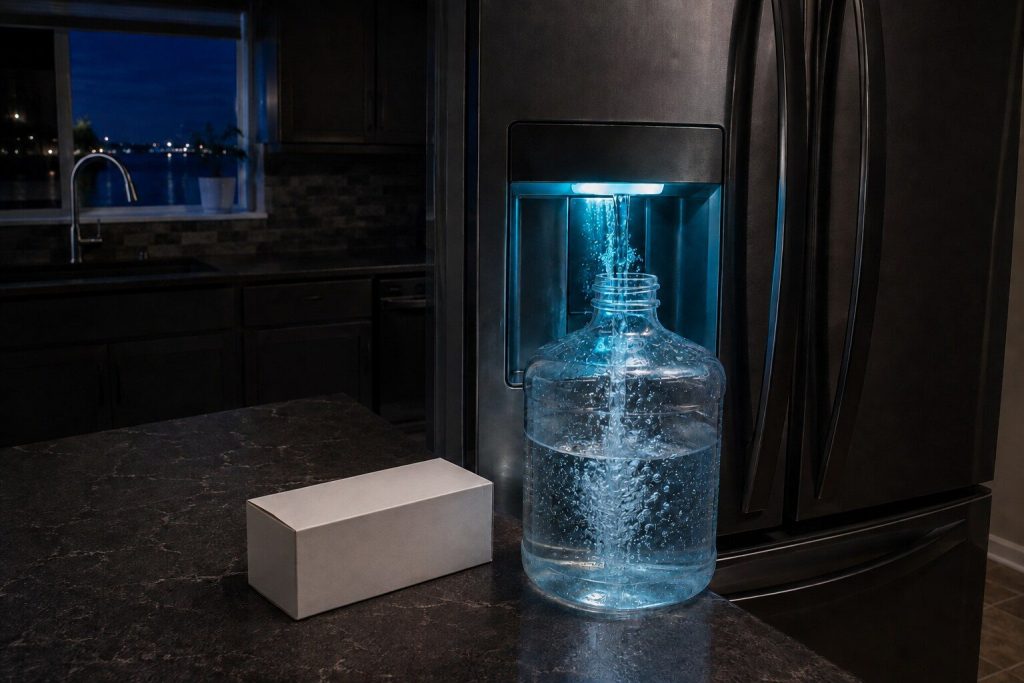
How Long an LG Refrigerator Water Filter Really Lasts in South Florida
Six months is the label, and the label assumes water that is not this. What actually decides it is hardness, sediment and how much the household draws.
Read more -
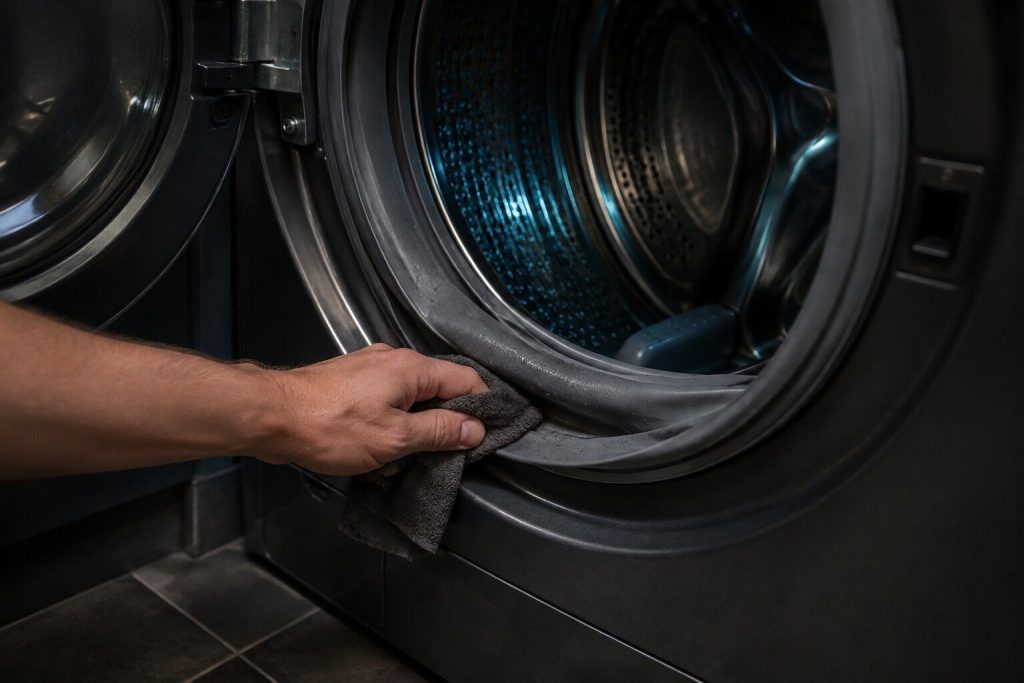
How Often an LG Washer Actually Needs Its Drum Cleaned in Florida
The machine counts loads and asks with tcL. In this climate that request is worth taking seriously rather than dismissing, and the reason is in the gasket fold.
Read more
Tell us the model number and what it is doing.
This article is based on:
- Official manufacturer documentation
- Internal repair procedures
- Technician repair history
- Company quality standards