Safety & Risks
Can an Appliance Start a Fire? The Four That Actually Can
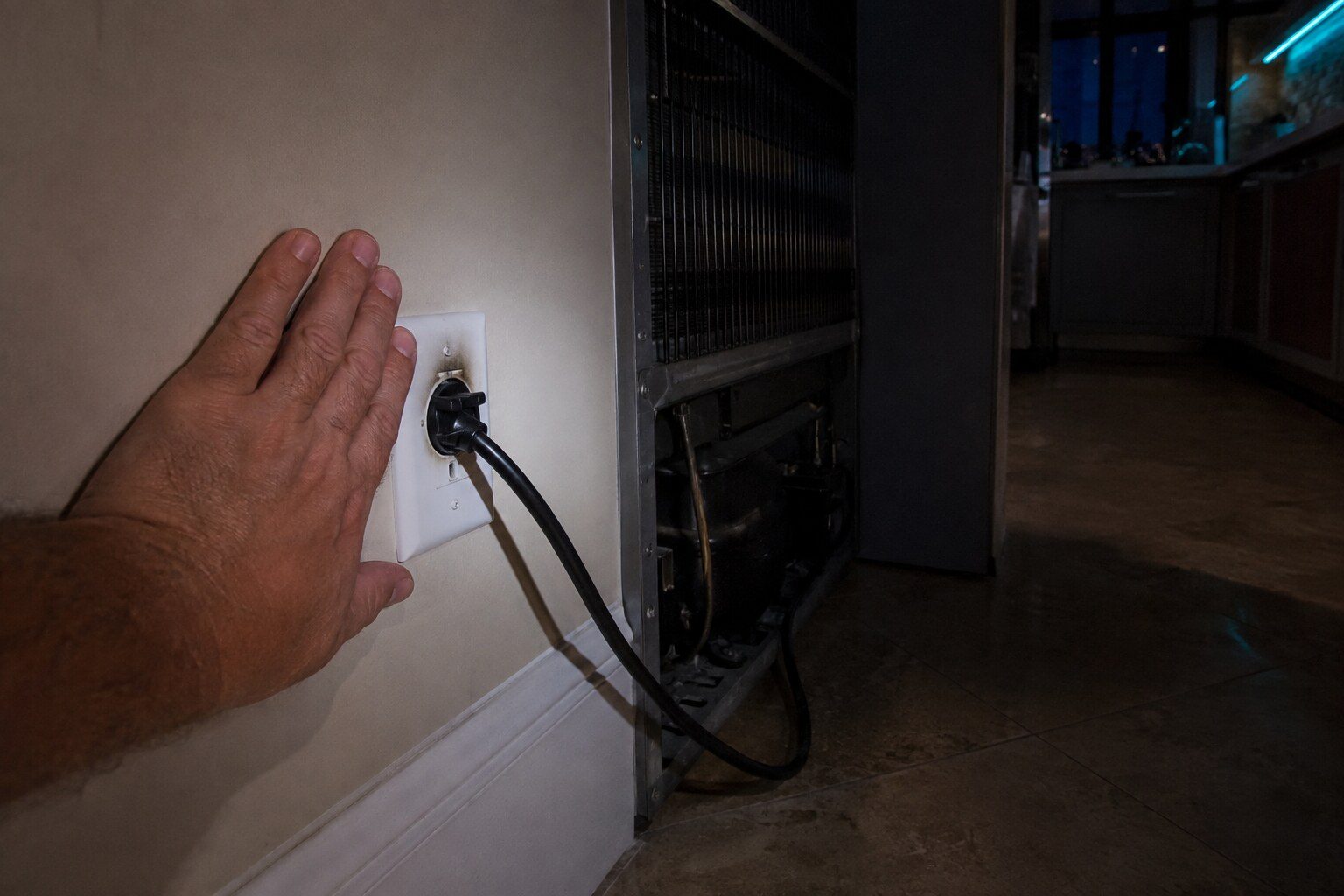
Realistically, four situations account for most appliance fires, and a refrigerator is rarely one of them. A clothes dryer with a restricted duct is the clear leader: lint is fuel, a blocked duct traps heat against it, and the machine's own protection is a thermal fuse that is a message rather than a repair. A microwave with a damaged door or a failed interlock is second, because the interlock is the only thing standing between the magnetron and an open cavity. An oven whose cooling fan has stalled during a self-clean cycle is third — LG stops the cycle and shows F27 for exactly this reason, and that stop is not a nuisance. And fourth is not the appliance at all but what it is plugged into: an extension cord, a shared circuit, or an outlet that is warm to the touch. Four signs mean stop today rather than book a visit: a burning smell, a scorch mark, a warm plug or outlet, and a breaker that trips when one appliance runs.
The full guide
Can a fridge start a fire? The honest answer
People worry about the refrigerator, because it runs all night and nobody watches it.
The dryer is the one that deserves the worry.
One: a dryer with a restricted duct
The clear leader, and the mechanism is simple enough to be worth stating.
Lint is fuel. It is fine, dry fabric fiber and it burns readily.
A restricted duct traps heat against that fuel and stops the moisture leaving, so the machine works harder and hotter for longer on every load.
The protection is a message, not a repair. When it gets too hot, a thermal fuse opens and the dryer stops heating. People replace the fuse, the machine works again for a while, and the fuse opens again — because nothing about the cause changed. A thermal fuse that has blown is the appliance telling you the airflow is wrong.
LG rates the restriction and reports it. d90 means the run is badly restricted. That is a safety number as much as a performance one.
The everyday version of this warning is unglamorous: *it takes two or three cycles to dry a load.* That is not an annoyance to live with. It is the same fact as the code.
What to do: clean the lint screen every load, have the duct run cleaned properly — not just the first three feet — replace any flexible foil or vinyl duct with rigid or semi-rigid metal, and keep the run as short and straight as the room allows.
Two: a microwave with a damaged door
A microwave oven works by containing energy inside a metal box. The door interlocks are the switches that guarantee the magnetron cannot run while that box is open.
They are not a convenience feature and they are not one switch — there are several, deliberately redundant.
A door that does not latch cleanly, a hinge with play in it, a machine that starts to run before the door is fully shut, or a microwave that appears to run on its own: all of those go straight to *unplug it now*.
This is one of the few appliances where the correct household response to a problem is to stop using it entirely rather than to work around it.
Three: an oven cooling fan during self clean
Self clean is a pyrolytic cycle. The oven goes far hotter than any cooking temperature and holds it, deliberately, to burn residue to ash.
Everything around the cavity depends on the cooling fan to keep the cabinet, the controls and the surrounding joinery survivable while that happens.
If the fan stalls during a self clean, LG stops the cycle and shows F27. That stop is not the machine being difficult — it is the one protection that matters at that temperature, working.
Two things follow. Do not run self clean on an oven that has stopped this way before it has been looked at. And do not run self clean at all on an oven that is due for a big meal tomorrow — the heat is exactly when marginal parts give up, which is why the day before Thanksgiving is the busiest oven day of the year in this trade.
Four: what it is plugged into
Often not the appliance at all.
Extension cords on large appliances. The most common installation defect we find. A cord rated for a lamp, carrying a dryer or a microwave, warms up — and warm connections deteriorate rather than settle.
Shared circuits. A breaker that trips when one appliance runs is not a nuisance breaker. It is a breaker.
Old or loose outlets. A plug that is loose in the socket arcs, and arcing is how outlets scorch.
A warm plug or a warm faceplate is an electrician today, not next month.
The four signs that mean stop today
Not *book a visit* — stop.
A burning smell you cannot trace to something spilled on an element.
A scorch mark or discoloration on a plug, a socket, a cord or a panel.
A plug or outlet warm to the touch.
A breaker that trips when one particular appliance runs.
Unplug the appliance if you can do that safely, and if you cannot reach the plug, switch the circuit off at the panel.
If there is a fire
In the oven: leave the door shut and turn the oven off. Opening it hands the fire a room full of air. A closed oven with the heat off starves what is inside it.
On a hob: cover it and turn it off. Never water on a pan of oil.
Anywhere else, or any doubt at all: leave and call the fire service. There is nothing in a kitchen worth standing next to to find out.
If it turns out to be a repair
What this leads to, and what it costs
Every job on this site is priced the same way: an on-site diagnostic first, the figure agreed in writing before anybody starts.
-
Microwave starts when the door closes
Stop using it and unplug it. This is a failed door interlock, and it means the switch that is supposed to prove the door is shut before the machine can run has stuck closed. It is a small, inexpensive part and it is a safety part, and a microwave that can start on its own is not one to think about over the weekend.
- Unplug it now — this is the one microwave symptom that is not a wait-and-see
- The interlock is a small cheap switch and the repair is short
- It is safe to use again once the switch is replaced and tested
-
Range error code F27
LG range error code F27: This is the one on the cooking list to stop using the oven over. Every spelling LG publishes for it, which machines can raise it, and what to do next.
What this one means -
Dryer error code d90
LG dryer error code d90: This is one of the more useful things LG does. Every spelling LG publishes for it, which machines can raise it, and what to do next.
What this one means

Questions people ask about this
Can a refrigerator start a fire?
It is possible and it is uncommon — the realistic paths are a failed start component or a compromised supply rather than anything about refrigeration itself. It is on the list of things worth taking seriously if you smell burning or find a scorch mark near the machine room, and it is not on the list of things worth worrying about routinely. The dryer deserves the worry.
Why is the dryer the one that matters?
Because lint is excellent fuel and a restricted duct does two things at once: it traps heat against that fuel and it stops the moisture leaving. LG rates a duct restriction and reports it — d90 means the run is badly restricted — and that number is a safety message as much as a performance one. A dryer that takes three cycles to dry a load is not an inconvenience; it is telling you something.
What should I do if there is a fire in the oven?
Leave the door shut and turn the oven off. Opening it feeds the fire a room full of air, which is the instinct and the wrong move. A closed oven with no heat starves what is in it. If it does not go out promptly, or if there is any doubt at all, leave the building and call the fire service — nothing in a kitchen is worth standing next to.
Is an extension cord really a problem?
For a large appliance, yes, and it is the single most common installation defect we find. Appliances with heating elements and motors draw far more than a cord is rated for, the cord warms, and warm connections get worse rather than better. A refrigerator, a dryer, a microwave and a window unit each want their own properly rated outlet. If a plug or an outlet is warm to the touch, that is an electrician today.
Safety & Risks
More guides like this one
-
How Long Food Stays Safe in a Refrigerator Without Power
A storm question in a storm city, and the answer is a clock rather than an opinion. The single most useful thing you can do is not open the door.
Read more
Tell us the model number and what it is doing.
This article is based on:
- Official manufacturer documentation
- Internal repair procedures
- Technician repair history
- Company quality standards