Common Problems
The Light Is On and the Fridge Is Warm: What That Rules Out
A refrigerator with its light on has power, which removes the whole electrical half of the problem — the cord, the outlet, the breaker and the main fuse are all doing their job. What is left divides into three, and they are worth checking in this order because it runs from free to expensive. First, a mode: an LG in demo or display mode lights the panel, runs the fans and switches the compressor off by design, and the way out is to open the fresh food door, hold FRIDGE and press Express FRZ three times until it chimes. Second, air: vents buried under food, a condenser packed with dust, or one of the three fans LG codes as CF, FF and rF — and in this climate the usual reason a fan stops is ice rather than a dead motor. Third, and only third, the sealed system, which is measured with gauges and is the least likely of the three.
The full guide
Fridge not cold but light working: what you have already proved
The sentence people type is more useful than they realize. A refrigerator whose interior light comes on has mains power at the board — the cord is intact, the outlet is live, the breaker has not tripped, and whatever fuse the machine carries has not opened. That is a real diagnostic step and it is already done.
So the question is not electricity. It is one of three things, and they are worth taking in order, because the order runs from free to expensive and most calls end in the first two.
First: a mode, not a repair
Every make has a showroom mode. LG's is easy to trigger and completely convincing: the panel lights, the buttons respond, the interior lamp works, the fans run, and the compressor is switched off deliberately so a cabinet can stand on a shop floor all day without cooling an empty box.
We have arrived at houses where the entire visit was ten seconds of button holding.
The tell is not on the panel. It is the history. A refrigerator in demo mode has sat at exactly room temperature since the moment it was plugged in, because it never cooled at all. A refrigerator that has failed cooled properly for a while and then lost ground — over hours, or over days. If the milk was cold yesterday, you are not in demo mode.
The way out is documented: open the fresh food door, hold FRIDGE and press Express FRZ three times. On some models it is both buttons held together for three seconds instead. Either way you should hear a chime, and the compressor should start within a minute or two.
Second: air, and there is a lot of it
Assuming the machine is genuinely trying to cool, the next question is whether the cold it makes is going anywhere — and whether the heat it removes is getting out.
Four things sit in that path, and only one of them needs a technician.
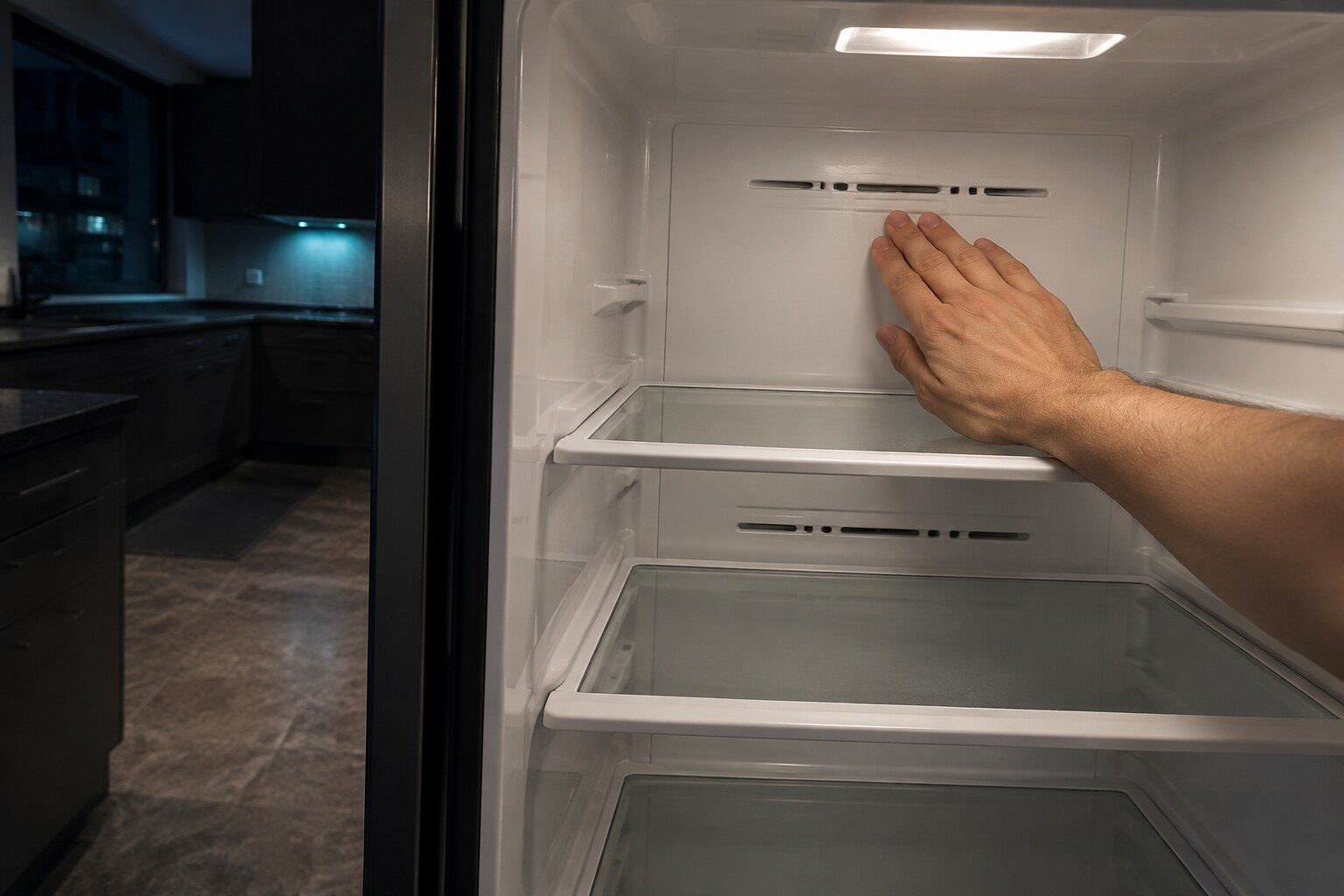
The vents inside. Cold arrives in the fresh food compartment through slots in the back wall, and a compartment packed to those slots is a compartment nothing is reaching. Move everything six inches off the back wall of both compartments and give it a day before deciding anything.
The condenser coil. This is the part that throws the heat away, it lives at the bottom rear on these cabinets, and in a coastal kitchen it fills with dust, hair and salt air over years. Nothing on the machine reports it — LG has a code for the fan over the coil and none at all for the coil itself — so it goes unnoticed until the cabinet starts running twice as long as it used to.
The fans. There are up to three, and LG names each of them: CF for the fan in the machine room, FF for the freezer fan, rF for the fresh food fan on the cabinets that cool each compartment separately. The manufacturer's own explanation for all three is a blade the machine has detected as blocked — and in a Miami kitchen the blockage is nearly always frost rather than a failed motor, which matters, because replacing a fan without asking why it iced means doing the job twice.
The door. Nine wet months a year is hard on a gasket. Close the door on a strip of paper and pull: it should resist, all the way round, including the bottom corners where a dropped door shows first.
Third: defrost, which hides for weeks
A refrigerator has to melt its own evaporator clear every few hours. When that stops, ice grows across the airway a little at a time, and the machine goes on working — until the day it does not.
This is the slow failure people live with for a month and then call about in a hurry, and the sign is visible if you look for it: frost across the back wall of the freezer, behind the vents. LG publishes dS for the sensor half of that circuit; the heater has no code and is measured.
Last: the sealed system
Real, uncommon, and the only one on this list that needs gauges, recovery, a drier and a weighed charge. It is also the one most often sold to people who did not need it, which is why it comes last here and why anyone who names it over the phone has skipped two thirds of the diagnosis.
On this make there is a second reason to slow down. LG's linear compressors carry a long parts warranty that follows the machine rather than the owner, so a cabinet bought second-hand can still be covered — and that changes the number considerably. What the warranty does not cover is the labor, the refrigerant or the drier, so a covered machine still has a real figure on it. Just a much smaller one.
What to do before anybody comes
Write down what the panel says, including any letter in front of the characters — on this make the prefix says which part of the machine is complaining. If the display is blank after a power cut, hold Freezer Temperature and Express Frz together for three seconds and the last code comes back.
Then put a thermometer on a middle shelf in each compartment and leave it an hour. Two numbers and a code is a diagnosis. "It is not cold" is a starting point.
If it turns out to be a repair
What this leads to, and what it costs
Every job on this site is priced the same way: an on-site diagnostic first, the figure agreed in writing before anybody starts.
-
Refrigerator not cooling
The most common call on this badge, and the first check is free. An LG refrigerator has a showroom mode that lights the whole panel, runs the fans and cools nothing at all, and it gets switched on at home by accident often enough that we ask about it on the phone before anything else.
- Demo mode looks exactly like a broken refrigerator and clears in ten seconds
- Three separate fan codes, and the usual cause of all three is ice rather than a dead motor
- The sealed system is last, and it is measured rather than assumed
-
Refrigerator: Showroom demo mode
LG refrigerator — reported by blinking lights rather than by a code. This is the one on the list that panics people and costs nothing.
What the lights are telling you -
Refrigerator not cooling repair
The most common repair on this badge and the one where the order of work matters most. Air first, then defrost, then the sealed system — a sequence that goes from free to expensive and that anybody quoting a compressor over the phone has skipped two thirds of.
- Demo mode and blocked vents are ruled out before anything is opened
- LG publishes three separate fan codes and the usual cause of all three is ice
- The sealed system is measured with gauges, never assumed
Questions people ask about this
How do I tell demo mode from a real failure?
By the history rather than the panel. A cabinet in demo mode has been at room temperature since the moment it was plugged in, because the compressor never ran. A refrigerator that has failed cooled properly for a while and then lost ground over hours or days. If the food was cold yesterday, this is not demo mode.
The freezer is fine and only the fridge is warm.
That is a different and much better problem, because a hard freezer proves the compressor, the refrigerant and the condenser are all working. What is left is the path the cold takes into the fresh food compartment: a damper, a duct, the fresh food fan, or an evaporator partly sealed in ice. We have a whole page on that combination.
It is running constantly and still not cold.
That usually means cold is being made and not delivered, or the machine cannot shed the heat it is producing. Ice on the evaporator, a stopped fan or a packed condenser all give exactly this — and continuous running is a good sign for the repair, because it means the compressor is alive.
Someone quoted me a compressor on the phone.
Then they guessed, because a sealed-system diagnosis needs gauges on the machine. On this make there is a second reason to slow down: LG's linear compressors carry a long parts warranty that follows the machine rather than the owner, so a covered cabinet is a very different number. That is worth establishing before anybody agrees to anything.
Common Problems
More guides like this one
-
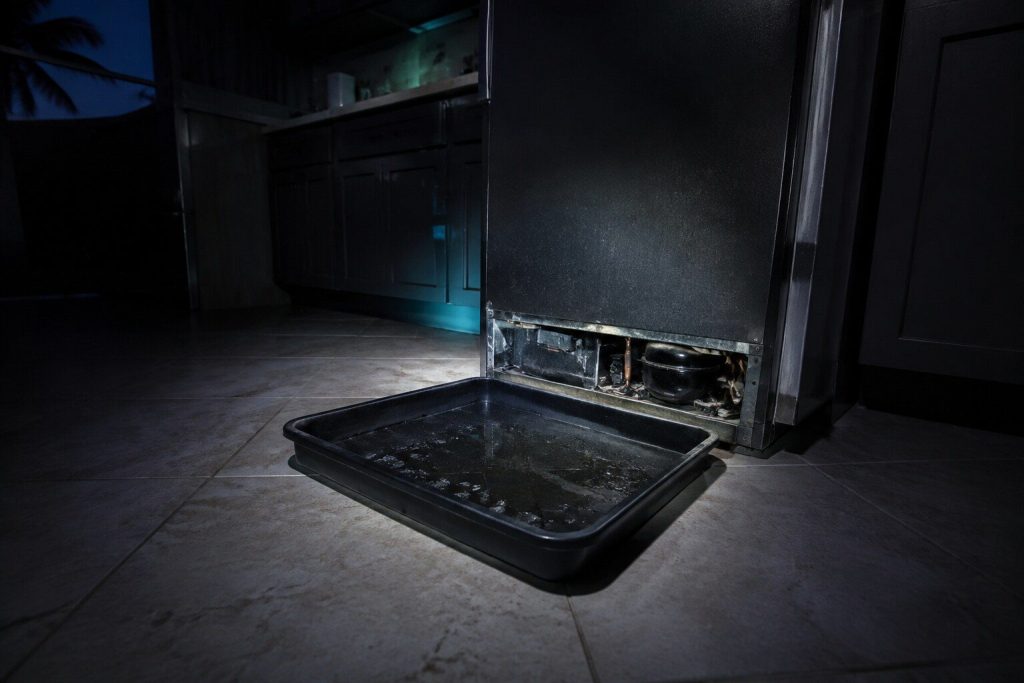
Water Under the Crisper Drawer, and the Tube Behind It
A refrigerator handles two entirely separate kinds of water, and where the puddle is decides which one you have before anybody is called.
Read more -
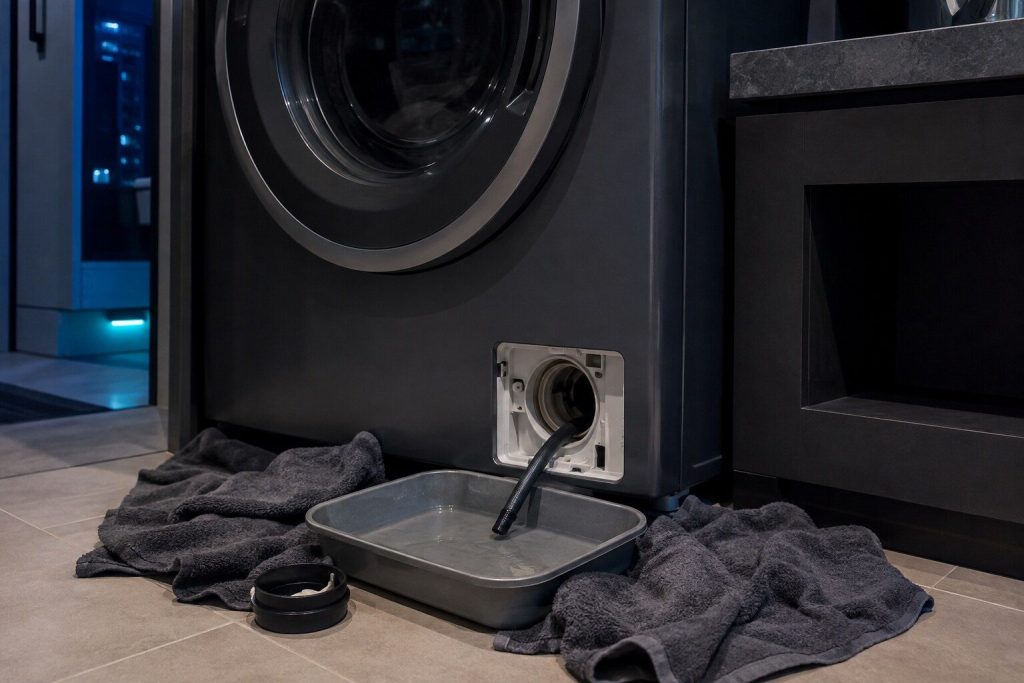
A Washer Stopped Full of Water: The Filter Nobody Opens
There is a filter behind a small door at the bottom of your washer, it is designed to be opened by you, and what comes out of it is usually the whole explanation.
Read more -
No Ice, But the Water Dispenser Works: What That Narrows It To
One ten-second test splits this problem in half, because ice and water share a supply and part company inside the door.
Read more
Tell us the model number and what it is doing.
This article is based on:
- Official manufacturer documentation
- Internal repair procedures
- Technician repair history
- Company quality standards