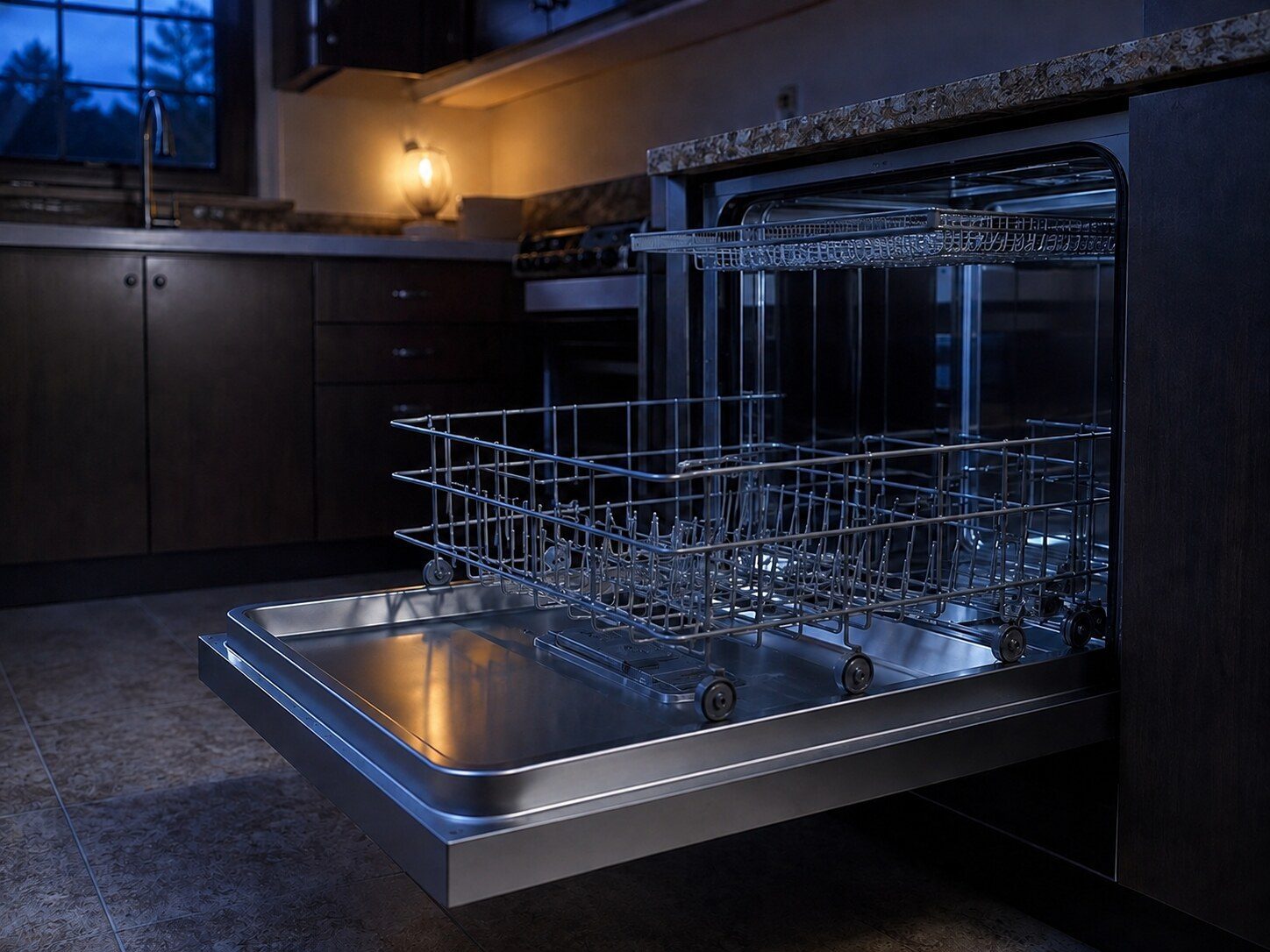
Appliance
LG dishwashers
A hundred and eight in LG's current catalog, and the best-documented dishwasher on this fleet: LG publishes thirteen codes for it and names the part behind each one — inlet, outlet, temperature sensor, heater, wash motor, water level sensor, the bubble error, the vario pump and three separate errors in the heat-dry system. The two calls we take most are the two the codes describe: it will not drain, and it is not getting things clean.
- 2 symptoms we are called out to
- From $95 diagnostic, credited to the repair
- 59 cities and neighborhoods covered
- OEM parts available on order
The short version
What this equipment is, for a repair
Configurations
Front control · top control · QuadWash · TrueSteam · Inverter Direct Drive
Access
Planned before the visit, not discovered on arrival
Parts
OEM, available on order
Diagnostic
From $95, credited to the repair
What goes wrong with it
Symptoms we are called out to on LG dishwashers
Each one covers the likely causes in the order they are worth checking, and what to do in five minutes before booking anything.
-
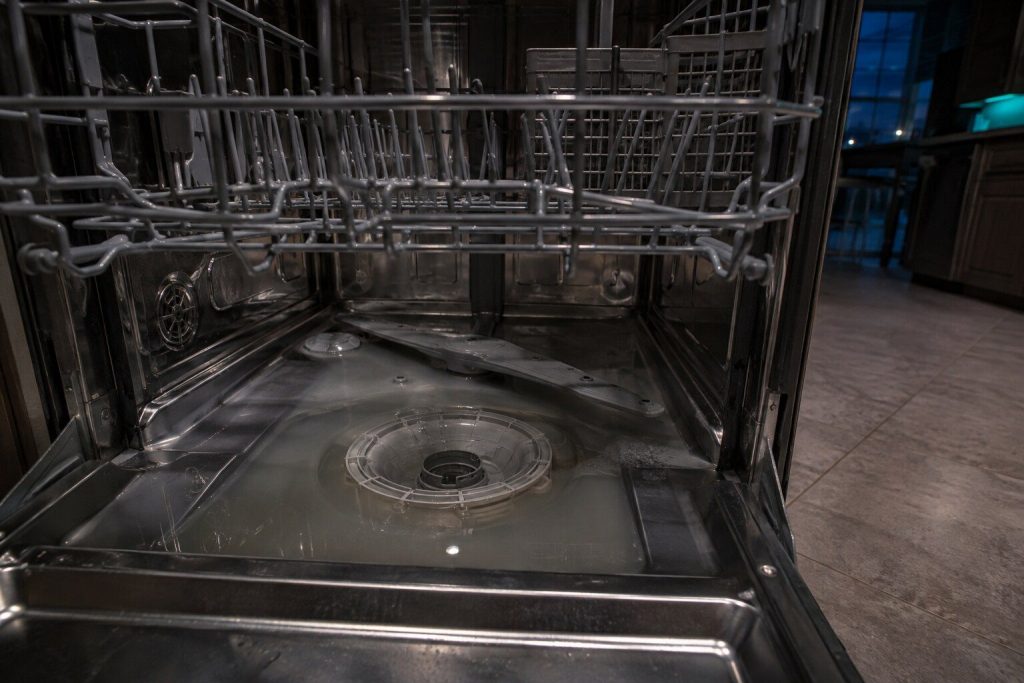
Water standing in the bottom at the end of the cycle Dishwasher not draining
The most common dishwasher call there is, and the cheapest cause is also the most likely. Everything the machine washes off the plates that does not leave through the drain stays in the sump, and the filter there is what catches it. A filter nobody has taken out in two years will stop a perfectly healthy pump.
- The filter in the sump floor is the answer more often than the pump
- OE is the code, and LG's own order goes from free to expensive
- A pump that hums is blocked; a pump that is silent has failed
-
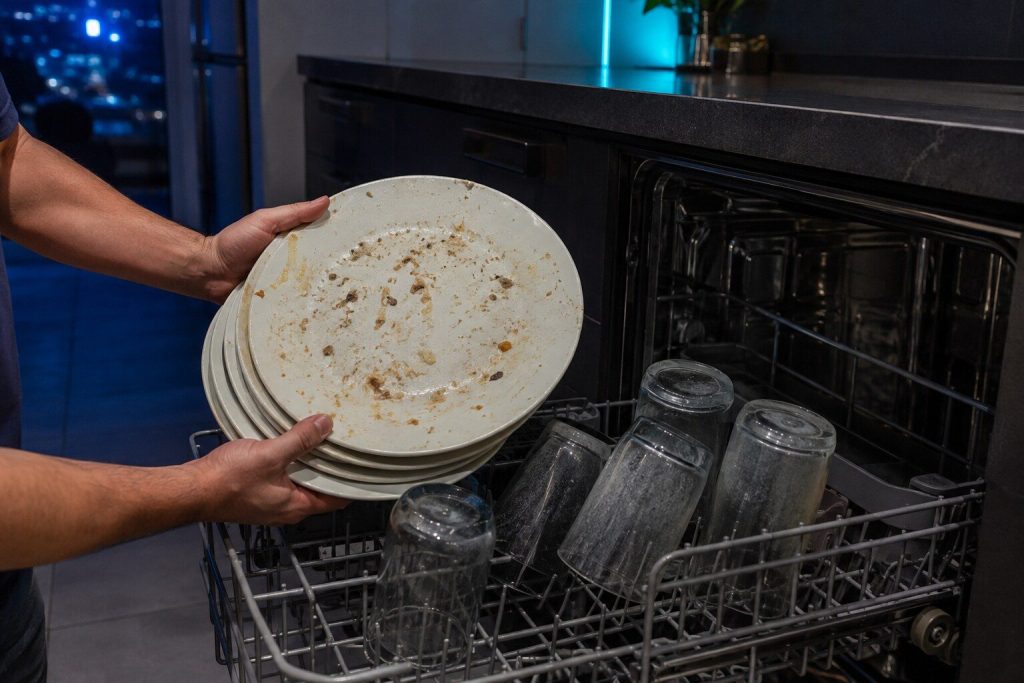
Dried food still on the plates, or a chalky film Dishwasher not cleaning
Two different complaints get reported the same way, and they have different answers. Food left on the plates is water not arriving with enough force in enough places. A white film on clean plates is the water itself, and in this city that is usually hardness rather than a machine problem at all.
- Food left on is spray, filter or heat; a chalky film is water
- Rinse aid does the work most people expect detergent to do
- Loading matters more than any setting on the panel
What we do on it
Repairs we carry out on LG dishwashers
Starting figures for this equipment in South Florida. The exact cost is confirmed after an on-site diagnostic — and this is not the whole list of what can go wrong, so call if your problem is not here.
-
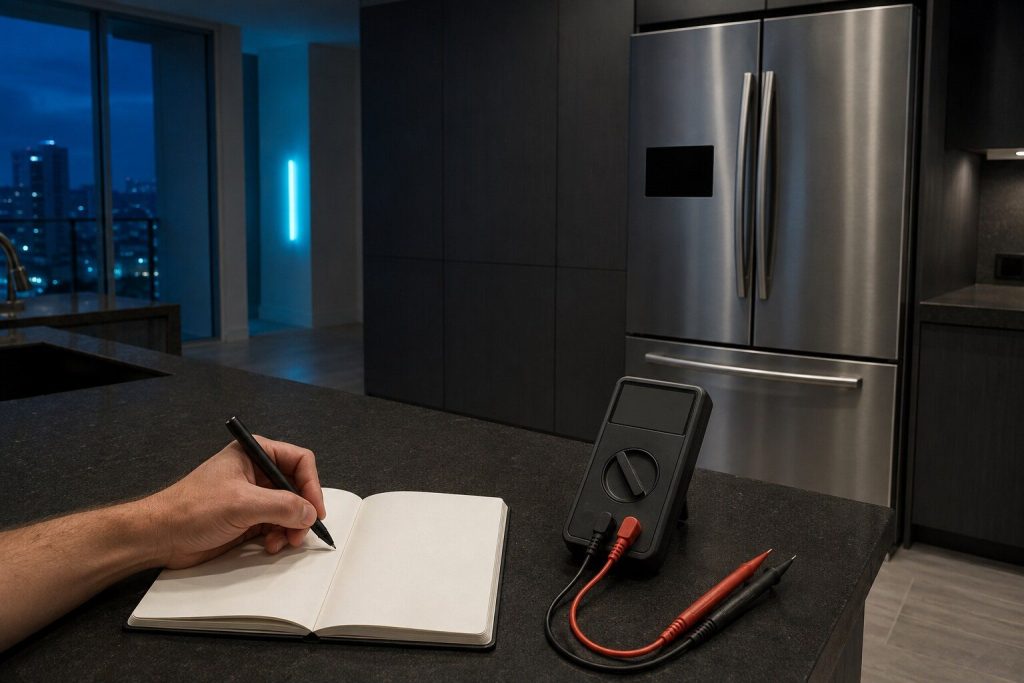
from $95 Diagnostic visit
One visit, one technician, one answer in writing. On this make the diagnostic starts with something most makes cannot offer: the appliance usually has something to say. LG publishes code lists for its refrigerators, dishwashers, washers, dryers and ranges, and on the machines with no display it publishes what the blinking lights mean instead. Reading that properly is half the job and it costs nothing to do.
- The model number and whatever the appliance is reporting, read before anything is opened
- Blinking-light patterns included, because LG documents them and that makes them codes
- Written findings and a from-price before any part is ordered
-
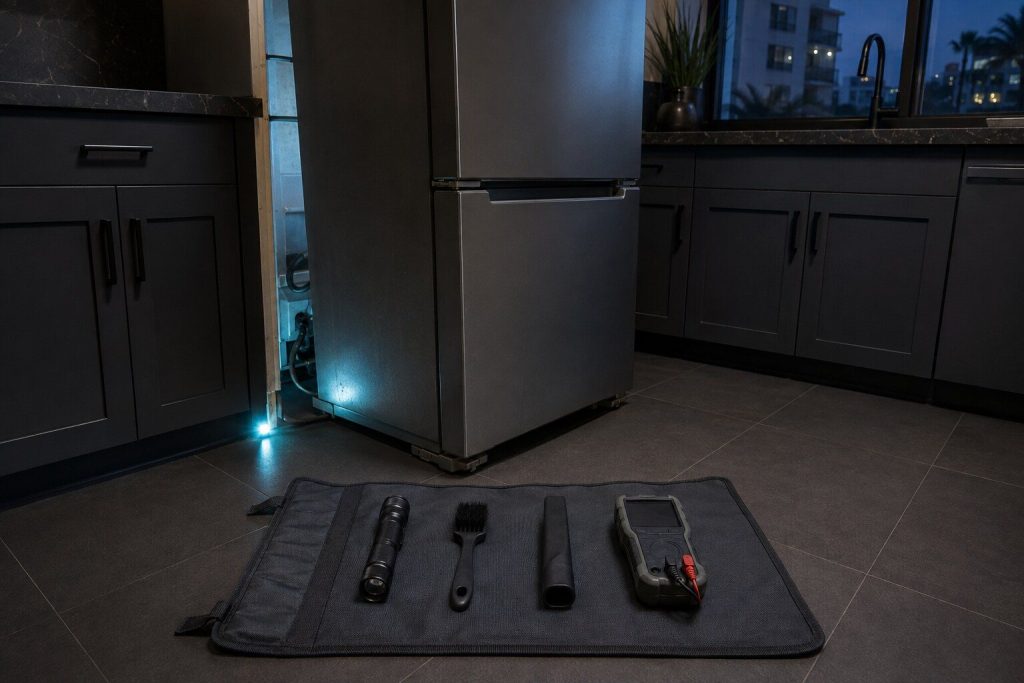
from $125 Appliance maintenance
The visit that stops the other visits. Most of what fails on an LG in this city fails because of something that could have been cleaned: a condenser packed with dust, a dishwasher filter nobody has taken out, a dryer duct that has been closing for three years. None of it is glamorous and all of it is cheaper than the repair it prevents.
- Condenser, filters, seals, drains and levels on whatever you have
- Written findings, so you know what is aging before it fails
- Priced on time rather than per appliance
-
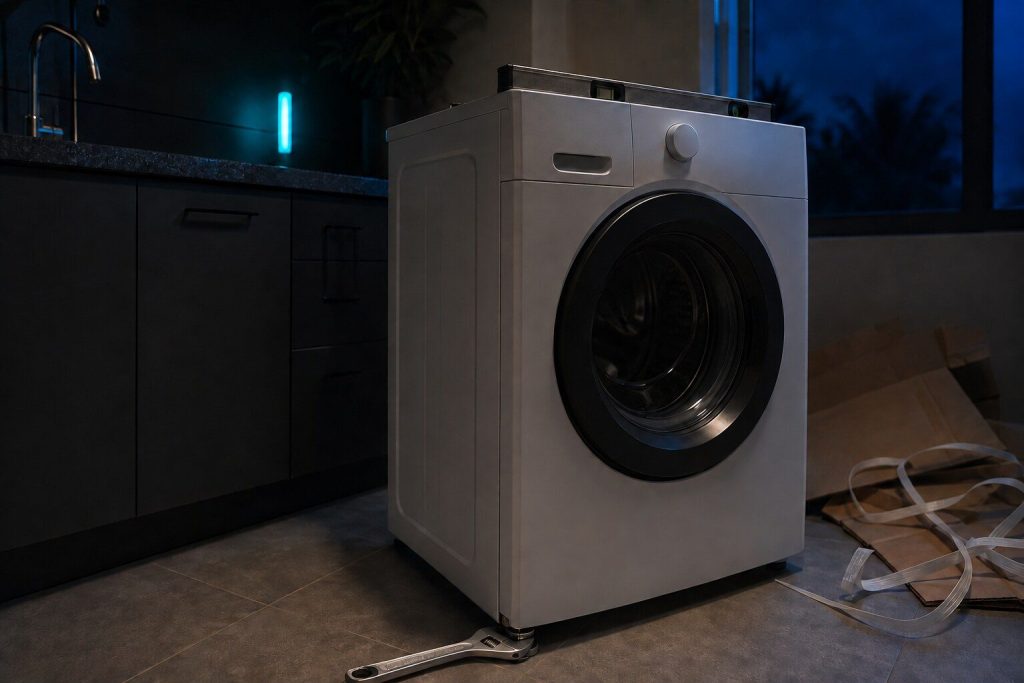
from $145 Appliance installation
Delivery is not installation. A machine that has been put in place is level, connected, tested, and standing with the clearances its manufacturer specifies — and on LG's ventless laundry and its built-in cooking there are specifics that get missed often enough to be worth naming.
- Leveled and tested, not just connected and left
- Clearances checked, because a built-in with no vent path fails in August
- Gas connections leak-tested and documented
-
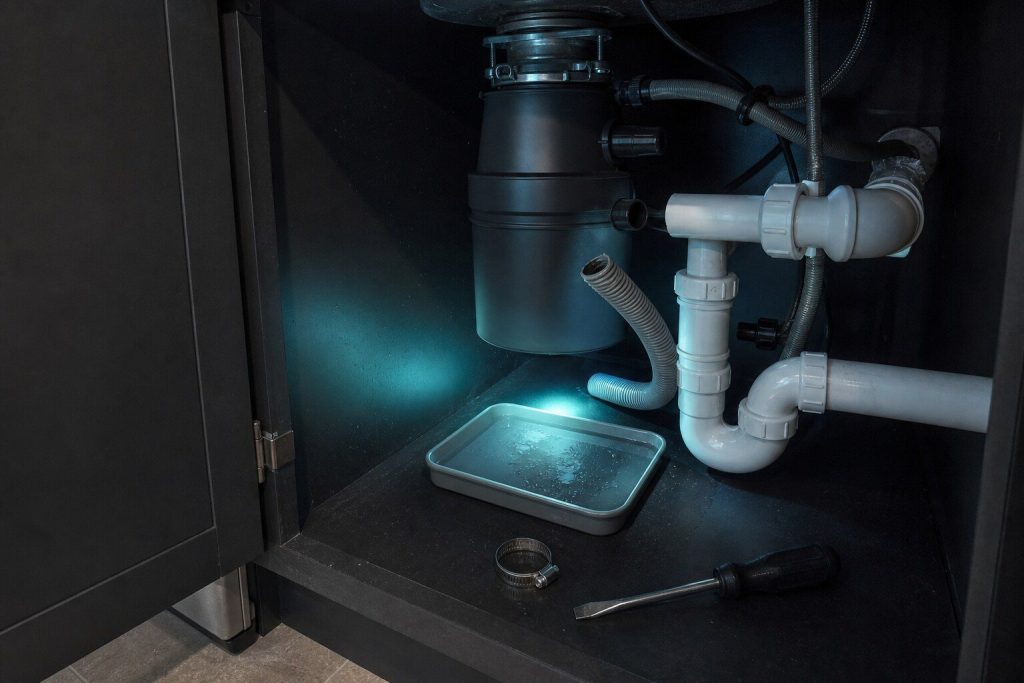
from $135 Dishwasher drain repair
The most common dishwasher call there is, and most of it is labor rather than part. LG codes it OE, and the causes run from a filter that has never been taken out to a disposal knockout plug that was never removed when the machine was installed.
- Filter, hose, air gap and disposal spigot before the pump
- A pump that hums is blocked; a pump that is silent has failed
- A machine that has never drained since installation is usually the knockout plug
-
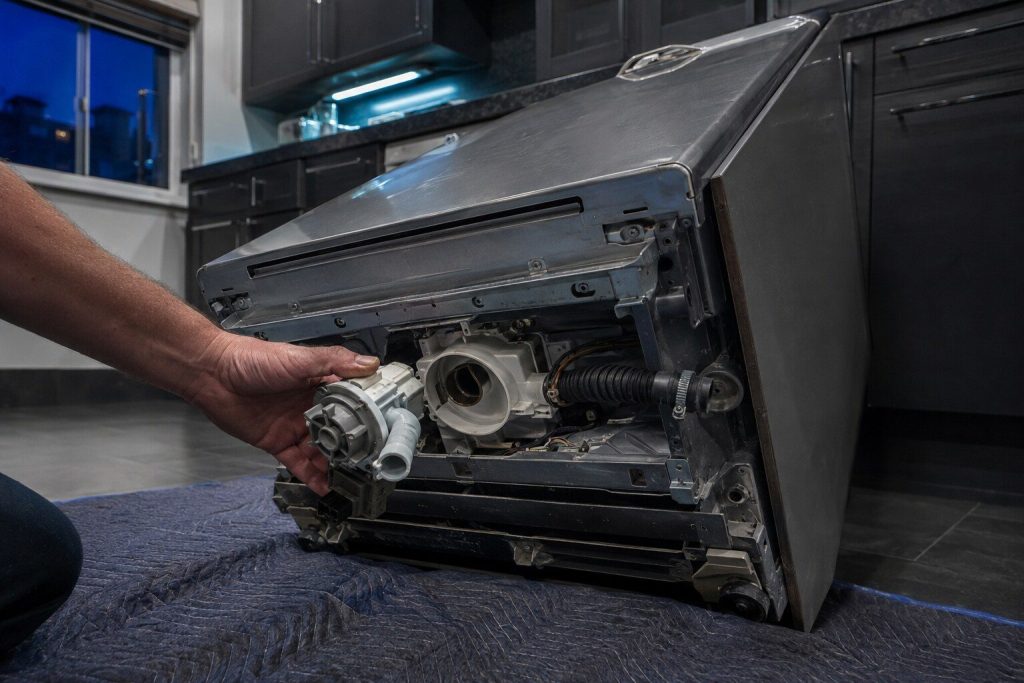
from $215 Dishwasher pump replacement
When the drain pump has genuinely failed rather than jammed, the machine comes out of its opening and goes onto its back to reach it. The part is stocked on this make and the access is most of the figure.
- Diagnosed before it is quoted — most suspected pumps are blockages
- The machine comes out and goes on its back
- A stocked part on LG, which keeps the number down
-
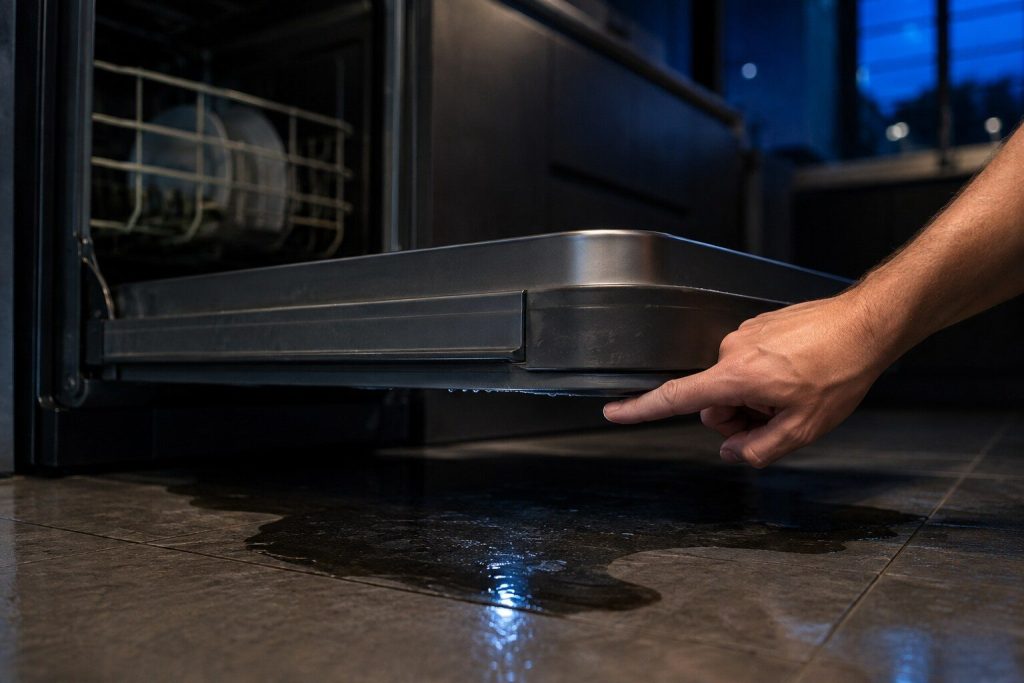
from $155 Dishwasher leak repair
Four quite different repairs share this name — a door boot, a hose, a sump seal, or the tub itself — and only three of them are worth doing. The diagnosis decides, and it happens before the quote rather than after it.
- Door, hose, sump or tub, and they are not the same job
- AE, EI and FE are LG's leak and overfill codes
- A tub that has failed is a conversation rather than a repair
-
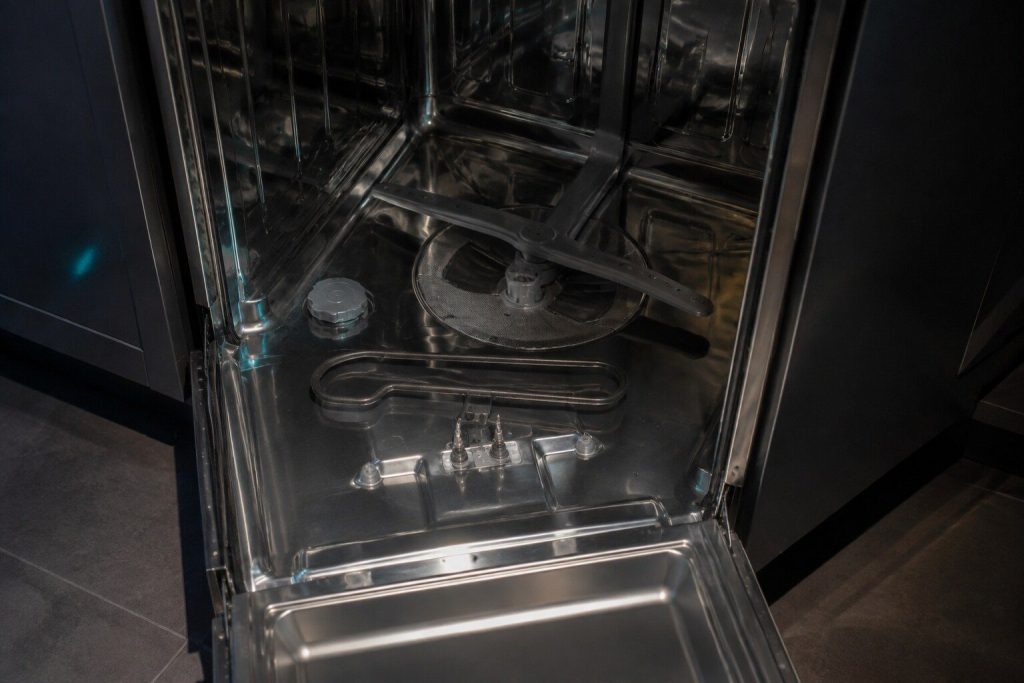
from $195 Dishwasher heater repair
The element does two jobs — bringing the wash water to temperature and helping the drying — so its failure arrives as poor cleaning, wet dishes, or both. LG codes it HE. The element is inside the tub, which is where the figure comes from.
- HE is the code and it explains poor cleaning as well as poor drying
- The incoming water temperature is checked before the element is blamed
- The element is inside the tub
-
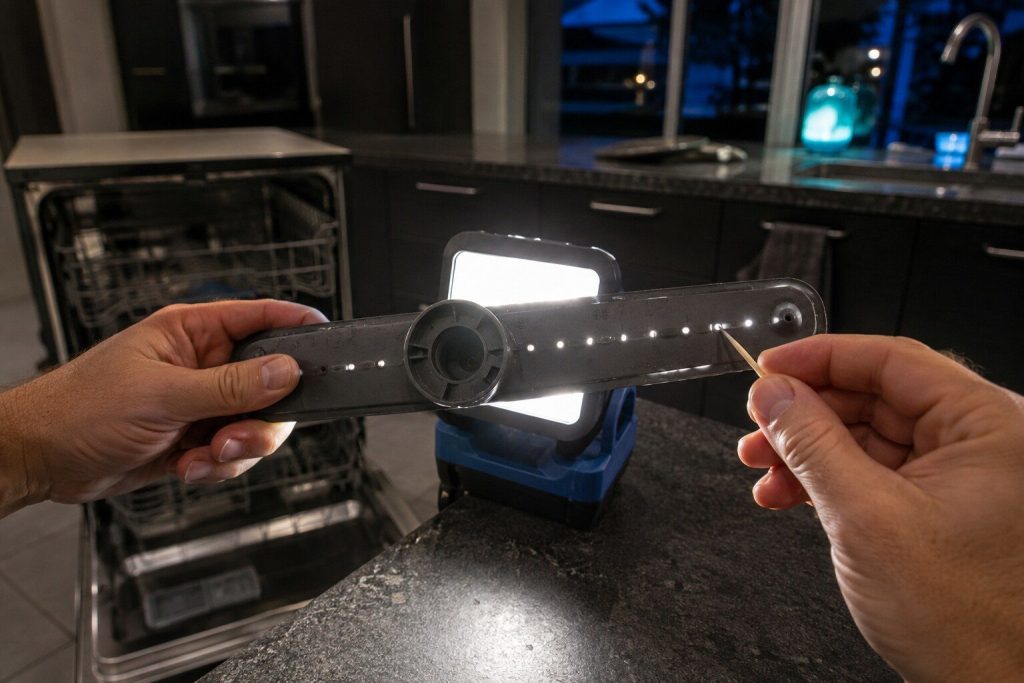
from $125 Dishwasher wash performance service
The visit for a machine that runs perfectly and cleans badly. Most of it is not a part: spray arms, filter, water temperature, rinse aid, loading and the diverter that switches between racks. It is priced on time because that is what it takes.
- Arms, filter, diverter and temperature, measured rather than guessed
- One rack clean and one dirty points at the diverter — nE on this make
- Hard water and no rinse aid explain the chalky film, and no repair fixes that
-
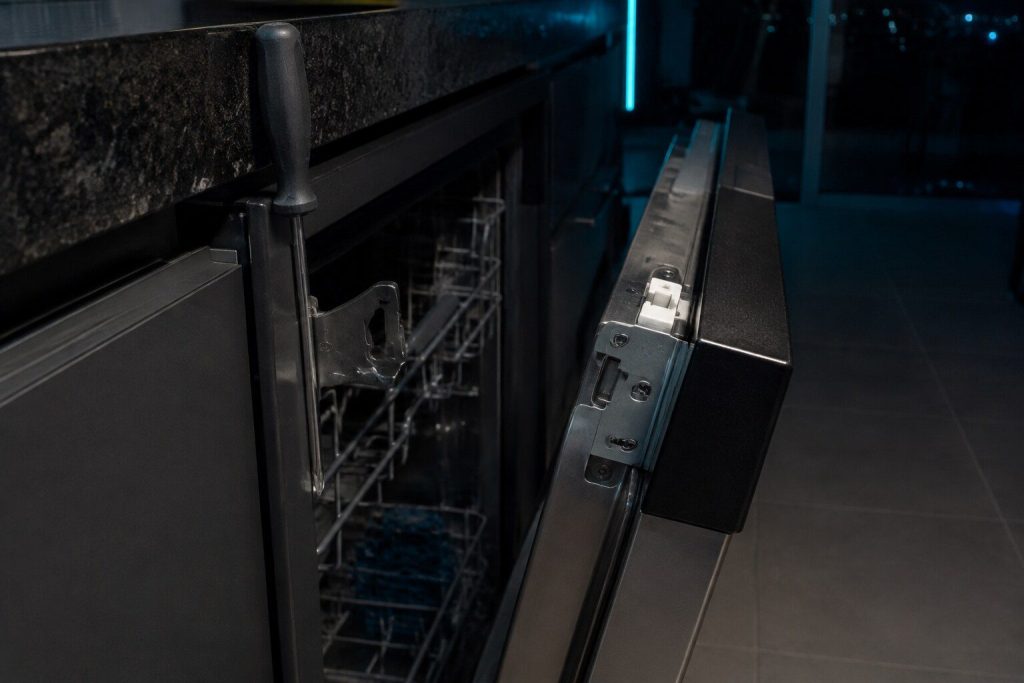
from $145 Dishwasher door latch repair
A dishwasher will not start with a door it cannot prove is closed, and the latch and its switch are what prove it. The inner door panel comes off to reach them, which makes this a contained job with a small part at the end of it.
- A machine that will not start is often the latch rather than the control
- The inner door panel comes off; the machine stays in place
- A door that has dropped presents a good latch to a moved frame
-
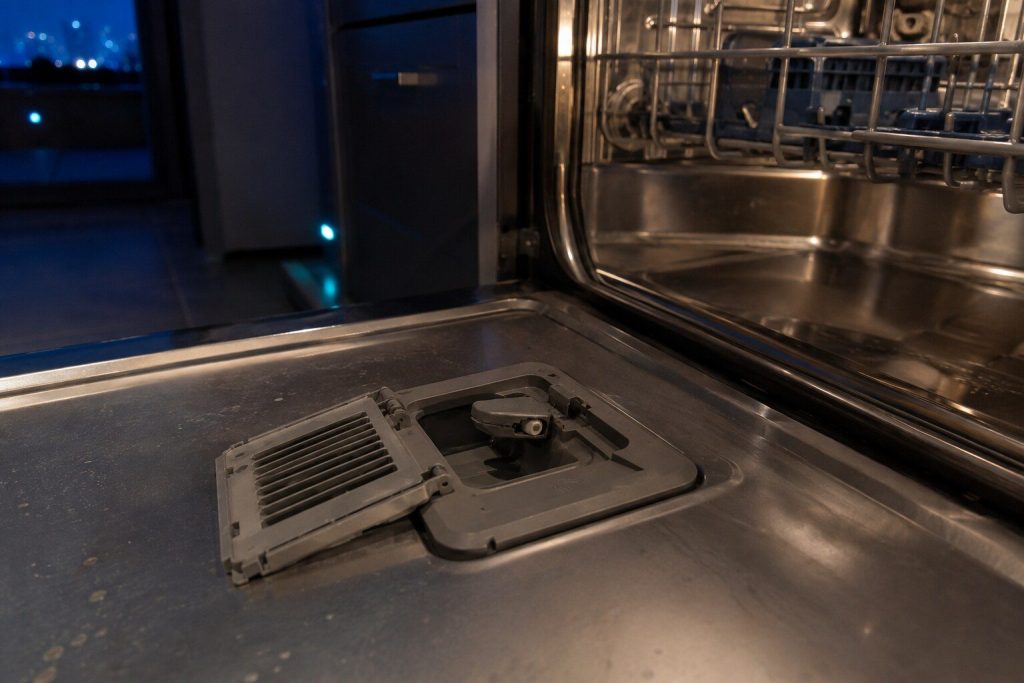
from $165 Heat dry system service
LG's dishwashers dry with a heated air system and, on many models, a door that opens itself at the end of the cycle. Three codes cover it — F31 for the fan, F35 for the temperature, F37 for the auto-open door — and all three produce the same complaint: a machine that washes perfectly and leaves everything wet.
- F31, F35 and F37 — fan, temperature, and the door actuator
- The machine is entirely usable meanwhile, which is worth knowing
- Rinse aid is checked first because it does much of the drying
-
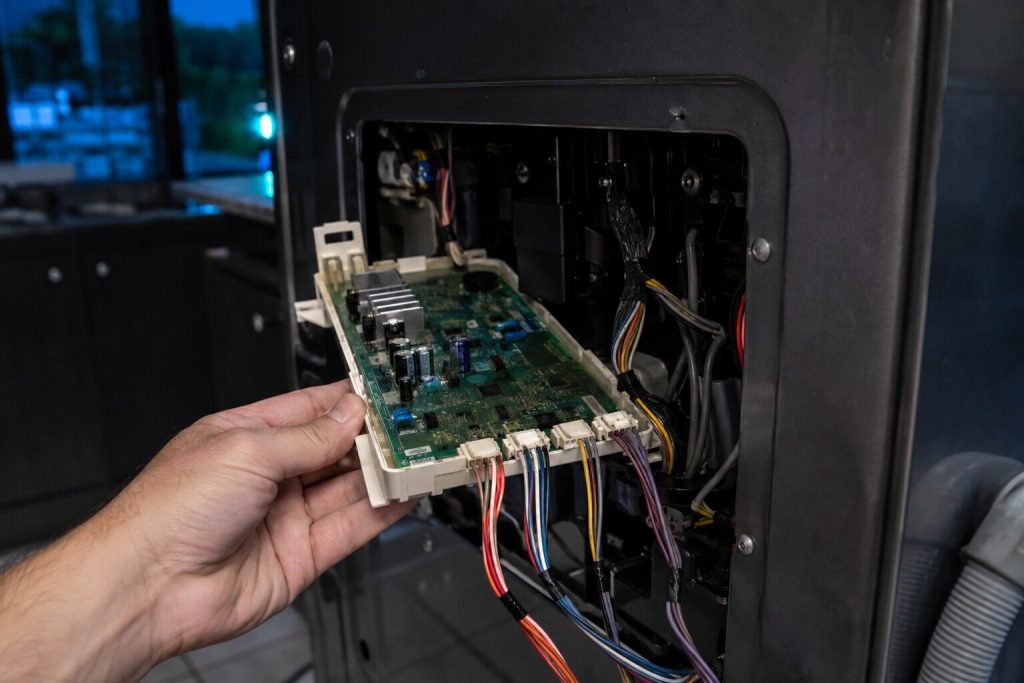
from $285 Appliance control board repair
The board is the last thing suspected rather than the first, because supply problems imitate it perfectly: a long extension lead, a shared circuit with something heavy on it, or a socket with a poor neutral will all produce board errors on a machine that is otherwise healthy. A second board fails exactly the way the first one did.
- The supply is checked first, every time
- EE on a washer and F11 on a range are board-level codes
- A board replaced without finding what killed it is a repeat visit
-
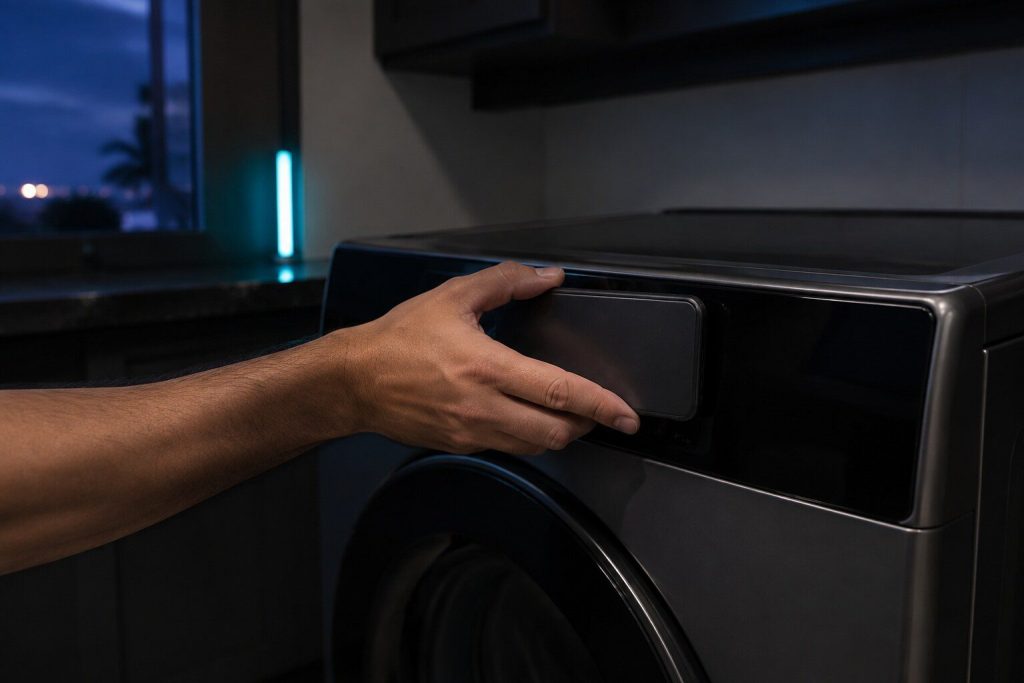
from $115 Smart diagnosis and firmware service
LG builds diagnostics into these machines that most makes do not: a connected app, a stored history, and on many models an audible diagnosis the machine plays down a phone line. When that side stops working the appliance still washes and still cools — but you lose the reporting, and on this make the reporting is worth having.
- Connectivity, firmware and the app-side diagnosis
- The machine works without it; you lose the instrumentation
- Often a network problem rather than an appliance one
In more detail
About LG dishwashers
A hundred and eight machines, two control layouts
LG's dishwashers are front control, with the buttons on the face, or top control, with them hidden along the top edge of the door. The wash system is QuadWash on most of the range — arms that move in two directions rather than one — and the motor is an Inverter Direct Drive, which is why these machines are quiet enough that people call about a noise which is simply the machine working.
The codes, and what they are worth
Thirteen, each with LG's own name for the part: AE/EI/FE for leakage or overfilling, IE for the inlet, OE for the outlet, tE for the temperature sensor, HE for the heater, LE for the wash motor, PE for the water level sensor, bE for the bubble error, nE for the vario pump, CL for the control lock, and F31, F35 and F37 across the heat-dry system. That last group is worth knowing because it explains the most confusing symptom this appliance has: a machine that washes perfectly and leaves everything wet.
This article is based on:
- Official manufacturer documentation
- Internal repair procedures
- Technician repair history
- Company quality standards

Before you book
Questions about LG dishwashers
There is water in the bottom at the end of the cycle.
That is OE, and LG's own explanation is the one to start from: the machine could not get rid of the water it used. In a Miami kitchen the order is almost always the filter first — the cylinder in the sump, which comes out by hand and is usually the whole answer — then the drain hose behind the machine for a kink or a crush, then the air gap or disposal spigot at the sink, and only then the pump. A pump that has actually failed is quiet when it should hum, and that is a thing you can listen for before anybody is called.
Everything comes out with a chalky film on it.
Usually water rather than machine, in this city. Hard water leaves the film, rinse aid is what stops it, and the two arrive together — an empty rinse aid reservoir and a house with no softener will do this to a machine that is working perfectly. What makes it a repair is when the film comes with poor cleaning: then it is spray arms, the filter, or the heater LG codes as HE.
It stops mid-cycle and shows a code with a letter and a number.
The F-numbers on this make are the heat-dry system: F31 is the fan, F35 is the temperature and F37 is the door that opens itself at the end of the cycle. None of them stop the dishwasher washing, and all of them stop it drying. If you have a code with letters instead — bE, nE, PE — that is the wash side, and it is worth writing down exactly as shown before you cut the power.
How long should one of these last here?
Ten to twelve years is a fair expectation, and the thing that shortens it is not use. It is a filter nobody has taken out, because everything that does not leave through the drain stays in the sump and goes through the pump again. Five minutes twice a year is the single best-value maintenance on any appliance in the kitchen.
Where we do it
Across Miami-Dade, Broward, and Palm Beach
Same terms everywhere we go: an on-site diagnostic first, the price agreed in writing, and the exact figure confirmed once we have seen the unit.
Neighborhoods people ask for by name