Appliance
LG cooktops
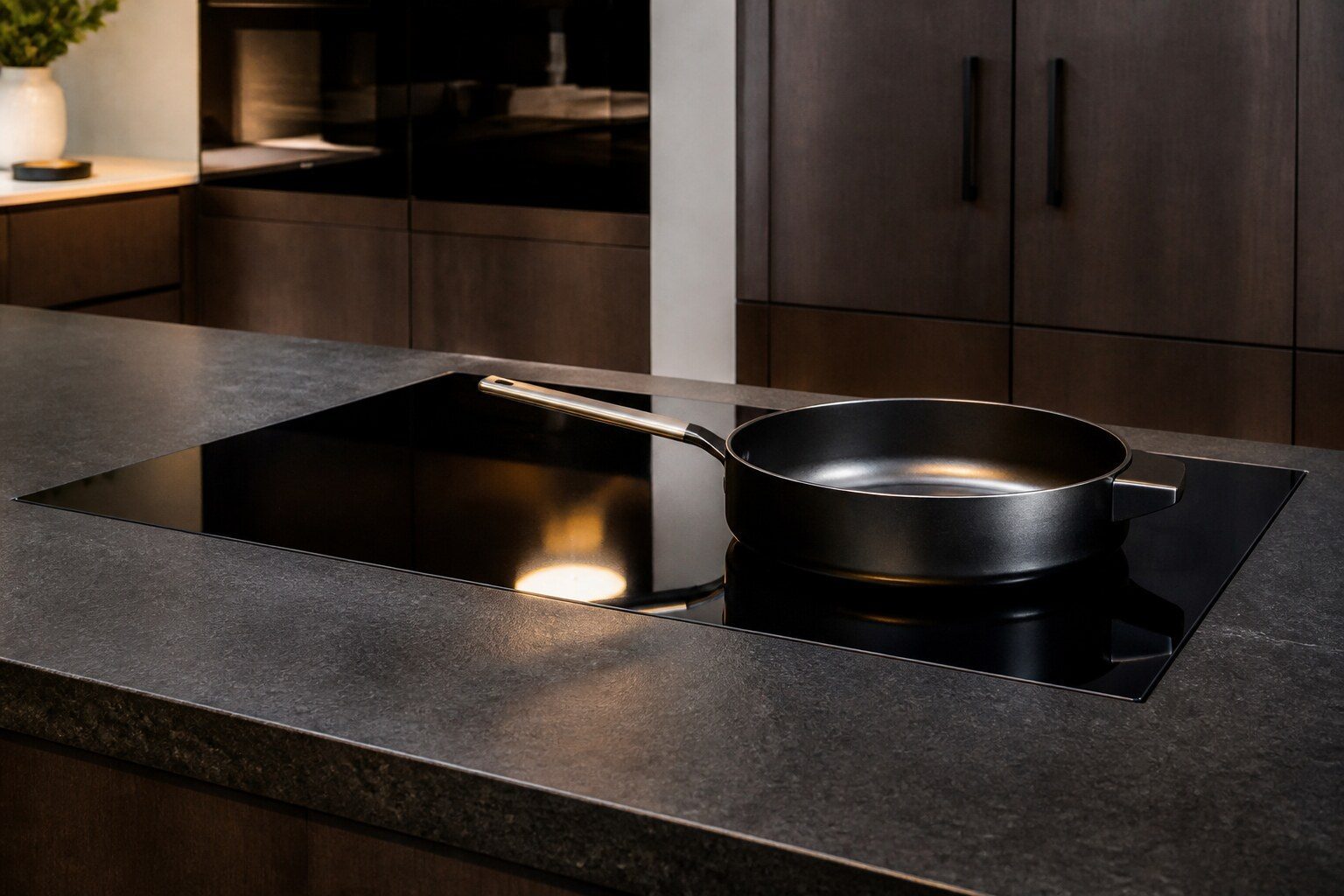
The drop-in half of the cooking line — LCE and its neighbors — in induction, radiant electric and gas, at thirty and thirty-six inches. Induction is where LG has put its effort, and it changes what a failure is: an induction top has no element to fail, it has coils, a board and a temperature sensor per burner, and the codes reflect that. F33 and F34 are front induction burner temperature sensors and exist on nothing else in the range.
- 1 symptoms we are called out to
- From $95 diagnostic, credited to the repair
- 59 cities and neighborhoods covered
- OEM parts available on order
The short version
What this equipment is, for a repair
Configurations
Induction · radiant electric · gas · 30 and 36 inch
Access
Planned before the visit, not discovered on arrival
Parts
OEM, available on order
Diagnostic
From $95, credited to the repair
What goes wrong with it
Symptoms we are called out to on LG cooktops
Each one covers the likely causes in the order they are worth checking, and what to do in five minutes before booking anything.
-
One zone is dead and the rest are fine Cooktop burner not working
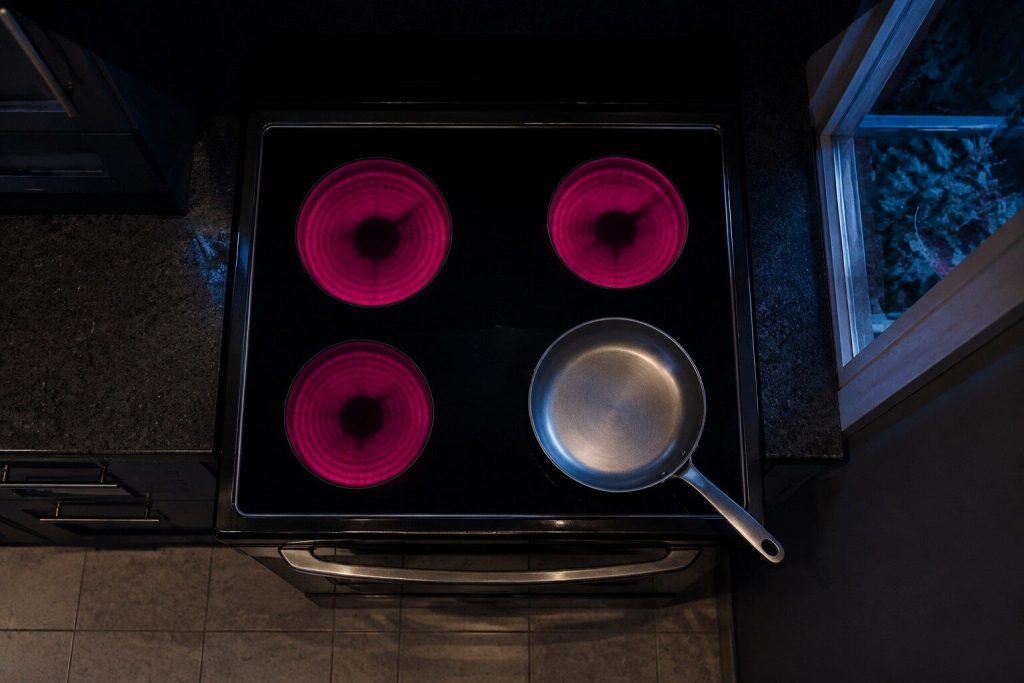
One burner out of four is the good version of this problem, because it usually rules out everything shared — the supply, the board, the controls. What it points at depends entirely on the kind of top, and LG sells three: induction, radiant electric and gas.
- One zone dead is better news than several: the shared parts are fine
- Induction has coils and sensors rather than elements — F33 and F34 are its codes
- On gas, cleaning the cap and ports fixes more of these than parts do
What we do on it
Repairs we carry out on LG cooktops
Starting figures for this equipment in South Florida. The exact cost is confirmed after an on-site diagnostic — and this is not the whole list of what can go wrong, so call if your problem is not here.
-
from $95 Diagnostic visit
One visit, one technician, one answer in writing. On this make the diagnostic starts with something most makes cannot offer: the appliance usually has something to say. LG publishes code lists for its refrigerators, dishwashers, washers, dryers and ranges, and on the machines with no display it publishes what the blinking lights mean instead. Reading that properly is half the job and it costs nothing to do.
- The model number and whatever the appliance is reporting, read before anything is opened
- Blinking-light patterns included, because LG documents them and that makes them codes
- Written findings and a from-price before any part is ordered
-
from $125 Appliance maintenance
The visit that stops the other visits. Most of what fails on an LG in this city fails because of something that could have been cleaned: a condenser packed with dust, a dishwasher filter nobody has taken out, a dryer duct that has been closing for three years. None of it is glamorous and all of it is cheaper than the repair it prevents.
- Condenser, filters, seals, drains and levels on whatever you have
- Written findings, so you know what is aging before it fails
- Priced on time rather than per appliance
-
from $145 Appliance installation
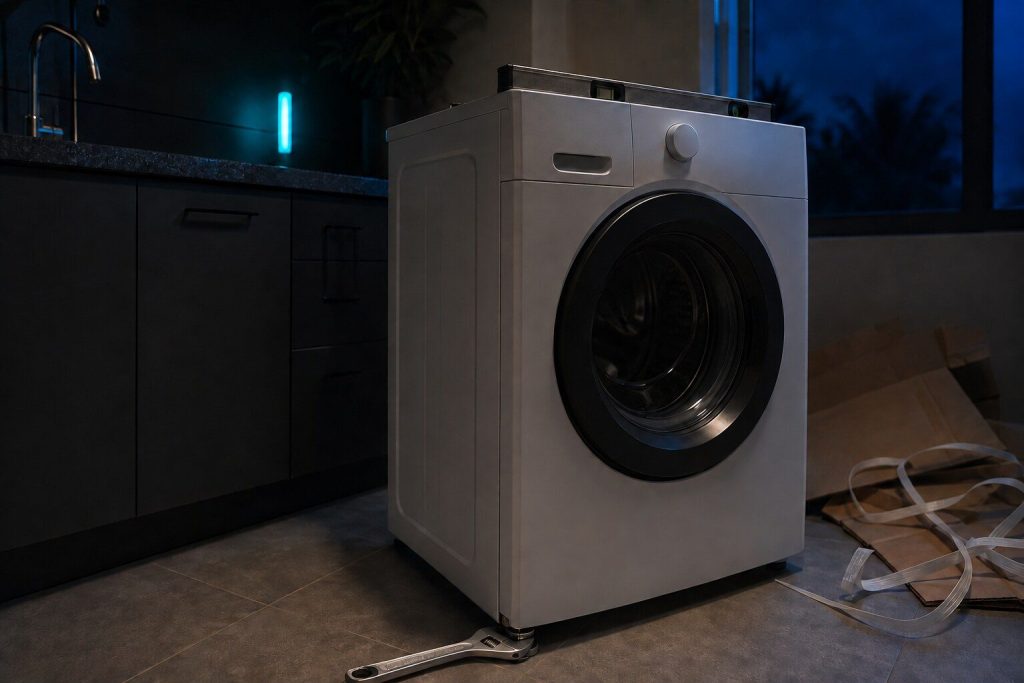
Delivery is not installation. A machine that has been put in place is level, connected, tested, and standing with the clearances its manufacturer specifies — and on LG's ventless laundry and its built-in cooking there are specifics that get missed often enough to be worth naming.
- Leveled and tested, not just connected and left
- Clearances checked, because a built-in with no vent path fails in August
- Gas connections leak-tested and documented
-
from $185 Range igniter replacement
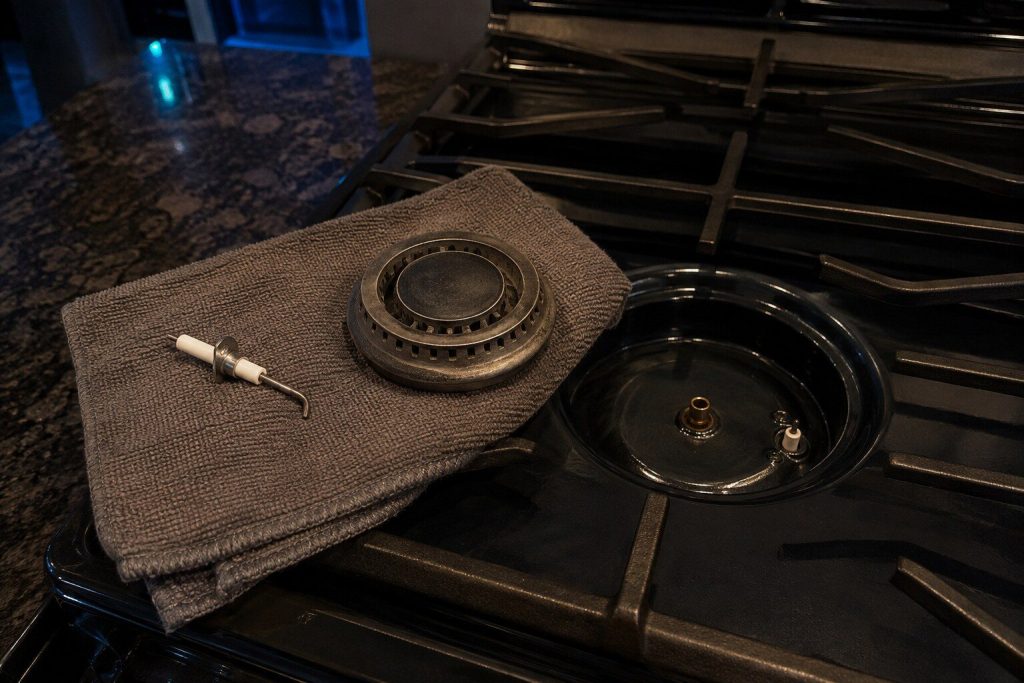
Two different igniters live on a gas range and they are not the same job: the surface igniters that spark the cooktop burners, and the oven igniter that has to draw enough current to open the gas valve. Both are ordinary repairs and both are preceded by the cleaning that fixes a good proportion of them for nothing.
- Cleaning the caps and ports fixes more dead burners than parts do
- An oven igniter that glows can still be too weak — it is measured
- Moisture in the assembly is a real cause in this climate
-
from $265 Induction cooktop repair
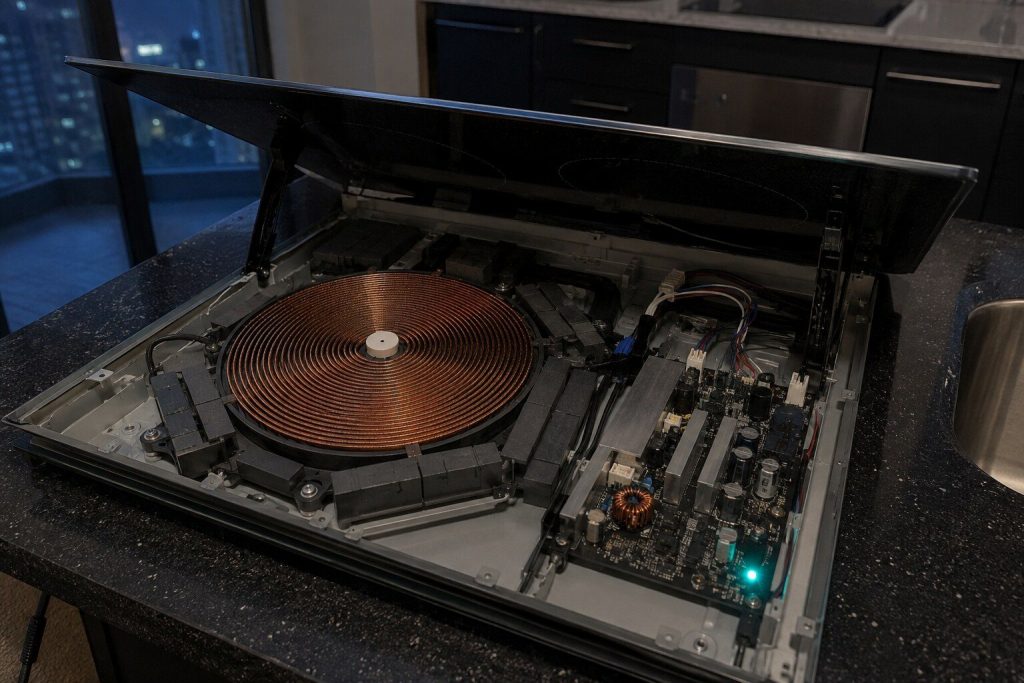
An induction top has no element to fail. It has a coil per zone, a temperature sensor under each, and an inverter board driving them — which is why a single dead zone is the good version of this problem and several at once is not. F33 and F34 are LG's front burner sensor codes and they exist on nothing else in the range.
- One zone dead is a coil or a sensor; several is the board
- F33 and F34 are induction-only codes
- The glass comes up, and the parts underneath are dearer than radiant
-
from $195 Cooktop element repair
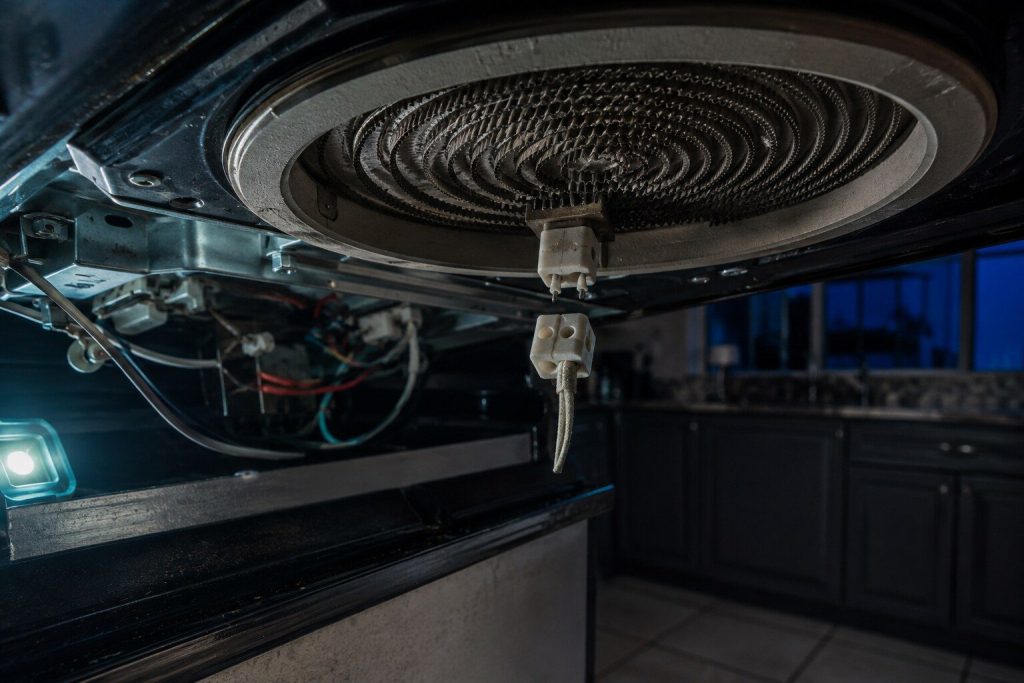
On a radiant top the element is under the glass and it fails open, which is measurable. The half people forget is the connector underneath it: it corrodes, it burns, and a new element onto a burnt connector fails early.
- Elements fail open and are measured, not guessed
- The connector under the element is half the repair
- F3 and the water-on-the-panel condition are controls rather than elements
-
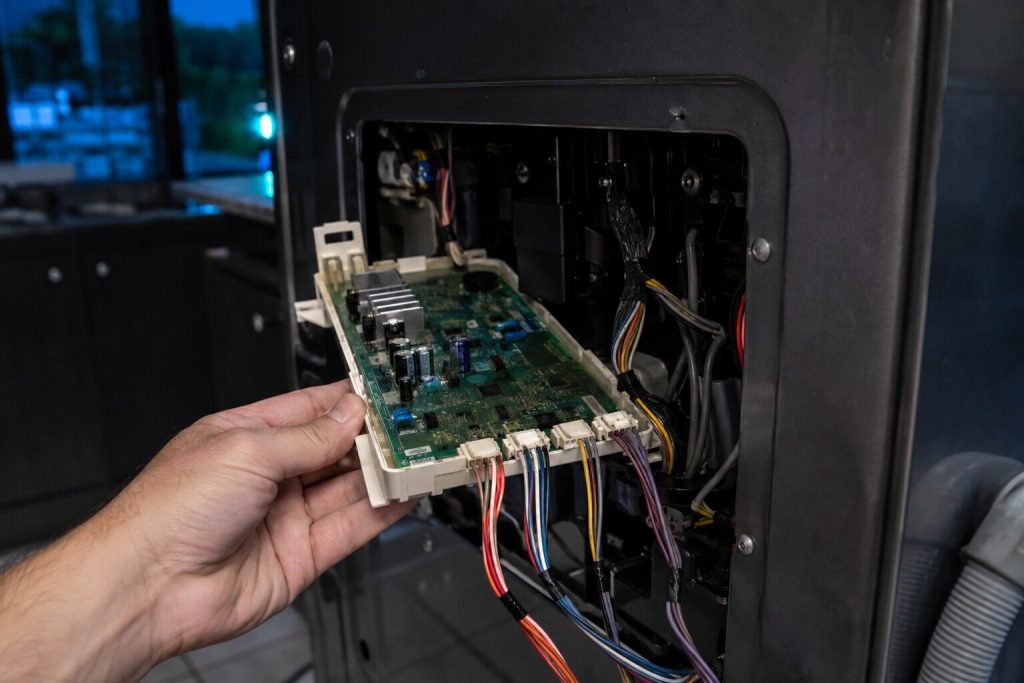
from $285 Appliance control board repair
The board is the last thing suspected rather than the first, because supply problems imitate it perfectly: a long extension lead, a shared circuit with something heavy on it, or a socket with a poor neutral will all produce board errors on a machine that is otherwise healthy. A second board fails exactly the way the first one did.
- The supply is checked first, every time
- EE on a washer and F11 on a range are board-level codes
- A board replaced without finding what killed it is a repeat visit
-
from $115 Smart diagnosis and firmware service
LG builds diagnostics into these machines that most makes do not: a connected app, a stored history, and on many models an audible diagnosis the machine plays down a phone line. When that side stops working the appliance still washes and still cools — but you lose the reporting, and on this make the reporting is worth having.
- Connectivity, firmware and the app-side diagnosis
- The machine works without it; you lose the instrumentation
- Often a network problem rather than an appliance one
In more detail
About LG cooktops
Three technologies, one sheet of glass
LG's cooktops are induction, radiant electric or gas, in thirty and thirty-six inch widths. Induction and radiant look nearly identical installed — a flat black surface with printed rings — and behave nothing alike: induction heats the pan and leaves the glass cool, radiant heats the glass and the glass heats the pan. That difference is the first question on a service call, because it changes every subsequent one.
What the codes cover
The cooking code list is shared with the ranges, and three entries belong to the cooktop specifically: F3, a touch pad sensor key error; F33 and F34, the front induction burner temperature sensors; and H5, which is not an error at all but the indication that the surface is above 150°F. LG also documents a code for water or metal left on the touch panel, which in a working kitchen is a more common cause than any component failure.
This article is based on:
- Official manufacturer documentation
- Internal repair procedures
- Technician repair history
- Company quality standards
Before you book
Questions about LG cooktops
One zone is dead and the rest are fine.
On induction that is the coil, its sensor or the board section that drives it, and it is worth knowing that a single zone failing is the good version — a board failure usually takes more than one. On radiant it is the element or the connector under it, and elements fail open, which is measurable. On gas it is the igniter, the burner cap or a blocked port, and cleaning fixes more of them than parts do.
The touch controls have stopped responding.
First look for water. LG's own list is explicit about it: a code appears when metal objects or water have been in contact with the panel for a prolonged time. A wet cloth left over the controls will do it, and so will a spill that has crept under the glass edge. Dry it, take everything off the panel and cycle the power at the breaker. What is left after that is the touch board, which is F3 on the published list.
H5 appears and everything works.
That is the hot surface indicator. LG's list says it plainly: the cooktop is above 150°F and it is not an error. It goes out on its own as the glass cools. The only version worth acting on is an H5 that stays lit on a cooktop that is cold to the touch, which means the sensor rather than the surface.
Where we do it
Across Miami-Dade, Broward, and Palm Beach
Same terms everywhere we go: an on-site diagnostic first, the price agreed in writing, and the exact figure confirmed once we have seen the unit.
Neighborhoods people ask for by name